Argumentative Essay怎么写?Structure、Examples与写作步骤

What is an argumentative essay?Argumentative Essay几乎贯穿很多留学生的Academic Writing生活。不管你读的是Business、Education、Social Science还是其他专业,只要assignment Brief里出现argue、evaluate、discuss、to what extent之类的要求,都有可能需要建立一个清楚的Argument。
很多同学第一次看到Argumentative Essay,会把它理解成“找一个观点,然后拼命证明自己是对的”。我以前也见过特别有气势的Essay:Introduction第一句就已经准备和全世界开战,写到Conclusion依然坚定得不得了。问题是——Evidence不够。
Academic Argument并不是谁语气强谁赢。真正好的Argumentative Essay需要提出一个可以争论的Claim,再通过Evidence、Reasoning和Critical Analysis让自己的Position成立,同时认真处理Counterargument。
Essay Type:Argumentative Essay / Academic Essay
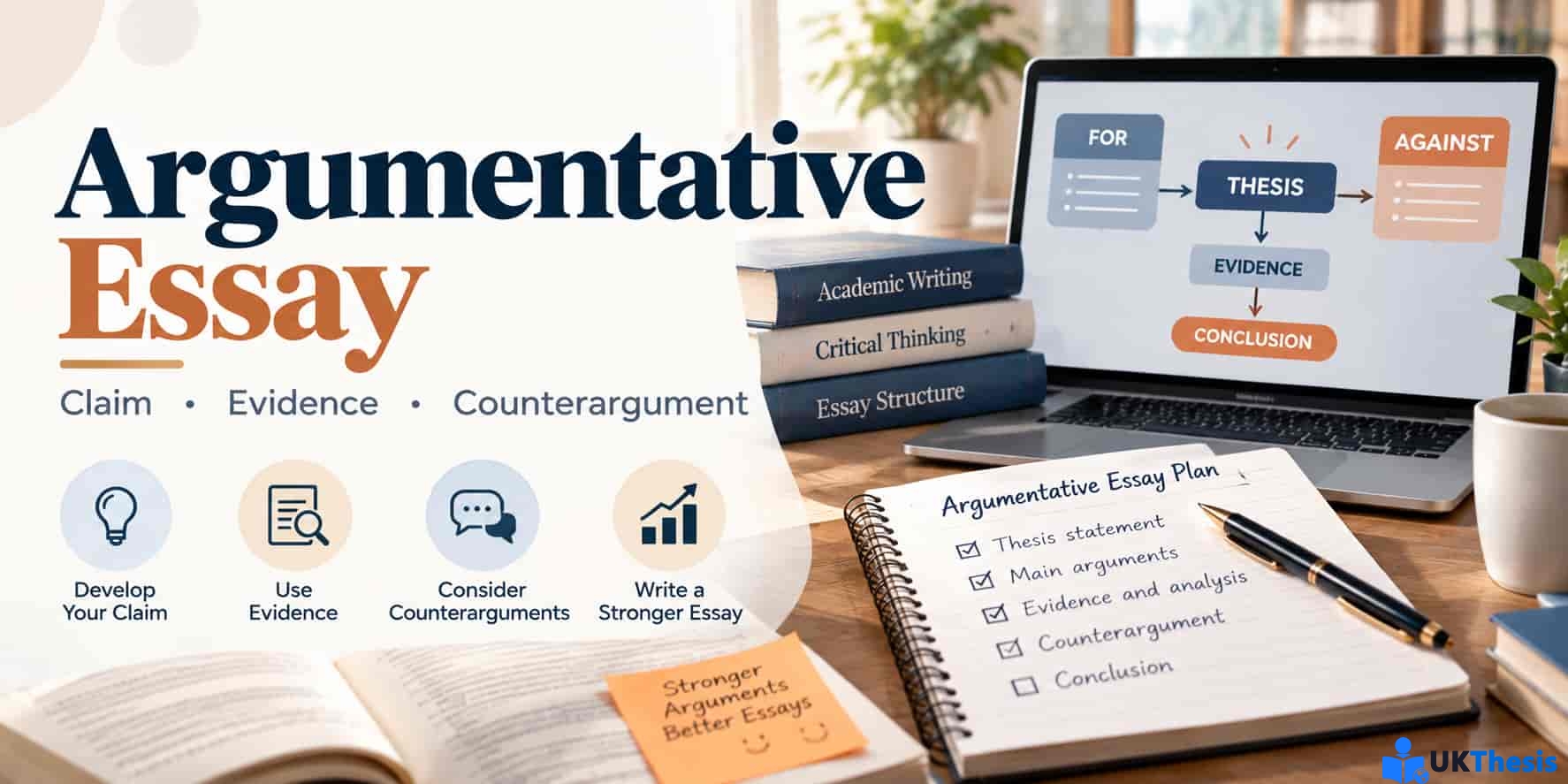
核心结构:Introduction → Thesis → Arguments → Evidence → Counterargument → Conclusion
核心能力:Research、Reasoning、Critical Thinking、Academic Evidence
适用课程:Business、Education、Politics、Social Science、Media、General Academic Writing
What Is an Argumentative Essay?
An argumentative essay is a piece of academic writing in which the writer develops a clear position on a debatable issue and supports that position through evidence and reasoning.
它和生活里两个人争论完全不是一回事。Academic Argument不需要“吵赢”,而需要让读者看到:
你的Claim是什么;
为什么这个Claim值得讨论;
有什么Evidence支持它;
反方有什么合理Argument;
综合Evidence以后,为什么你的Position仍然成立。
因此,一个好的Argument应该是specific、debatable、evidence-based。如果一个观点所有人都同意,或者根本没有办法Research,它通常不太适合作为Argumentative Essay的核心问题。
Argumentative Essay和普通Opinion有什么区别?
这是最容易踩坑的地方。
“I think university is too expensive.”当然是一个Opinion,但它还不是一个成熟的Academic Argument。
Argumentative Essay需要继续回答:为什么?对谁而言?根据什么Evidence?有没有相反Evidence?在什么条件下这个结论才成立?
| 比较 | Opinion | Academic Argument |
|---|---|---|
| 基础 | 个人看法 | Evidence + Reasoning |
| Research | 不一定需要 | 通常需要可靠Sources |
| Opposing View | 可以忽略 | 通常应该认真考虑 |
| 目的 | 表达“我觉得” | 建立可以被检验的Position |
Argumentative Essay Structure
最基本的Argumentative Essay Structure仍然可以理解为Introduction、Body和Conclusion,但真正决定文章质量的不是有没有这三个标题,而是每一部分承担什么功能。
| Section | 主要任务 | 常见问题 |
|---|---|---|
| Introduction | Context + Problem + Thesis | 背景写太长 |
| Body Paragraphs | Arguments + Evidence + Analysis | 只有Reference,没有Analysis |
| Counterargument | 处理Opposing View | 故意挑最弱的反方 |
| Conclusion | Synthesis + Final Position | 只是复制Introduction |
1. Argumentative Essay Introduction怎么写?
Introduction的任务是把读者带到你的Argument面前。
很多写作指南会建议一开始放一个Hook。Hook当然可以使用,但大学Academic Essay没必要为了“吸睛”硬编一句惊天动地的话。相比夸张开场,清楚交代Context和Essay Problem通常更重要。
一个比较实用的Introduction可以包含:
Context → Problem / Debate → Scope → Thesis Statement
例如题目是:
Should universities continue to offer remote learning after the pandemic?
比较弱的Thesis:
Remote learning has advantages and disadvantages.
这句话几乎没有Argument,因为读者看完还是不知道你到底准备证明什么。
更明确的方向可以是:
Although remote learning can improve flexibility and access, universities should use it selectively because its effectiveness depends on course design, student engagement and the type of learning activity.
这里已经出现了Position,而且后面的Body Structure也基本能看出来。
2. Body Paragraph不是把Reference排队
The body of an argumentative essay contains evidence and analysis that support the main thesis. Each paragraph should normally have a clear purpose rather than simply introduce another source.
一个很实用的思路是:
Point → Evidence → Explanation → Critical Analysis → Link
比如你引用了一项Research说明Remote Learning能够减少通勤时间,这只是Evidence。
真正的Analysis还需要继续问:
减少通勤时间为什么会影响Learning Experience?
这个Evidence适用于所有学生吗?
研究对象是谁?
有没有研究得到不同结果?
它最终怎样支持你的Thesis?
很多同学不是Reference太少,而是Reference太勤快。Smith说完Jones说,Jones说完Brown说,作者本人反而悄悄下班了。Argumentative Essay真正需要的是你对Evidence的解释和判断。
3. Counterargument为什么重要?
Argumentative Essay不是只收集支持自己的资料。
如果存在一个有力的Opposing View,认真处理它通常能让文章更完整。
例如你的Argument认为大学应该继续保留Remote Learning,反方可能指出线上课程会降低Interaction并影响部分实践型课程。
比较成熟的处理方式不是假装这个问题不存在,而是:
| Step | 作用 |
|---|---|
| Acknowledge | 公平说明反方Argument |
| Evidence | 看看反方有什么证据 |
| Concede | 承认其中真正合理的部分 |
| Respond | 解释为什么你的Position仍然成立,或需要加入条件 |
有时候Counterargument甚至会让你修改自己的Thesis。这不是坏事。Academic Writing的目的并不是证明自己永远正确,而是让最终Conclusion尽可能符合Evidence。
4. Argumentative Essay Conclusion怎么写?
Conclusion需要回到Essay Question和Thesis,但不应该只是把Introduction换几个同义词再写一次。
一个比较完整的Conclusion可以完成三件事:
回答题目 → 综合主要Arguments → 给出最终Judgement。
这里的关键词是Synthesis。
不要逐段写:“Body 1讲了A,Body 2讲了B,Body 3讲了C。”更好的Conclusion应该说明这些Evidence放在一起以后意味着什么。
通常也不建议在最后突然加入一个正文从未讨论过的新Argument。否则读者刚准备关门,你又从窗户塞进来一个新观点。
Argumentative Essay Example:一个Argument怎样搭起来?
假设Essay Question是:
Should social media platforms be required to verify the age of teenage users?
| 部分 | 示例思路 |
|---|---|
| Thesis | Platforms should implement proportionate age-assurance systems, but regulation must also protect privacy and avoid excessive data collection. |
| Argument 1 | Age assurance may reduce children's exposure to unsuitable services or content. |
| Argument 2 | Platforms have responsibilities that differ from those of individual users. |
| Counterargument | Strict verification may create privacy and data-security risks. |
| Response | Policy should therefore focus on proportionate age assurance rather than unnecessary identity-data collection. |
| Conclusion | A conditional position that balances child protection with privacy. |
这个例子最值得注意的是:Argumentative Essay并不要求你永远选择一个极端的“Yes”或者“No”。如果Evidence支持一个有条件的Position,那么有条件的Conclusion反而可能更成熟。
Argumentative Essay Topics怎么选?
原来很多Argumentative Essay指南喜欢一次给学生列几十个Topics。其实选题不是越多越好。
我更建议先检查四件事:
Debatable → Researchable → Specific → Manageable
| Topic | 为什么适合Argumentative Essay |
|---|---|
| Should self-driving cars face stricter safety regulation? | Technology、Safety和Regulation存在明显争议 |
| Is the cost of university education too high? | 可以结合Education Policy、Access和Economic Evidence |
| Should schools restrict smartphone use? | Learning、Wellbeing与Individual Freedom可以形成不同Position |
| Should social media companies moderate harmful content more aggressively? | Platform Responsibility与Freedom of Expression存在讨论空间 |
| Should universities use generative AI in teaching? | 可以讨论Learning、Assessment、Academic Integrity与Digital Literacy |
Argumentative Essay最容易丢分的地方
只有Opinion,没有Evidence。自己非常相信一个观点,并不能自动变成Academic Argument。
Evidence很多,却没有Analysis。Reference负责提供材料,你负责解释材料为什么重要。
Thesis太宽。“Globalization is good”这种题目,2000词基本救不回来。需要限定Context、Population或者具体Dimension。
完全不看反方。只研究支持自己的Sources,很容易形成Confirmation Bias。
把Counterargument写成稻草人。故意选择一个特别弱的反方再轻松击败,看起来赢得很漂亮,Critical Thinking却不一定高。
Conclusion只是复制Thesis。写完几千字以后,你应该已经能够形成比Introduction更成熟的Judgement。
写完以后用这张Checklist检查
| 检查 | 问自己 |
|---|---|
| Essay Question | 我真的回答题目了吗? |
| Thesis | 读者能一句话说出我的Position吗? |
| Evidence | 主要Claim都有可靠Evidence吗? |
| Analysis | Evidence后面有没有解释“所以呢”? |
| Counterargument | 我有没有公平处理最重要的Opposing View? |
| Conclusion | 最后有没有真正回答Essay Question? |
FAQ
Q1:What is an Argumentative Essay?
Argumentative Essay是一种围绕可争议问题建立Position,并通过Evidence、Reasoning和Critical Analysis支持Argument的Academic Essay。
Q2:Argumentative Essay一定要有Thesis Statement吗?
通常需要。Thesis Statement告诉读者你的核心Position,并帮助控制后续Body Paragraph的论证方向。
Q3:Argumentative Essay一定要写Counterargument吗?
具体取决于Assignment Brief和字数,但在较完整的Academic Argument中,认真处理重要Opposing View通常能够体现更好的Critical Thinking。
Q4:Argumentative Essay可以写I think吗?
是否使用第一人称应看课程要求。即使允许使用“I argue”,真正支撑Position的仍然应该是Evidence和Reasoning,而不是个人感觉。
Q5:Argumentative Essay和Persuasive Essay一样吗?
两者高度相关,但侧重点可能不同。Argumentative Essay通常更强调Research、Evidence和对Opposing Arguments的分析;Persuasive Writing还可能更关注Audience以及说服策略。最终仍应以Assignment Brief为准。
Q6:Argumentative Essay写多少个Body Paragraph?
没有固定答案。段落数量应该由Word Count、Essay Question和Arguments数量决定,而不是机械套用五段式。
相关阅读:
Argumentative Essay写到Thesis、Outline或Counterargument卡住时,可以继续阅读本站Thesis Statement、Essay Outline以及Persuasive Essay相关写作指南。不同页面分别解决不同写作环节,不需要把所有Essay知识都塞进同一篇文章。
Argumentative Essay真正难的通常不是Introduction第一句话怎么写,而是如何让Thesis、Evidence、Analysis和Counterargument形成一条完整的论证链。如果拿到Assignment Brief以后仍然不知道题目要求什么,可以先拆解Question和Rubric,再决定Outline和Research方向。UKThesis提供留学生Essay写作辅导、题目分析、结构梳理及英文修改支持,可以根据具体课程要求处理Argumentative Essay中的论证与结构问题。