Caribbean Tourism Essay范文:旅游依赖、Neoliberalism与经济不平等分析

阳光、沙滩、海水、椰子树,再加上一杯插着小伞的饮料——很多Tourism Advertisement里的Caribbean大概就是这个样子。
但如果Tourism Management essay只写到这里,老师大概会觉得我们是在帮旅行社做宣传册。
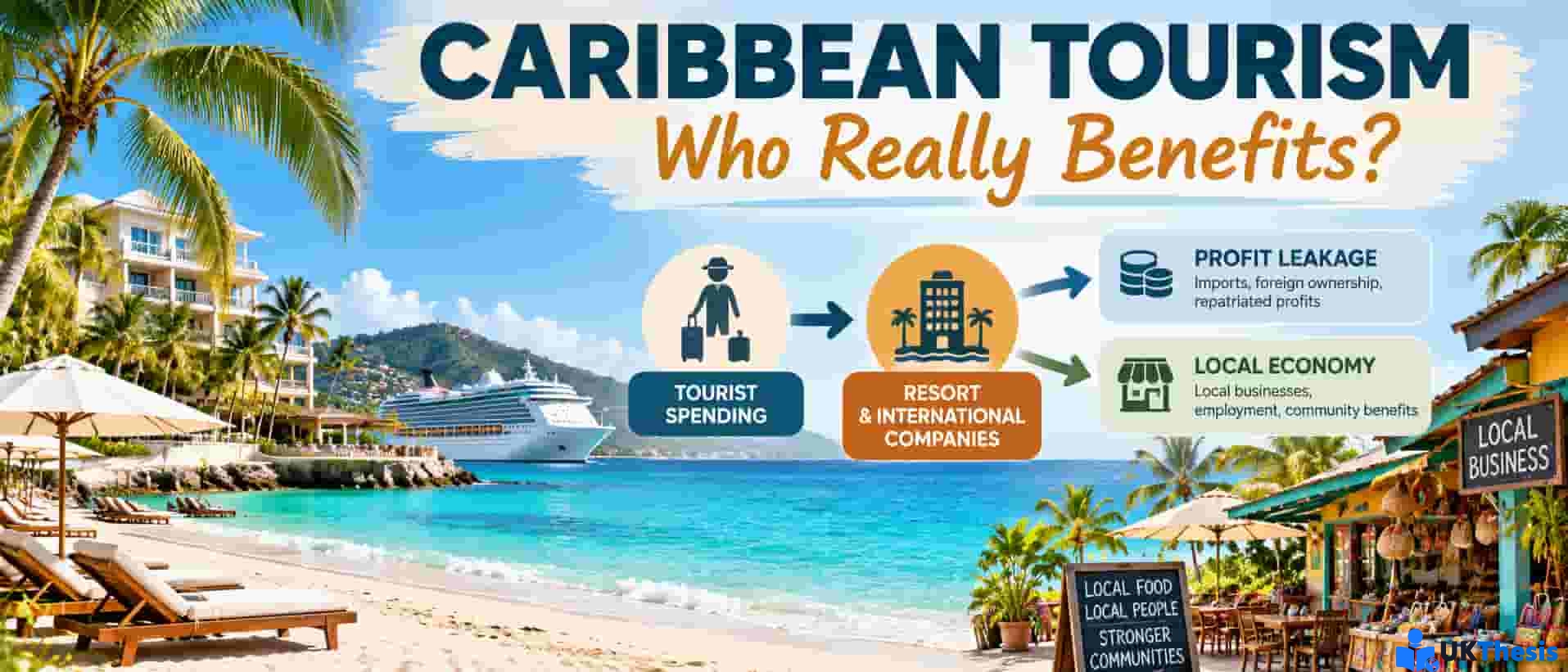
Caribbean Tourism真正值得分析的问题是:当一个岛国高度依赖Tourism以后,游客带来的Foreign Exchange到底留在当地多少?谁拥有Hotels和Tour Operators?Local Workers获得什么类型的Jobs?旅游业是在减少Dependency,还是产生另一种形式的Dependency?
下面这篇Caribbean Tourism Essay从Colonial Legacy、Neoliberalism、Tourism Dependency、Transnational Corporations、Profit Leakage、Labour与Gender Inequality几个方面讨论加勒比旅游经济。
| 核心问题 | Caribbean Tourism中的表现 |
|---|---|
| Tourism Dependency | 部分经济体高度依赖International Tourism与Foreign Exchange |
| Foreign Ownership | International Hotels、Airlines和Tour Operators拥有较强Market Power |
| Economic Leakage | 部分Tourism Revenue可能通过Imports与Profit Repatriation流出Destination |
| Tourism Labour | Employment Benefits与Low-paid / Seasonal Work可能同时存在 |
| Gender | 不同岗位和Career Opportunities可能呈现Gender Segmentation |
Caribbean真的是一个“Paradise”吗?
The Caribbean has historically been represented as a tropical paradise: sun, sand, sea, music, hospitality and luxury.
这种Image对Tourism Marketing当然非常有效。
但Critical Tourism Studies会继续追问:
Paradise for whom?
Caribbean作为“Paradise”的想象并不是今天Tourism Industry突然创造出来的。它与Colonial History、Plantation Economy以及后来Destination Marketing之间存在复杂联系。
对游客来说,Beach Resort可能意味着Escape、Relaxation和Luxury;但对于Host Community来说,同一个Tourism Space还涉及Employment、Land、Infrastructure、Wages、Ownership和Economic Dependency。
从Plantation Economy到Tourism Economy
原Essay最有辨识度的Argument之一,是把现代Caribbean Tourism与历史上的Plantation Economy联系起来。
殖民时期,很多Caribbean Economies高度依赖Sugar、Tobacco、Cotton等少数Export Commodities。
随着Global Economy变化,一些岛屿逐渐把Tourism发展为重要Foreign Exchange来源。
表面上看:
Sugar → Tourism
产业已经完全不同。
但Critical Perspective提出的问题是:
Has the economic structure changed as much as the product?
如果Destination仍然高度依赖External Demand、Foreign Capital和Overseas Companies,那么Tourism可能在创造新收入的同时,也保留某些历史性的Dependency。
Globalization怎样改变Caribbean Tourism?
Globalization使People、Capital、Information和Services跨国流动更加容易。
对于Caribbean Tourism来说,这意味着:
International Airlines带来更多Visitors;
Global Hotel Chains进入Local Market;
Online Booking扩大Destination Visibility;
International Investment支持Resort Development;
Global Tour Operators组织Package Holidays。
这些变化当然能够创造Opportunities。
但Globalization不是只有“游客变多”这一面。它同时改变了谁控制Tourism Supply Chain。
Neoliberalism和Tourism有什么关系?
原Essay使用Neoliberalism解释Caribbean Tourism Development。
在Tourism Context中,这个角度通常关注:
Market Liberalisation;
Foreign Investment;
Privatisation;
International Capital Mobility;
Government Incentives;
Transnational Corporate Power。
支持这种Development Strategy的人可能认为,Foreign Investment能够提供Capital、Technology、Management Expertise和Employment。
Critical View则会问:
Who captures the economic benefits?
这就是分析不能只停留在“Foreign Investment is good / bad”的原因。
Tourism Dependency是什么?
Tourism Dependency指一个Destination的Income、Employment、Foreign Exchange或者Government Revenue在较大程度上依赖Tourism。
依赖Tourism本身并不等于Tourism一定有害。
真正的问题是Economic Concentration带来的Vulnerability。
| Tourism带来的机会 | 高度依赖可能带来的风险 |
|---|---|
| Foreign Exchange | External Demand Shock |
| Employment | Seasonality |
| Infrastructure Investment | Tourism-oriented Development |
| Business Opportunities | Foreign Ownership / Leakage |
| International Connectivity | Exposure to Global Crisis |
如果一个Economy过度依赖单一Industry,那么International Recession、Pandemic、Natural Disaster、Airline Capacity变化甚至Destination Reputation都可能产生放大效应。
Economic Leakage:游客花的钱去了哪里?
这是Caribbean Tourism Essay特别值得写的Concept。
假设一名Tourist花了£2,000购买Caribbean Holiday。
不能直接得出:
£2,000全部进入了Local Economy。
Tourist Expenditure可能需要支付:
International Airline;
Foreign-owned Hotel;
Overseas Tour Operator;
Imported Food and Drinks;
Imported Equipment;
Booking Platforms;
Profit Repatriation。
最终真正留在Local Economy里的部分才形成更直接的Local Economic Benefit。
Tourist Spending
− Imports
− Overseas Payments
− Repatriated Profits
= Greater Local Retention
这就是为什么Tourist Arrival Number很高,并不自动代表Local Community获得同等比例的Economic Benefit。
All-inclusive Tourism会不会加剧Leakage?
原Essay特别讨论了Tour Operators与All-inclusive Packages。
这种Business Model对Tourist非常方便:
Flight、Hotel、Food、Drinks、Entertainment甚至Activities都可以一次购买。
但从Destination Economy角度,需要继续问:
游客还有多少消费会流向Hotel之外的Local Economy?
如果Tourist的大部分时间和消费都留在Resort内部,Local Restaurants、Taxi Drivers、Craft Sellers以及Small Businesses能够分享的Tourism Revenue就可能受到限制。
因此,分析All-inclusive Tourism不能只看Customer Convenience,也需要看Local Linkages。
Tourism Enclave:游客和当地居民生活在两个世界?
原Essay还提出一个非常形象的问题:一些Tourist Areas拥有较完善的Roads、Water、Electricity和Other Infrastructure,而Nearby Communities未必享有同样水平的Public Services。
这形成了所谓Enclave Tourism值得讨论的一面。
Tourism Space可能被设计成:
Airport → Resort → Beach → Attraction → Resort
Tourist获得非常流畅的Holiday Experience,却可能很少真正进入Local Community。
这会产生一个有趣的矛盾:
Destination依赖Tourism,但Tourist Experience本身却可能与Destination日常社会生活高度分离。
Tourism创造Jobs,但是什么Jobs?
Employment是支持Tourism Development最常见的理由之一。
Tourism确实能够创造:
Hotel Employment;
Food & Beverage Jobs;
Transportation;
Entertainment;
Retail;
Tour Operations。
但Critical Analysis不能写到“creates jobs”就收笔。
还应该继续分析:
Are the jobs permanent or seasonal?
What are the wage levels?
Who occupies management positions?
Are there opportunities for career progression?
How much of the workforce is locally employed?
因为:
Number of Jobs ≠ Quality of Jobs
Gender Inequality为什么也是Tourism问题?
原Essay后半部分用了相当大的篇幅讨论Women in Tourism Employment,这个内容值得保留。
Tourism Industry中的Gender问题可能表现在:
Occupational Segregation;
Wage Differences;
Limited Management Opportunities;
Domestic-service Roles;
Informal Employment;
Emotional Labour。
例如Housekeeping、Cleaning以及部分Service Roles可能被社会文化长期定义成“女性工作”,而Higher-level Management Positions的Gender Structure可能完全不同。
所以分析Tourism Employment时,不应该只统计一共创造了多少Jobs,还应该分析谁得到什么类型的Job。
Tourism会不会把Culture变成Commodity?
Caribbean Tourism依赖的不只是Beach。
Music、Food、Dance、Festivals、Local Identity以及“Friendly People”都可能成为Destination Marketing的一部分。
这产生了另一个Critical Tourism问题:
When Culture becomes part of the Tourism Product,
who decides how that culture is represented?
Tourism可以帮助Local Culture获得International Visibility,也可能创造收入。
但如果Culture主要按照Tourist Expectation进行包装,就可能出现Commodification的问题。
所以这里最好避免两个极端:
Tourism destroys culture.
或者:
Tourism preserves culture.
现实通常比这两句话复杂得多。
Transnational Corporations一定对Caribbean有害吗?
也不能这么写。
International Hotel Groups、Airlines和Tour Operators可以带来:
Capital;
International Marketing;
Global Distribution Networks;
Employment;
Professional Management;
Access to International Visitors。
问题不是“Foreign Company一定不好”,而是Destination怎样提高Local Economic Linkages。
例如:
增加Local Procurement;
支持Local Food Supply;
提高Local Management Participation;
支持Small Tourism Businesses;
发展Community-based Tourism;
改善Skills和Career Progression。
这样Critical Analysis就从单纯批判Capitalism,进一步走到Tourism Management。
怎样减少Tourism Dependency?
减少Dependency不等于“不要Tourism”。
对很多Island Economies来说,这既不现实,也没有必要。
更实际的方向包括:
| Strategy | Potential Benefit |
|---|---|
| Economic Diversification | 降低对单一Industry依赖 |
| Local Supply Chains | 提高Tourism Revenue Retention |
| Community Tourism | 增加Local Participation |
| Skills Development | 改善Career Mobility |
| Sustainable Planning | 平衡Economic、Social与Environmental Goals |
学姐提醒:这类Tourism Essay最容易写成两个极端。一个是“旅游业给加勒比带来了工作,所以很好”;另一个是“跨国公司赚走了钱,所以旅游业就是新殖民主义”。老师真正想看的通常不是站队,而是Benefit由谁获得、Cost由谁承担、Revenue留在哪里、Local Community有没有Decision-making Power。把这四个问题问出来,Critical Analysis基本就有了。
Conclusion
Tourism plays an important economic role across the Caribbean, generating employment, foreign exchange, investment and international connectivity. However, these benefits should not be evaluated without considering the historical and structural conditions within which tourism operates.
The transition from plantation-based export economies to tourism does not necessarily remove economic dependency. Foreign ownership, international tour operators, imported goods and profit repatriation can reduce the proportion of tourism revenue retained within destination economies.
At the same time, the social effects of tourism are uneven. Tourism can create employment while also reproducing seasonal work, occupational hierarchies and gender inequalities. Cultural identity can gain international visibility while simultaneously becoming part of a commercial tourism product.
The central challenge for Caribbean tourism is therefore not simply how to attract more visitors. It is how to increase local participation, strengthen economic linkages, improve the quality of tourism employment and ensure that tourism contributes to broader and more resilient forms of development.
FAQ
Q1:什么是Tourism Dependency?
指Destination的Employment、Income、Foreign Exchange或其他Economic Activity高度依赖Tourism,因此也更容易受到External Tourism Demand变化影响。
Q2:什么是Tourism Leakage?
指Tourist Expenditure中的一部分通过Imported Goods、Foreign Companies、Overseas Services或Profit Repatriation等方式流出Destination Economy。
Q3:为什么Caribbean Tourism会和Colonialism联系起来?
因为Critical Tourism Research经常比较历史上的Plantation Economy与现代Tourism Economy在External Dependency、Ownership和Global Power Relations方面的连续性。
Q4:All-inclusive Resorts有什么经济问题?
它们能够提供便利和稳定的Tourist Experience,但如果游客大部分消费都发生在Resort内部,Local Small Businesses能够获得的Tourism Spending可能减少。
Q5:Tourism不是可以创造很多Employment吗?
可以,但分析Employment还需要看Wages、Seasonality、Job Security、Career Progression以及Management Positions由谁获得。
Q6:Gender为什么会出现在Tourism Management Essay里?
因为Tourism Labour Market可能存在Gender-based Occupational Segmentation、Wage Differences以及Management Opportunity差异。
Q7:这篇属于Sustainable Tourism吗?
有关联,但它的主定位更接近Tourism Economics、Tourism Dependency和Critical Tourism Studies;Sustainable Tourism可以作为解决策略的一部分。
Q8:Tourism Management Essay不知道怎么写Critical Analysis怎么办?
可以从Economic Benefits、Leakage、Ownership、Employment Quality、Community Participation和Sustainability几个维度比较,而不是只罗列旅游业的Advantages与Disadvantages。如果Outline或Critical Discussion比较乱,也可以通过UKThesis的Essay写作辅导梳理论证结构。
相关阅读
Globalization and Tourism Essay:全球化对旅游业的影响