Euthanasia Argumentative Essay范文|正反论点与Essay结构分析

Argumentative essay真正难的地方,并不是“我有没有观点”,而是:这个观点能不能经得住别人反驳。
很多同学第一次写Argumentative Essay的时候特别容易犯一个小错误——先决定自己支持哪一边,然后搜索资料时只找支持自己的Evidence。写到最后,整篇文章看起来立场特别坚定,但老师读完可能会觉得:反方去哪儿了?
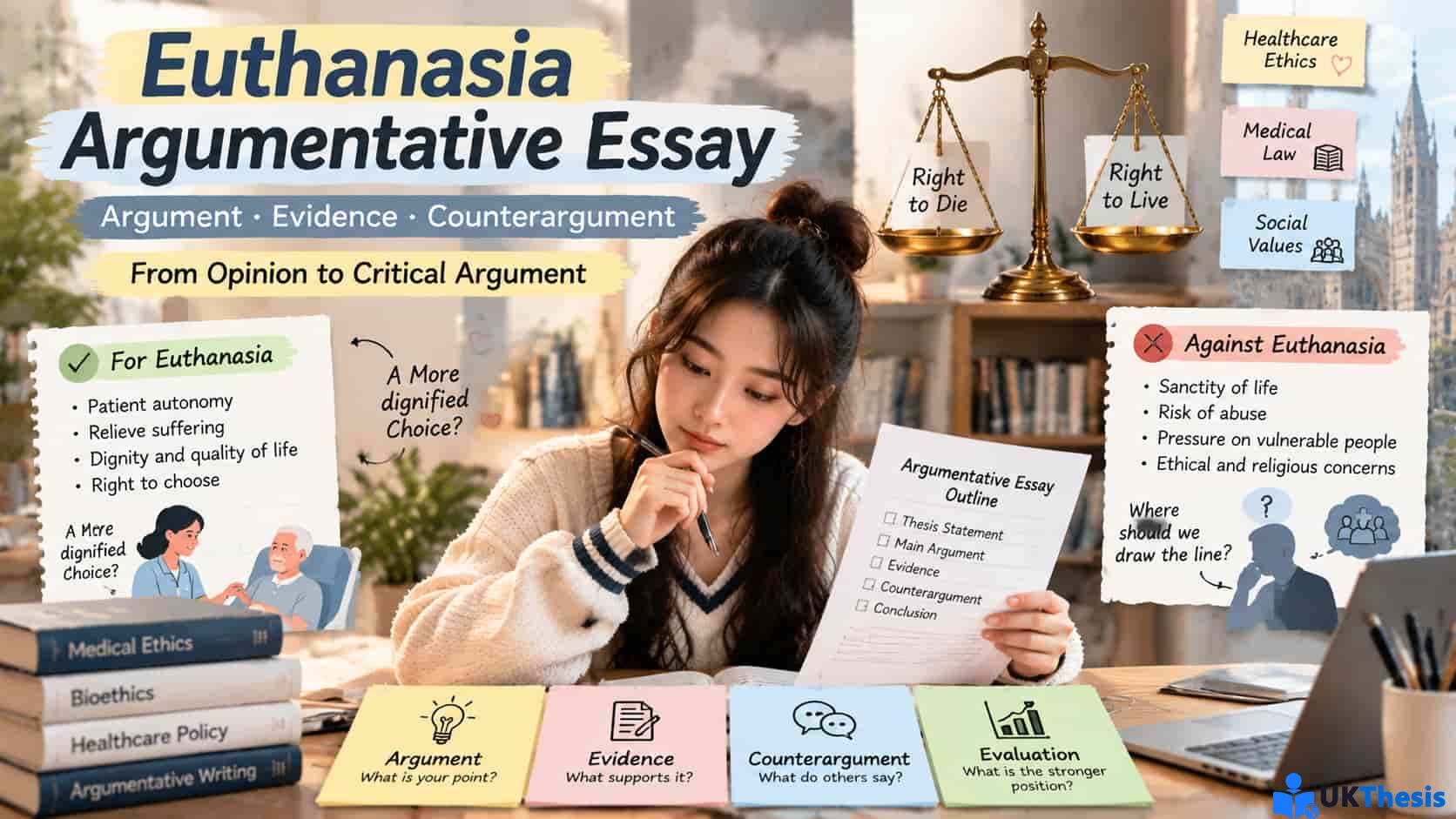
真正成熟一点的Argumentative Writing,通常需要提出一个可以争论的Claim,用Academic Evidence支撑自己的Position,同时认真处理Counterargument。下面先简单看看Argumentative Essay的基本写法,再通过一篇关于Euthanasia(安乐死)的英文Essay Sample观察一篇议论文怎样安排正反观点。
Argumentative Essay最重要的不是“争”,而是Argument
An argumentative essay is one of the most common writing assignments at college and university. It requires analytical thinking, critical reasoning and evidence-based argument rather than relying mainly on personal feelings or experience.
换句话说,Argumentative Essay并不是把语气写得特别强硬,更不是反复使用“Obviously”“Clearly”就能让观点变得有说服力。
老师真正会看的通常是:
| 写作部分 | 核心问题 |
|---|---|
| Thesis Statement | 你的Position到底是什么? |
| Main Argument | 为什么这个Position成立? |
| Evidence | 有什么Academic Evidence支持? |
| Counterargument | 反方最有力的观点是什么? |
| Evaluation | 比较双方后为什么仍然支持这个结论? |
以前我看同学的Essay,有一种情况特别常见:Reference找了二十几个,老师还是说argument weak。问题往往不是Reference太少,而是资料只是被“放进去”,并没有真正参与论证。
Evidence后面一定还要有Analysis。否则Reference再多,也可能只是一个资料陈列柜。
Argumentative Essay Topic怎么选?
Most teachers provide argumentative essay topics or give students several questions to choose from. Sometimes, however, students need to select their own topic.
如果需要自己选题,可以先看三个条件:这个题目是否真的存在不同立场?有没有足够可靠的Academic Sources?在规定Word Count里面能不能讲清楚?
比如:
“Climate change exists.”
这种题目很难形成一个好的大学Argumentative Essay,因为它本身并没有给你留下足够清晰的argument space。
相比之下:
“Should governments impose stricter carbon taxes on high-emission industries?”
这个问题天然包含policy、economic impact、environmental benefits以及不同stakeholders之间的利益冲突,会更容易形成Arguments和Counterarguments。
选题时还要避免题目过大。一个2000-word Essay如果直接写“Climate Change”,最后很容易什么都提到了,什么都没分析透。
Argumentative Essay写作时最值得检查的5件事
| 检查项目 | 容易出现的问题 | 修改方向 |
|---|---|---|
| Topic | 范围太大 | 缩小Population、Context或具体Issue |
| Thesis | 只有Topic,没有Position | 明确回答Essay Question |
| Evidence | 引用很多但没有分析 | Evidence后解释Why it matters |
| Counterargument | 故意忽略反方 | 选择真正有力量的Opposing View |
| Conclusion | 只是重复Introduction | 综合比较Arguments后回应题目 |
Euthanasia Argumentative Essay Example
下面保留一篇围绕Euthanasia展开的Argumentative Essay案例。它涉及医疗伦理、患者选择、生命价值以及Healthcare Professionals的责任。
需要说明的是,这是一篇Academic Writing Sample,其中涉及的法律、政策和不同国家情况来自文章写作时期的资料。阅读重点应该放在Argument Structure、Evidence和Counterargument的组织方式,而不是把其中的国家法律状态当作当前法律查询结果。
Essay Title: Is Euthanasia Everybody’s Right?
Introduction
Euthanasia has long been a controversial issue among healthcare professionals and the wider public. The word euthanasia originates from Greek and is commonly associated with the idea of bringing about a peaceful or painless death under particular circumstances.
Attitudes toward euthanasia can depend on many factors, including religious background, cultural values, personal beliefs and medical circumstances. Euthanasia is often discussed in relation to active and passive forms, as well as voluntary, involuntary and non-voluntary situations.
The debate is not limited to patients themselves. It also concerns families, healthcare professionals and wider medical and legal systems. Questions surrounding autonomy, suffering, dignity and the protection of vulnerable people make euthanasia a particularly complex ethical issue.
写作观察:这个Introduction首先交代controversy,再简单解释概念,最后把讨论范围引到autonomy、suffering、healthcare和ethics。对于Argumentative Essay来说,这种写法比一开始直接宣布“I strongly agree”更容易建立讨论背景。
Right to Die or Right to Live?
Many theories and ethical principles have been proposed to explain the moral value of human life within healthcare. One important argument concerns autonomy: whether an individual should have the right to make decisions about continuing or withholding medical treatment.
Supporters of euthanasia may argue that patients experiencing incurable illness and unbearable suffering should have greater control over end-of-life decisions. From this perspective, continuing medical treatment without a realistic prospect of recovery may prolong suffering rather than improve quality of life.
Patient autonomy therefore becomes one of the strongest arguments used in favour of assisted dying. The argument is that competent adults should, under carefully controlled circumstances, have a meaningful role in decisions concerning their own treatment and end-of-life care.
However, the opposing argument begins from a different ethical position. Human life may be considered intrinsically valuable and something that should be protected even in circumstances involving severe suffering.
Religious, cultural and social attitudes also influence how euthanasia is understood. In some traditions, deliberately ending human life is considered incompatible with religious or ethical principles.
There is also concern about vulnerable people. Older adults, people with disabilities and terminally ill patients may depend heavily on relatives and healthcare professionals. Critics therefore question whether consent can always be separated from pressure, fear, financial circumstances or feelings of being a burden.
写作观察:这里值得看的不是最终支持哪边,而是文章开始出现真正的Counterargument。Autonomy支持一边,protection of vulnerable people则形成另一边。Argumentative Essay如果只写支持自己的Evidence,往往很难体现Critical Thinking。
Medical Ethics and Professional Responsibility
Another important issue concerns the responsibilities of healthcare professionals. Doctors and nurses traditionally have responsibilities relating to care, wellbeing and the reduction of harm.
Supporters may argue that reducing extreme suffering can itself be understood as an expression of compassion. If treatment can no longer provide meaningful improvement, the question arises whether prolonging life under severe pain always represents the most humane outcome.
Opponents, however, may argue that healthcare professionals directly participating in assisted death could alter the traditional relationship between practitioner and patient. Trust becomes particularly important when patients are seriously ill and highly dependent on medical advice.
The debate therefore moves beyond a simple choice between “life” and “death”. It involves autonomy, professional responsibility, informed consent, vulnerability, dignity and the meaning of care.
The Problem of Safeguards
One of the strongest counterarguments concerns safeguards. Even if assisted dying is accepted in principle, difficult questions remain about how mental capacity should be assessed, how genuine consent can be confirmed and how vulnerable individuals can be protected from coercion.
This creates a useful lesson for argumentative writing. A mature argument does not pretend that its preferred position has no weaknesses.
Instead, it acknowledges the strongest limitation and then evaluates whether that limitation can be addressed.
这个写法特别值得注意。很多同学觉得承认自己观点有limitation会显得“立场不坚定”,其实大学里的Critical Writing往往恰恰相反。
一句:
However, this argument remains limited because...
有时候比连续三段“Furthermore”更有学术味。
Conclusion
The debate surrounding euthanasia involves competing ethical principles rather than a simple right-or-wrong answer. Supporters emphasise autonomy, dignity and the reduction of unbearable suffering, while opponents raise concerns about the value of life, professional responsibility and the protection of vulnerable people.
Healthcare professionals have an important role in supporting patients, understanding their individual circumstances and providing appropriate end-of-life care. Any approach to euthanasia therefore needs to consider not only individual choice but also ethical safeguards, professional responsibilities and the wider consequences for society.
Palliative care also remains an important part of the discussion because end-of-life decisions should consider pain management, psychological support and the individual needs of patients and their families.
从这篇范文可以学到什么?
| 范文内容 | 对应Argumentative Writing技巧 |
|---|---|
| Euthanasia controversy | 建立Debatable Question |
| Patient autonomy | Main Argument |
| Human life and vulnerability | Counterargument |
| Healthcare responsibility | Evidence与Ethical Analysis |
| Safeguards | Limitation与Critical Evaluation |
| Final discussion | Synthesis而不是简单重复 |
如果把这篇Essay只看成“安乐死的正反观点”,其实有点可惜。更值得学的是它的骨架:
Issue → Position → Evidence → Opposing View → Evaluation → Conclusion
换成Climate Change、Social Media、AI、Education Policy或者Healthcare Ethics,同样可以沿着这个逻辑重新搭建自己的Argument。
Argumentative Essay FAQ
Argumentative Essay和Persuasive Essay一样吗?
两者很接近,也经常被混用。Argumentative Essay通常更强调Evidence、Reasoning和对Counterargument的处理;Persuasive Essay同样希望说服读者,但有些课程中的Persuasive Writing会允许更明显的rhetorical persuasion。具体还是要看Assignment Brief。
Argumentative Essay一定要写反方观点吗?
很多大学Argumentative Essay都会受益于Counterargument,因为这可以显示你理解争议并不是单方面的。不过是否需要独立的Counterargument Section,要根据Word Count和Rubric判断。
Argumentative Essay可以用“I think”吗?
一般不需要依靠“I think”建立Argument。比起“I think euthanasia is...”,Academic Writing更看重你能否通过Evidence和Analysis让结论成立。不同课程对第一人称要求不完全一样,因此仍应以老师的要求为准。
Argumentative Essay最重要的是Thesis还是Evidence?
两者不能完全分开。Thesis决定你准备证明什么,Evidence负责提供支撑,而Analysis解释这些Evidence为什么能够支持Thesis。如果只有Evidence没有Analysis,文章很容易变成资料汇总。
Argumentative Essay不知道怎么写怎么办?
拿到题目以后,可以先判断Essay Question要求讨论什么,再整理Position、Main Arguments、Evidence和Counterargument。如果Assignment Brief比较复杂,也可以先通过Essay写作辅导梳理题目和Outline,再逐步处理Thesis Statement、Paragraph Structure和Academic Expression,比一开始直接凑Word Count轻松得多。
相关文章阅读
写Argumentative Essay的时候,我比较不建议先问“我要支持哪一边”。先问一句:这个问题真正值得争论的地方到底在哪里?
找到这一点以后,Thesis、Evidence和Counterargument通常都会顺很多。如果一篇Essay读到最后只能证明“我从第一段开始就是这么想的”,那叫立场坚定;如果能认真面对反方以后仍然形成有根据的结论,才更接近大学要求的Argumentative Writing。