HRM vs Personnel Management Essay范例:Soft HRM、Hard HRM与Strategic HRM区别
HRM vs Personnel Management:到底是新瓶装旧酒,还是管理人的方式真的变了?
第一次学Human Resource Management时,我也被HRM、Personnel Management、Industrial Relations、Soft HRM、Hard HRM这一串词绕得有点晕。看起来都在“管人”,为什么教材偏偏要分这么多Concept?更有意思的是,HR学者自己对这个问题也没有完全统一的答案:有人认为HRM只是Personnel Management换了一个更现代的名字,也有人认为两者背后的管理哲学已经发生明显变化。
这篇HRM essay讨论的核心问题正是:To what extent is Human Resource Management new or different from Personnel Management?
要回答它,不能只列一个HRM和PM区别表格就结束。我们需要从Personnel Management的发展谈起,再比较HRM的Strategic Integration,以及Soft HRM和Hard HRM两种不同思路,最后回到一个看似简单、其实一直存在争议的问题:HRM究竟是不是“old wine in a new bottle”?
本文核心分析线:
Industrial Relations → Personnel Management → Human Resource Management → Strategic Integration → Soft & Hard HRM → HRM vs PM
从Industrial Relations到Human Resource Management
要理解HRM为什么出现,最好先把时间往前倒一点。
管理员工并不是二十一世纪才出现的问题。它的历史可以追溯到Industrial Revolution时期。当工业生产扩大以后,Organisation开始面对Working Conditions、Labour Welfare以及Management与Workers之间关系的问题。
早期Managing People更多与Industrial Relations以及Employee Welfare有关。随着Organisation规模扩大,Recruitment、Selection、Training、Reward、Discipline以及Dismissal逐渐成为更加正式的管理活动,Personnel Management也慢慢形成。
第二次世界大战以后,Personnel Management在Organisation中的作用进一步扩大。它不再只处理简单的Employee Administration,而开始承担Recruitment and Selection、Training and Development、Performance Appraisal、Reward以及Employee Relations等工作。
但问题也慢慢出现了。
Personnel Management经常处在Organisation Demands和Employee Demands之间,需要不断寻找平衡。到了二十世纪八十年代以后,Human Resource Management逐渐受到关注,一个重要变化就是:People Management开始更加直接地与Business Strategy联系起来。
HRM只是Personnel Management换了个名字吗?
这是原讨论里最有意思的地方。
一种观点认为,HRM与Personnel Management没有根本区别。Organisation以前需要Recruitment、Training、Compensation和Performance Management,换成HRM以后这些事情照样要做。
所以有学者把HRM理解为一种“re-labelling process”——工作还是那些工作,只是门牌从Personnel Department换成了Human Resources Department。
如果只看日常Function,这种观点并不是完全没有道理。
| People Management Function | Personnel Management | HRM |
|---|---|---|
| Recruitment & Selection | Yes | Yes |
| Training | Yes | Yes |
| Reward | Yes | Yes |
| Performance Management | Present | More strategically integrated |
但是另一派学者认为,如果只看“HR部门每天做什么”,很容易忽略HRM真正发生变化的地方。
这个变化就是Strategic Integration。
Strategic Integration:HRM真正不同的地方在哪里?
传统Personnel Management经常被理解为一种Supporting Function:Organisation需要员工,于是进行Recruitment;员工需要Skill,于是安排Training;出现Employee Conflict,再进行处理。
HRM则更进一步问:
Organisation未来要去哪里?为了实现这个Business Strategy,我们需要什么样的人、Skill、Culture和Performance?
这就是Strategic HRM特别重要的一层。
所谓Vertical Integration,可以理解为People Management Strategy与Business Strategy之间形成联系;Horizontal Integration则强调Recruitment、Training、Reward、Performance Management以及Employee Development之间不能各自为战。
例如一家Organisation说自己希望Innovation,但Recruitment只招习惯执行固定流程的人,Performance System又惩罚所有失败,那它嘴上喊Innovation基本没什么用。
所以HRM的重点开始从单纯“处理员工事务”,逐渐转向:
怎样利用People、Skills、Commitment和Culture支持Organisational Objectives。
Soft HRM和Hard HRM:一个Human,一个Resource?
HRM内部也不是只有一种Management Philosophy。
最经典的区分之一就是Soft HRM与Hard HRM。
我觉得这两个Concept最好记的方式,就是看Human Resource Management这三个词:
Hard HRM:更强调“Resource”。
Soft HRM:更强调“Human”。
| Dimension | Hard HRM | Soft HRM |
|---|---|---|
| View of Employees | Human resources / capital | Valued organisational assets |
| Main Concern | Efficiency and performance | Commitment and development |
| Control | Measurement and monitoring | Trust and self-regulation |
| Employee Development | Investment linked to business needs | Development and long-term capability |
| Relationship | More instrumental | More commitment-oriented |
Hard HRM并不意味着Organisation一定“不尊重员工”。它更强调Employees作为Resources需要被Planning、Allocation和Performance Measurement,并且People Strategy应该直接服务Business Goals。
Soft HRM则更强调Employees是能够Learning、Developing并形成Commitment的人,而不是生产流程里的一个编号。
它更加关注Training and Development、Employee Involvement、Communication、Motivation、Trust以及Organisational Culture。
Soft和Hard真的完全对立吗?
理论上看,两者好像站在天平两端。
现实里却没有这么整齐。
Organisation完全可能一边强调Employee Development,一边设置非常严格的Performance Targets;一边告诉员工“People are our greatest asset”,一边用HR Data精确计算Productivity。
这也是原讨论中非常值得保留的一点:Soft和Hard HRM虽然在基本理念上存在明显差异,但实际Organisation经常同时采用两类Practice。
例如:
| HR Practice | Soft元素 | Hard元素 |
|---|---|---|
| Training | 帮助Employee成长 | 提升Productivity |
| Performance Management | Feedback与Development | Targets与Measurement |
| Employee Engagement | Trust与Commitment | 提高Performance与Retention |
所以写HRM Essay时,如果最后简单下结论说“Soft HRM好、Hard HRM不好”,反而把一个本来很有讨论空间的问题写扁了。
Personnel Management与HRM有哪些相似点?
如果HRM真的完全不同于Personnel Management,那为什么两者日常工作看起来又如此相似?
这正是“old wine in a new bottle”争论一直存在的原因。
两者都会涉及Recruitment and Selection、Compensation、Training、Employee Development以及Performance Management。
两者也都需要处理Organisation与Employees之间的关系,并且People Management最终都不能脱离Organisational Objectives。
因此,HRM并不是突然从天上掉下来的一套全新制度。它显然继承了Personnel Management的大量Function和Practice。
那么HRM与Personnel Management到底差在哪里?
真正的Difference更多体现在emphasis、philosophy和strategic role上,而不是“这个部门做不做Recruitment”。
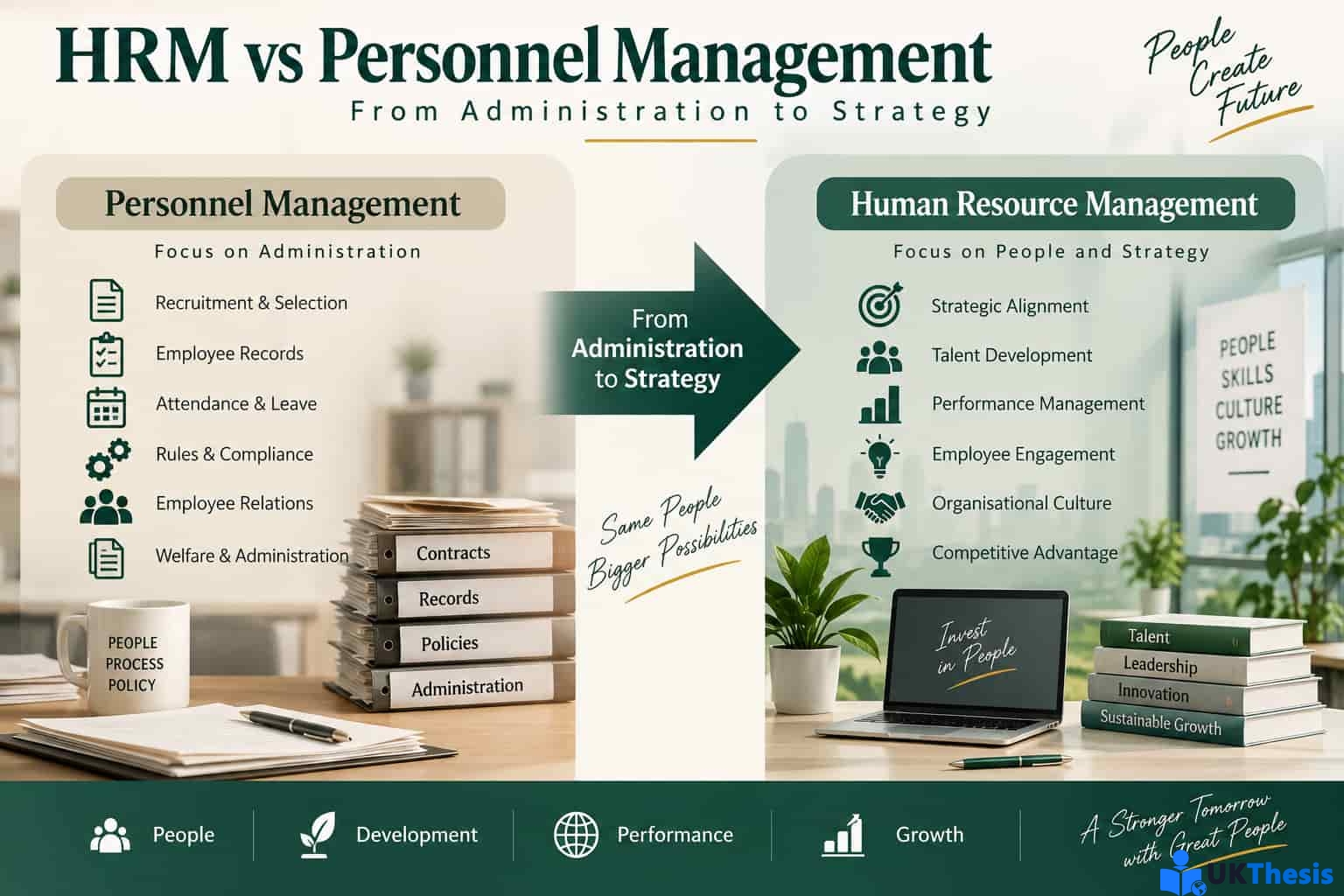
| Dimension | Personnel Management | Human Resource Management |
|---|---|---|
| Orientation | Administrative / operational | More strategic |
| People | Employees to be administered | Potential source of competitive advantage |
| Business Strategy | More separated | Strong strategic integration |
| Employee Relations | Greater emphasis on collective relations | Greater emphasis on direct employee relationship |
| Development | Training as personnel activity | Capability development linked to strategy |
| Responsibility | Personnel specialists | HR specialists plus line/senior managers |
不过这个表格只是帮助理解,不应该把它当成绝对边界。
现实Organisation里的Personnel Management和HRM经常有大量Overlap。
HRM in Practice:名字变了,实际工作也变了吗?
理论说完以后,最麻烦的问题来了:现实真的按照教科书发展了吗?
一些研究发现,HR Managers确实比传统Personnel Managers更容易参与Strategic Management和Business Planning,而且HR Function也更可能向Line Managers进行Authority Devolution。
但这并不代表每一家把部门名字从Personnel改成HR的Organisation,都自动实现了Strategic HRM。
我觉得这是写这类Essay特别值得抓住的一点:
Changing the label is easy. Changing the management philosophy is much harder.
如果Organisation仍然把HR Department当作只负责合同、请假、招聘和处理Employee Problems的后台部门,那么即使门口写着“Human Resources”,实际Practice也可能仍然非常接近传统Personnel Management。
写HRM vs Personnel Management Essay,最容易出现什么问题?
第一,把文章写成两个Definition。
左边定义HRM,右边定义PM,然后直接Conclusion。这只能算Description。
第二,Soft HRM等于“对员工好”,Hard HRM等于“压榨员工”。
这种理解太简单。Hard HRM真正强调的是Resources、Planning、Measurement以及Strategic Business Needs。
第三,忘记Strategic Integration。
这是解释HRM为什么可能不同于传统Personnel Management的重要理论切入口。
第四,只写Difference,不写Similarity。
HRM继承了Recruitment、Training、Reward、Performance Management等大量Personnel Management Practice,所以Similarity本身就是争论的重要组成部分。
第五,一定要给出“谁绝对正确”的答案。
这个题目的价值恰恰在于Debate。不同Organisation可能同时出现HRM与PM特征。
如果碰到HRM Essay或HRM assignment,题目里同时出现Strategic HRM、Soft HRM、Hard HRM、Employee Relations等多个Concept,真正困难的通常不是资料找不到,而是Theory之间不知道怎样建立逻辑。通过留学生论文辅导或Assignment写作指导先拆清Question、Assessment Criteria和Argument,再决定使用哪些理论,通常比把所有HRM模型全部塞进正文更有效。
FAQ
Q1:HRM和Personnel Management是一样的吗?
两者存在大量相似的People Management Functions,但HRM通常更强调Strategic Integration、Employee Commitment以及People作为Organisational Capability的作用,因此不能简单认为完全相同。
Q2:Soft HRM和Hard HRM最大的区别是什么?
Hard HRM更强调Employees作为Resources以及Performance、Planning和Business Objectives;Soft HRM更强调Employees作为Valued Assets,以及Trust、Development、Communication和Commitment。
Q3:HRM是不是“old wine in a new bottle”?
这是HRM研究中的经典争论。HRM继承了Personnel Management的大量Functions,但Strategic Integration、Employee Commitment以及People与Competitive Advantage之间的联系又体现出新的Management Emphasis,因此很难用简单的Yes或No回答。
Q4:HRM Essay可以同时讨论Soft和Hard Model吗?
可以,而且两者的Comparison非常适合形成Critical Discussion。关键不是简单判断哪个更好,而是分析不同Management Philosophy如何影响Employees与Organisational Performance。
Q5:HRM vs Personnel Management属于Essay还是Assignment?
这种理论比较题非常适合HRM Essay,也常出现在Human Resource Management Assignment中。它通常不属于Dissertation、Methodology或Business case study。
相关阅读
International HRM Assignment:Cross-Cultural Training与海外员工管理
Organizational Culture Assignment:企业文化与员工表现案例
Conclusion:到底是不是“新瓶装旧酒”?
Human Resource Management显然不是凭空出现的。Recruitment、Selection、Training、Reward以及Employee Relations等Function,都能在Personnel Management中找到历史基础。
从这个角度说,把HRM理解成Personnel Management的发展而不是彻底断裂,是有道理的。
但HRM又不仅仅是换了一个Fashionable Label。Strategic Integration、Employee Commitment、Organisational Culture、Human Capital以及People与Competitive Advantage之间的联系,让Managing People逐渐进入Business Strategy的核心讨论。
Soft HRM和Hard HRM进一步说明,HRM本身也不存在唯一的Management Philosophy。一家公司可能同时强调Employee Development和Performance Measurement,也可能同时具有传统Personnel Management和Strategic HRM的特征。
所以,“HRM和Personnel Management到底有没有区别?”可能本来就不应该期待一个特别干脆的答案。
Managing People一直在变化。名称会变化,Management Tools会变化,Organisation面对的Employee Expectations也会变化。真正值得分析的,不是门口究竟挂着Personnel还是HR的牌子,而是Organisation究竟如何看待People,以及怎样把People Management真正放进Business Strategy之中。
```