McDonald’s PESTEL Analysis|商业环境、利益相关者与增长障碍案例

案例导读:本文是一篇Business Environment与Strategic Management案例,以McDonald’s为研究对象,重点讨论大型快餐企业在全球经营过程中可能面对的Growth Barriers,包括消费者偏好变化、员工与Stakeholder关系、竞争、供应链、监管、健康议题、技术和环境压力。原始案例中的部分企业数据和市场描述来自较早时期,因此本文更适合用于学习PESTEL、Stakeholder Analysis和Business Environment的分析逻辑,而不是作为McDonald’s当前经营数据。
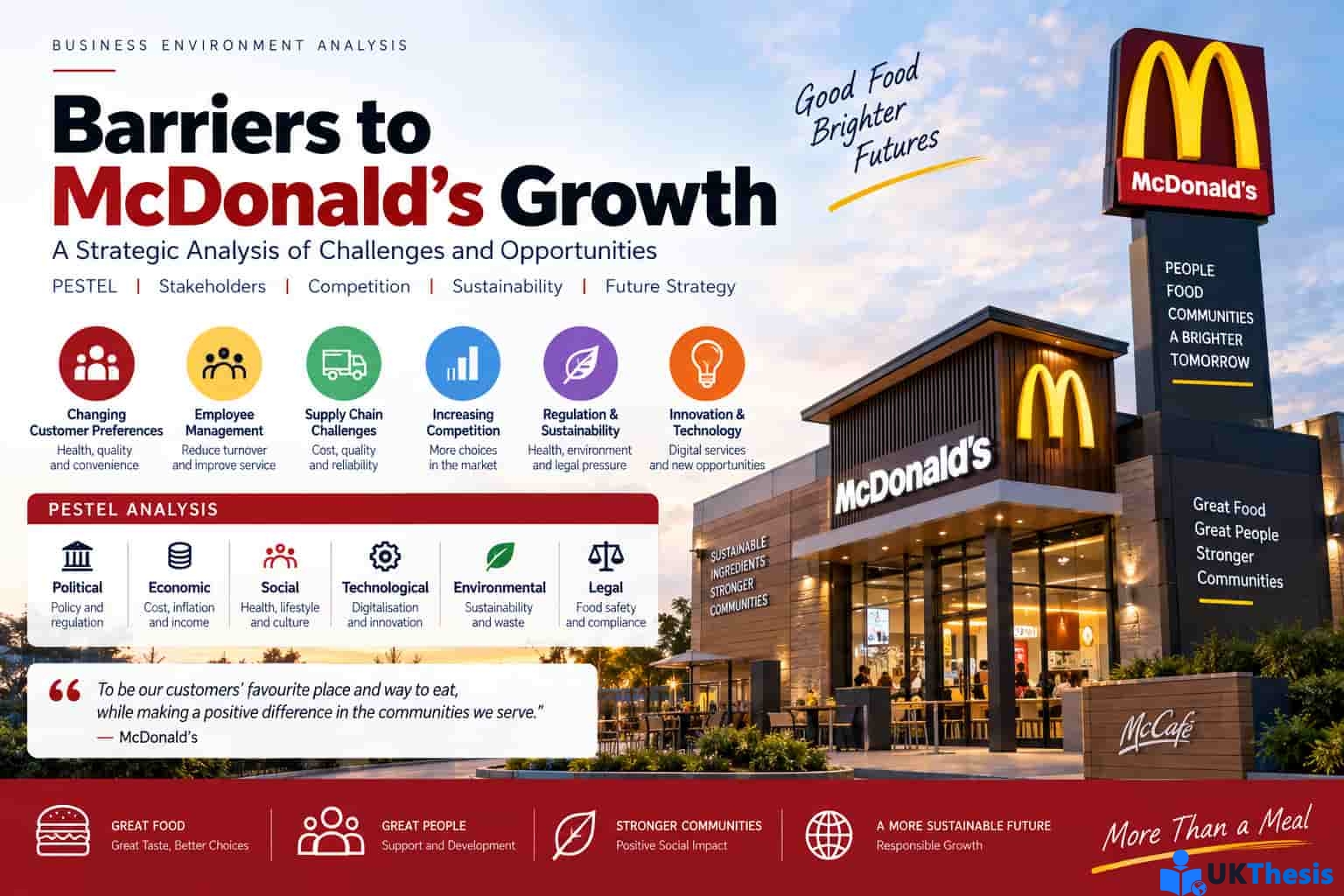
McDonald’s是一个很适合做Business Environment assignment的案例。原因不是它“很有名”,而是这种全球化快餐企业同时受到Customer、Employee、Supplier、Government、Technology、Competition以及社会价值观的影响。
企业规模越大,并不代表增长越容易。相反,一个已经进入多个国家和市场的品牌,往往需要同时处理Standardisation和Local Adaptation、Cost和Quality、Growth和Sustainability之间的矛盾。
所以分析McDonald’s的Growth Barriers时,不能只问“为什么销量会上升或下降”,更应该进一步分析:哪些Internal和External Factors正在影响企业的长期Strategy?
1. McDonald’s的增长障碍到底来自哪里?
企业增长通常不会因为单一因素突然停止。尤其对大型跨国餐饮企业来说,Growth Barrier可能来自多个方向。
| Growth Barrier | 可能产生的影响 |
|---|---|
| Changing Customer PReferences | 消费者更加关注健康、营养、便利性和Product Choice |
| Competition | 其他Fast-food、Coffee、Delivery及Local Brands争夺Customer |
| Employee Issues | Recruitment、Training、Turnover会直接影响Service Quality |
| Regulation | Food Safety、Employment、Advertising及Environmental Rules增加经营要求 |
| Supply Chain | 质量、价格、冷链和稳定供应影响Restaurant Operations |
| Brand Reputation | Health、Environment及Social Responsibility议题可能影响Brand Perception |
这些因素往往互相联系。例如消费者更重视健康,可能推动Menu Innovation;但新产品又会影响Supplier、Cost、Kitchen Process和Marketing。
2. Customer Preference变化为什么会影响Growth?
快餐行业一个长期挑战,是Customer Preference不会一直停留在原来的状态。
消费者除了关心Price和Convenience,也可能越来越在意:
Nutrition Information
Product Variety
Food Quality
Dietary Preference
Convenience
Digital Ordering
Sustainability
如果企业仍然只依赖过去成功的Product和Marketing方式,就可能出现Strategy和Customer Demand之间的Gap。
对于McDonald’s这类大型连锁企业来说,挑战还在于不同国家的Customer并不完全一样。
一个Market接受的产品,在另一个Market可能受到Culture、Religion或Dietary Habit影响。因此Global Brand需要保持一定Standardisation,同时进行Local Adaptation。
3. Employee为什么也是Growth Barrier?
Fast-food Business高度依赖Front-line Employees。
Customer最终接触到的并不是Head Office制定的Strategy,而是Restaurant里的员工、Service Speed、Cleanliness以及Order Accuracy。
如果Employee Turnover过高,企业可能不断面对:
Recruitment Cost;
Training Cost;
Experience Loss;
Service Quality波动;
Employee Morale问题。
这也是为什么Internal Environment不能被忽视。
这里与HRM页面的区别:
本页不详细分析Recruitment、Training Model或Performance Management,而只是把Employee作为影响Business Growth和Service Performance的内部因素。详细HRM内容应由McDonald’s Human Resource Management页面承担。
4. Stakeholders到底有哪些?
McDonald’s这样的企业不只需要面对Customers。
重要Stakeholders可能包括:
| Stakeholder | 主要关注 |
|---|---|
| Customers | Price、Quality、Convenience、Food Safety与Experience |
| Employees | Pay、Training、Working Conditions与Career Development |
| Franchisees | Profitability、Operating Standards及Corporate Support |
| Suppliers | 长期合作、采购要求、Quality和Cost |
| Government | Food、Employment、Tax及Environmental Compliance |
| Communities | Employment、Environment和Social Responsibility |
不同Stakeholder的利益并不总是一致。
例如Customer希望Price更低,Employee希望Pay更高,Franchisee希望Margin更高,而Supplier也需要保持自己的Profitability。
Strategic Management真正困难的地方,往往不是找到一个“所有人都满意”的方案,而是在不同利益之间找到可以持续的平衡。
5. Supplier和Distribution为什么会限制Growth?
大型快餐企业需要稳定、标准化的Supply Chain。
一个Restaurant每天能否正常运行,很大程度取决于Raw Materials、Packaging、Cold Chain、Inventory和Distribution是否稳定。
供应链通常需要同时做到:
Quality + Food Safety + Cost Control + Reliable Delivery
如果只追求最低采购价格,却导致Quality不稳定,Brand Reputation可能受到影响;如果质量非常高但Cost失去控制,又可能削弱Price Competitiveness。
Distribution Centre也不是单纯的Storage Location,它还可能承担Procurement、Inspection、Inventory Management、Order Fulfilment以及Cold-chain Control等功能。
6. Competition:Growth并不只看Burger King
原案例把Burger King视为主要Competitor之一,这个思路可以保留,但不应该把Competition理解得太窄。
消费者决定“今天吃什么”时,并不会只在McDonald’s和Burger King之间二选一。
Competitive Pressure还可能来自:
其他Fast-food Brands;
Coffee Chains;
Local Restaurants;
Convenience Stores;
Food Delivery Platforms;
Health-oriented Food Brands。
因此Strategic Analysis真正应该讨论的,是Customer有哪些Alternative,以及这些Alternative为什么可能吸走Demand。
7. PESTEL:Political Factors
Political Factors主要关注Government Policy和Political Environment怎样影响Business。
对于Fast-food Industry来说,可能包括:
Food Policy;
Public Health Regulation;
Employment Policy;
Trade Rules;
Agricultural Policy;
Franchise Regulation。
跨国经营会进一步增加复杂性,因为不同国家的Regulatory Environment并不一样。
因此Global Strategy不能简单复制一个Market的Operating Model到所有地区。
8. Economic Factors
Economic Environment会直接影响Restaurant Cost和Customer Spending。
比较重要的因素可能包括:
| Economic Factor | 可能影响 |
|---|---|
| Inflation | Food、Labour、Energy和Packaging成本上涨 |
| Disposable Income | 影响Customer Frequency和Average Spend |
| Exchange Rate | 影响进口原料、Equipment以及International Cost |
| Interest Rate | 影响Investment和Financing Cost |
Value Pricing在Economic Pressure较大的时期可能更加重要,但Price下降又必须和Margin保持平衡。
9. Social Factors:Health和Lifestyle变化
Social Environment可能是快餐行业非常重要的一部分。
消费者生活方式和价值观发生变化以后,企业也需要调整。
常见Social因素包括:
Health Awareness;
Dietary Preference;
Family Lifestyle;
Working Pattern;
Convenience需求;
Culture与Religion。
健康饮食讨论尤其容易影响Fast-food Brand。
但Assignment里不要简单写成:
“Fast food不健康,所以McDonald’s有风险。”
更好的分析是进一步讨论:
这种Social Trend会不会改变Menu?
会不会改变Marketing Communication?
会不会增加Nutrition Information需求?
会不会影响Brand Positioning?
这才是PESTEL从“描述现象”变成“战略分析”的关键。
10. Technological Factors
Technology对Restaurant Business的影响远不只是“提供Wi-Fi”。
Technology可能影响:
POS Systems
Mobile Ordering
Digital Payment
Inventory Management
Kitchen Automation
Customer Data
Delivery Integration
Supply Chain Visibility
技术投资可能提高Efficiency和Customer Convenience,但也意味着Capital Investment、Cybersecurity以及Employee Training等新问题。
因此Technological Factor既可能是Opportunity,也可能成为Cost和Implementation Risk。
11. Environmental Factors
Environmental Pressure已经成为很多Consumer-facing Business必须考虑的问题。
Fast-food企业尤其可能面对:
Packaging Waste;
Energy Consumption;
Food Waste;
Transportation Emissions;
Sustainable Sourcing。
Environment不应该被写成一句“企业应该保护环境”。
更值得分析的是:Environmental Requirements会怎样改变Packaging、Supply Chain、Restaurant Operations和Cost Structure。
12. Legal Factors
Legal Environment会直接决定企业“可以怎么做”。
Fast-food企业需要考虑:
Food Safety Law;
Employment Law;
Health and Safety;
Advertising Rules;
Consumer Protection;
Tax;
Franchise Agreement;
Data Protection。
对于Global Business来说,最大的难点是不同国家要求不完全一样。
所以Legal Compliance本身就可能增加Expansion Cost和Management Complexity。
13. 六个PESTEL因素中,哪个最重要?
PESTEL并不是六个标题平均写600字。
对于McDonald’s这类Fast-food企业,不同Market的重要因素可能完全不同。
| PESTEL | 与Growth的主要连接 |
|---|---|
| Political | Government Policy与International Expansion |
| Economic | Cost、Pricing与Customer Spending |
| Social | Health、Culture、Lifestyle与Demand |
| Technological | Digital Ordering、Efficiency与Customer Experience |
| Environmental | Packaging、Waste与Sustainable Supply Chain |
| Legal | Food、Employment和Advertising Compliance |
真正高质量的Assignment应该根据Case Evidence判断哪些Factors最关键,而不是把六个部分写得完全一样长。
14. McDonald’s应该怎样回应Growth Barriers?
结合前面的分析,企业的Response不能只写一句“继续Innovation”。
更具体的思路可以包括:
Customer:持续观察Health、Convenience和Local Preference变化;
Employee:减少Service Quality因Turnover和Training不足产生的波动;
Supply Chain:维持Food Safety、Quality和Reliable Delivery,同时控制Cost;
Technology:让Digital Investment真正改善Order Experience和Operational Efficiency;
Sustainability:把Packaging、Waste和Sourcing纳入长期Operations Strategy;
Local Adaptation:Global Brand Standard不能完全取代不同Market的Culture和Regulation。
McDonald’s Business Environment常见问题 FAQ
Q:这篇属于Marketing essay还是Strategic Management Assignment?
更准确地说属于Business Environment或Strategic Management case study。虽然涉及Customer和Marketing,但核心问题是企业怎样受到Internal、Stakeholder和PESTEL Factors影响。
Q:PESTEL和SWOT有什么区别?
PESTEL主要分析企业无法直接控制的External Macro Environment;SWOT则同时总结内部Strengths、Weaknesses和外部Opportunities、Threats。
Q:McDonald’s的Marketing Mix需要在这里详细写吗?
没有必要。本页重点是Growth Barriers和Business Environment。如果Assignment专门要求4Ps或7Ps,应单独围绕Product、Price、Place和Promotion分析,否则会让页面主题再次变散。
Q:Stakeholder Analysis属于External Analysis吗?
Stakeholders可能来自企业内部或外部,例如Employees属于Internal Stakeholder,而Customers、Suppliers和Government通常属于External Stakeholders。因此最好根据具体关系分析,而不是机械归类。
Q:旧McDonald’s案例还能参考吗?
可以用于学习Framework、Essay Structure和Case Analysis,但涉及Restaurant数量、Supplier数字、旧Campaign、历史价格和市场数据时,应当视为历史材料,当前作业需要重新核对最新资料。
案例总结:
McDonald’s的Growth Barriers并不是一个单一的“竞争问题”。Customer Preference、Employee、Supplier、Competition、Technology、Regulation和Sustainability会共同改变企业的Growth Environment。PESTEL真正的价值,也不是把六个定义背出来,而是解释这些变化怎样影响Business Decision。
如果在Business Environment Assignment、PESTEL Analysis、Strategic Management Case Study或者Stakeholder Analysis方面遇到困难,可以结合Assignment Brief、Learning Outcomes和Marking Criteria进行针对性的论文辅导或论文代写相关咨询。选择Framework时应围绕题目真正要求回答的问题,而不是把所有商科模型全部堆进一篇文章。
本站相关阅读:
PESTEL Analysis专题:六大宏观环境因素与案例分析
McDonald’s Human Resource Management:员工、培训与HR Strategy案例
McDonald’s国际营销与Franchising案例分析
Marketing Mix怎么分析?4Ps与7Ps案例写作指南