Planned Preventative Maintenance Essay范文:Building Maintenance与Estate Planning分析

Planned Preventative Maintenance听起来很简单:东西坏掉以前先修,不就行了吗?但真正放进Facilities Management或Property Management assignment里,事情没有这么轻松。
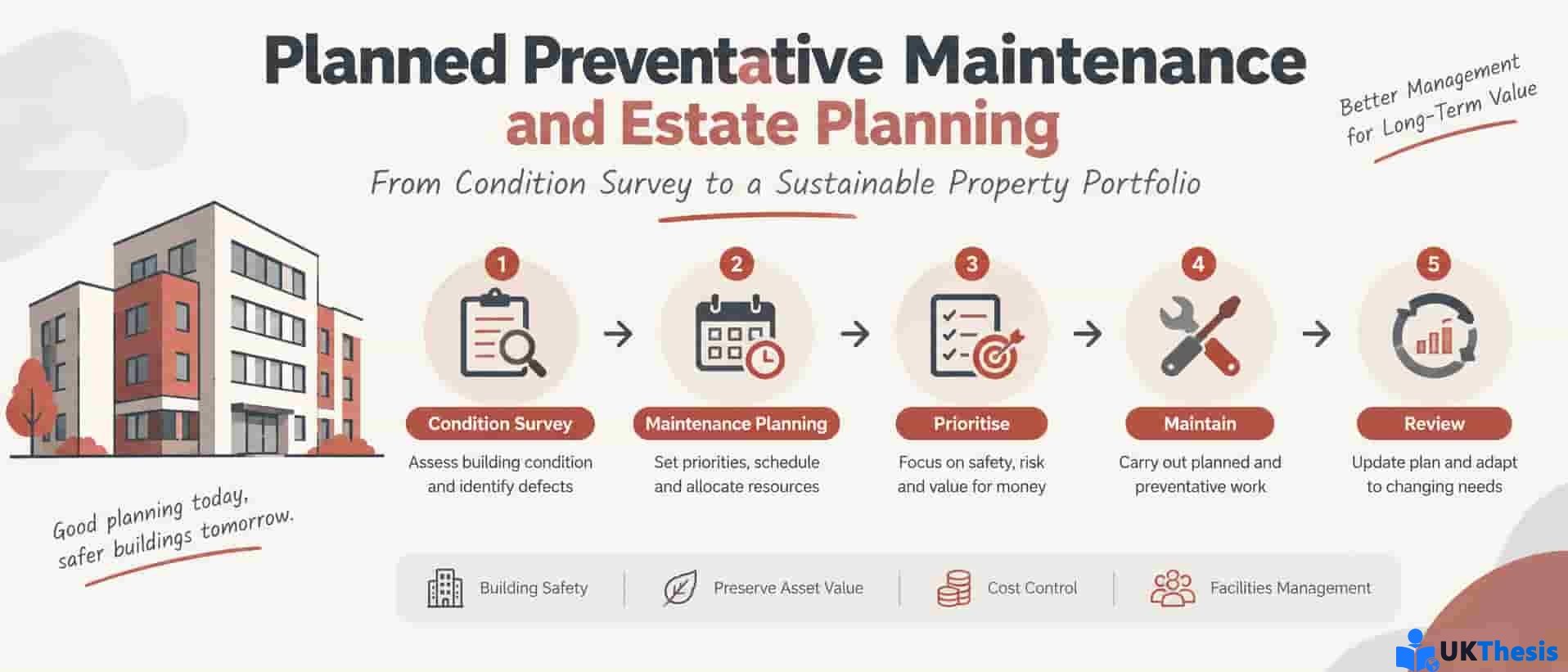
管理者首先要知道Building现在是什么Condition,哪些Defects最紧急,哪些Maintenance可以延后,未来需要多少Budget,以及提前维修的Cost是否真的低于Failure以后再Repair的Cost。
下面这篇Planned Preventative Maintenance essay以Strategic Estate Planning为背景,从Condition Survey、Maintenance Planning、Preventive Maintenance、Resource Allocation和Facilities Management几个方面讨论怎样建立合理的Building Maintenance Programme。
| 核心概念 | 在Maintenance Management中的作用 |
|---|---|
| Condition Survey | 判断Building Condition与Maintenance Needs |
| Planned Maintenance | 提前安排Inspection、Repair和Replacement |
| Preventative Maintenance | 在Failure之前采取Maintenance Action |
| Estate Planning | 协调Property Portfolio、Priority与Long-term Investment |
| Facilities Management | 把Maintenance与Finance、Operations和Asset Decisions结合 |
Condition Survey为什么是Maintenance Planning的起点?
In order to understand the implementation of a planned preventative maintenance programme for estate planning, it is first necessary to understand the role of condition surveys.
Historically, one problem inBuilding Maintenance Management was estimatingMaintenance Expenditure without having sufficiently detailed information about the actual condition of theProperty Portfolio.
A Condition Survey provides a more systematic way of identifying defects, assessingBuilding Condition and estimating futureMaintenance Requirements.
但Condition Survey的意义不能只理解成:
“今年到底要申请多少维修预算?”
它还应该帮助Maintenance Manager回答:
Which defects require immediate attention?
Which components are likely to fail?
Which work can be postponed?
What should be repaired or replaced?
How should limited resources be prioritised?
所以Condition Survey实际上是从Building Information → Maintenance Decision之间的一座桥。
为什么很多Organisation不愿意做Comprehensive Condition Survey?
The first major obstacle is cost.
A comprehensive survey of a largeProperty Portfolio requires time, specialist knowledge and financial resources. IfBuilding Records are incomplete, the initial survey may become even more difficult.
这就形成一个挺现实的矛盾:
Condition Survey Costs Money
↓
But Poor Information Can Lead to Poor Maintenance Decisions
↓
Poor Decisions May Cost Even More
因此,判断Condition Survey值不值得做,不能只看Survey Fee,还应该考虑Poor Maintenance Decisions可能带来的Failure、Disruption以及Consequential Damage。
Maintenance Planning和普通Project Planning有什么共同点?
The process of planning maintenance work has much in common with the planning of other construction activities.
Planning begins withObjectives。简单的Maintenance Plan可能只是在Calendar里安排Inspection和Decoration;复杂的Property Portfolio则可能需要Computer-based Management Systems、Condition Data和Long-term Programmes。
无论工具复杂还是简单,最先应该回答的都不是“用什么Software”,而是:
What is this maintenance programme actually trying to achieve?
如果Objectives没有定义清楚,Programme做得越复杂,反而越容易变成Bureaucratic Exercise。
Planned Maintenance是不是越多越好?
不是。
这是原Essay里面一个很值得留下的观点。
Within any maintenance organisation there will normally be both planned and unplanned work. The appropriate balance depends on the nature of the organisation, the buildings being managed and the consequences of failure.
例如,一个Estate只有一栋结构比较简单的Building,Owner可能完全没必要建立昂贵复杂的Maintenance Management System。
他可以选择:
出现问题以后进行Reactive Maintenance;
只对明显可以预测的工作进行Planning;
例如每隔几年进行Redecoration。
所以:
More Planned Maintenance ≠ Automatically Better Maintenance Management
真正应该比较的是Cost、Risk、Building Complexity和Consequences of Failure。
哪些Maintenance比较适合提前Planning?
原文把比较容易规划的Maintenance Work大致分成两种。
1. Cyclical Maintenance
Some operations occur regularly and can therefore become part of a rolling maintenance programme.
例如:
Decoration;
Routine Inspection;
Servicing;
Cleaning and Treatment;
Scheduled Component Checks。
2. Major Renewal or Repair
Some major components eventually require renewal or substantial repair. For example, a housing association may decide to replace flat roof coverings across a group of properties over a defined period.
这种工作就进入了Preventative Maintenance最有意思的问题:
Should the component be replaced before it fails?
Preventative Maintenance:为什么不等坏了再修?
Imagine a flat roof that is approaching the end of its expected service life.
一种选择是继续使用,等Leak或Failure发生以后再Repair。
另一种选择是在Failure之前安排Replacement。
第二种方法表面上看起来“明明还没坏就花钱”,但Maintenance Manager需要考虑的不只是Replacement Cost。
| Wait Until Failure | Preventative Replacement |
|---|---|
| 延迟Immediate Cost | 提前产生Maintenance Cost |
| 存在Unexpected Failure Risk | Work可以提前Scheduling |
| 可能产生Water Damage等Consequential Damage | 降低Secondary Damage Risk |
| Emergency Repair可能干扰Operations | 可以选择影响较小的时间施工 |
所以Preventative Maintenance的核心不是“提前维修一定更便宜”,而是:
Does the cost of preventing failure justify the reduction in risk, disruption and consequential damage?
Planned Preventative Maintenance Programme有哪些Objectives?
Strategic Estate Planning中的Maintenance Programme可能有很多不同目标。比较典型的包括:
| Objective | Management Purpose |
|---|---|
| Safety & Compliance | 保持Building处于Safe和Legally Acceptable Condition |
| Prevent Deterioration | 避免Building Fabric与Services过度恶化 |
| Preserve Asset Value | 维持Estate作为Asset的Utility与Value |
| Building Services | 保持Engineering与Utility Services正常运行 |
| Priority Planning | 让Maintenance按照合理Priority和Sequence进行 |
| Value for Money | 更有效地使用Limited Resources |
| Financial Management | 支持Budget Control与Funding Decisions |
| Facilities Management | 协调Repair、Refurbishment、Redevelopment和其他Asset Decisions |
Maintenance Priority怎么确定?
Property Portfolio的Maintenance Budget几乎永远不是无限的。
所以Condition Survey完成以后,真正困难的部分才刚开始:
Which work should be done first?
一个简单的Priority Logic可以考虑:
Safety → Legal Compliance → Failure Risk → Operational Impact → Asset Deterioration → Cost Efficiency
例如涉及Safety或者Statutory Requirement的Defect,通常应该比单纯影响Appearance的问题拥有更高Priority。
而对于不会立即影响Safety的Maintenance,则可以进一步比较Failure Probability、Consequential Damage和Cost。
Facilities Management为什么不能只看Maintenance?
在更大的Facilities Management Framework中,Maintenance并不是孤立决策。
管理者有时候面对的真正问题不是:
“Should we repair this building?”
而是:
Repair?
Refurbish?
Redevelop?
Replace?
Dispose?
Change the leasing strategy?
如果一栋Building已经接近Functional Obsolescence,即使继续Maintenance在技术上可行,也不代表这是Strategically Best Option。
所以Planned Preventative Maintenance最终应该服务于Estate Strategy,而不是为了“完成Maintenance Programme”而Maintenance。
为什么Long-term Maintenance Programme必须保留Flexibility?
The characteristics of maintenance work make accurate and comprehensive long-term prediction difficult.
Building Condition会变化,Usage会变化,Budget会变化,一些Defects也可能比预测更早或者更晚出现。
因此Maintenance Programme不能写完以后锁进抽屉五年不动。
合理的Programme应该允许:
Periodic Review;
Condition Update;
Priority Adjustment;
Budget Revision;
Unexpected Work。
换句话说:
Plan → Inspect → Update → Re-prioritise → Maintain → Review
学姐提醒:写Preventative Maintenance Essay千万别把结论写成“preventive maintenance is always better than reactive maintenance”。老师看到这种绝对句通常不会特别兴奋。一个简单Building可能根本不值得配置复杂系统;一个Failure Consequence很低的Component也可能适合Run-to-Failure。真正值得分析的是:什么时候提前维护值得,什么时候不值得,以及你用什么Evidence作出这个Decision。
Conclusion
Planned Preventative Maintenance is an important part of strategic estate and facilities management, but its effectiveness depends on the quality of information and the clarity of management objectives.
Condition surveys can provide the information required to identify defects, estimate maintenance needs and prioritise limited resources. However, comprehensive surveys and sophisticated maintenance systems also involve cost, and they should therefore be appropriate to the size, complexity and risk profile of the estate.
A successful maintenance programme should balance planned and unplanned work, consider the consequences of failure, protect building condition and asset value, support financial management and remain flexible enough to respond to changing circumstances.
The purpose of preventative maintenance is therefore not simply to maximise the amount of planned work. It is to use available information and resources to make better long-term decisions about the performance, condition and value of the property portfolio.
FAQ
Q1:Planned Preventative Maintenance是什么意思?
指在Building Component发生Failure之前,根据Inspection、Condition、Time或Risk提前安排Maintenance或Replacement。
Q2:Preventative Maintenance和Reactive Maintenance有什么区别?
Preventative Maintenance强调Failure之前采取Action;Reactive Maintenance通常是在Defect或Failure出现以后再Repair。
Q3:Condition Survey为什么重要?
因为Maintenance Manager需要先知道Building Condition和Defects,才能合理估算Budget、Priority与Future Maintenance Requirements。
Q4:Planned Maintenance一定比Reactive Maintenance好吗?
不一定。需要根据Building Complexity、Failure Risk、Consequential Damage以及Maintenance Cost判断。
Q5:这篇属于Project Management Essay吗?
可以归入广义Project/Construction Management,但更准确的学术定位是Facilities Management、Building Maintenance与Property/Estate Management。
Q6:Preventative Maintenance怎样帮助Budget Control?
通过Condition Information和Long-term Planning,Management可以更早预测Maintenance Expenditure,并根据Priority分配有限资金。
Q7:Maintenance Programme为什么需要定期Update?
因为Building Condition、Budget、Usage和Failure Risk都会发生变化,长期Programme必须保留调整空间。
Q8:Facilities Management Assignment不知道怎样搭结构怎么办?
可以从Condition Assessment、Maintenance Strategy、Risk、Cost、Priority和Asset Management几个方向建立Argument。如果在Outline、Critical Analysis或英文表达方面比较乱,也可以通过UKThesis的Assignment写作辅导梳理文章结构。
相关阅读
Essay Outline怎么写?从Assignment Brief到Essay大纲