Tracks vs Into the Wild Essay范文:自然、成长与Self-Discovery分析

有些essay题目看起来像是在写“个人成长”,但真正写起来并不是Personal Statement,也不是单纯讲自己的经历。比如Robyn Davidson的Tracks和Sean Penn的Into the Wild,都在讨论人离开熟悉社会以后,如何在自然环境里重新理解自己。
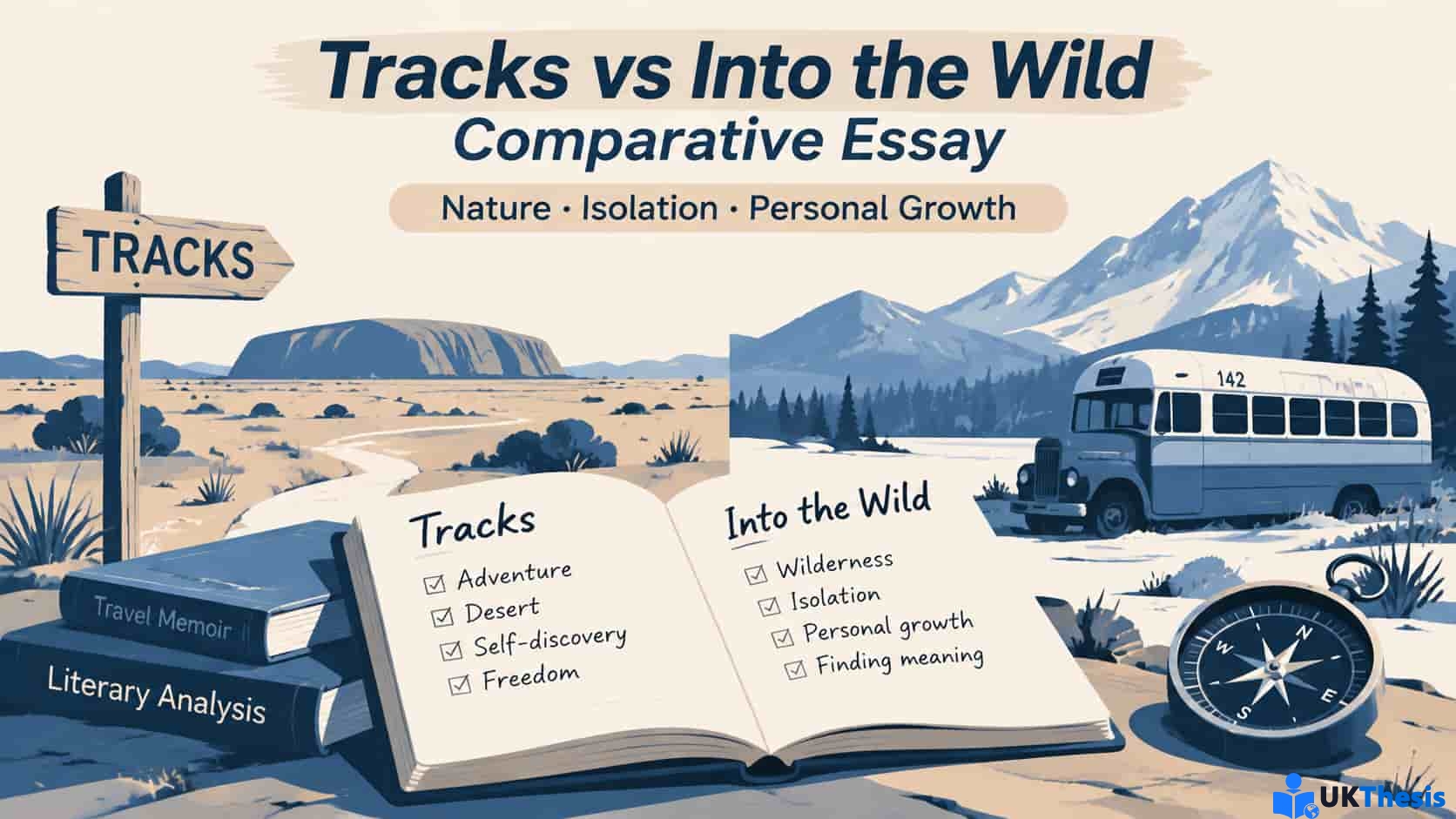
这种题目更接近Comparative Literary Essay或者Analytical Essay。你需要比较两部作品怎样表现nature、alienation、freedom、personal growth和self-discovery,同时分析作者或导演使用了哪些叙事和视觉手法。
Tracks与Into the Wild为什么适合做Comparative Essay?
Robyn Davidson’s Tracks and Sean Penn’s Into the Wild both present the natural world as a space where individuals attempt to escape social expectations and discover a different way of living.
However, the two protagonists do not experience nature in exactly the same way. Christopher McCandless approaches the wilderness with a strongly idealised and romantic view, while Davidson gradually learns to respect its danger, unpredictability and complexity.
| 比较角度 | Tracks | Into the Wild |
|---|---|---|
| Nature | 逐渐学习适应与尊重自然 | 最初高度理想化自然 |
| Personal Growth | 通过经验与学习逐渐成熟 | 成长伴随着孤立与悲剧 |
| Society | 逃离社会但仍与人建立联系 | 更强烈地拒绝社会与关系 |
| Self-Discovery | 学习适应、妥协和接受现实 | 最后才重新认识人与关系的重要性 |
Personal Growth and Environment in Tracks and Into the Wild
McCandless and Davidson both have romantic and idealised views of the natural world. Both protagonists experience alienation from their societies and reject expectations connected with class, lifestyle and identity. They see the natural environment as a sanctuary and an alternative to the pressures of modern society.
Robyn Davidson’s Tracks and Sean Penn’s Into the Wild present the natural world as a liberating space where individuals attempt to free themselves from social constraints. At the same time, both journeys demonstrate that wilderness can be emotionally powerful, unpredictable and potentially deadly.
While Davidson and McCandless both begin with idealised ideas about what the wilderness may offer, their experiences develop in different directions. The works ultimately question whether entering nature with romantic expectations but without sufficient understanding can truly lead to personal freedom.
Nature as Freedom and Escape
In the opening scenes of Into the Wild, Penn presents the relationship between man and nature as something almost sublime. Aerial shots and extreme long shots make McCandless appear very small in comparison with the surrounding landscape, highlighting the scale and power of the natural world.
McCandless sees nature as an escape from the civilisation he rejects. The journey becomes connected with freedom, independence and a desire to leave behind the expectations of family and society.
Davidson is also drawn to the vastness and purity of the Australian desert. However, her relationship with nature gradually becomes more practical. Rather than treating the wilderness only as a romantic ideal, she learns from the environment and from people who understand it better than she does.
This difference becomes important. McCandless often approaches nature as something that can confirm his personal philosophy, while Davidson increasingly accepts that survival depends on adaptation, knowledge and respect.
Learning from the Environment
Davidson’s willingness to recognise that she is still learning becomes one of the major differences between the two journeys. She seeks help and gradually becomes more attentive to the people and environments around her.
Her understanding of the natural world changes over time. The journey stops being only about escape and becomes a process of learning how to exist within an environment rather than simply moving through it.
McCandless, by comparison, remains much more committed to the idea of complete self-sufficiency. His view of wilderness is heavily influenced by literature and philosophical ideas about independence.
This gives his journey emotional power, but it also creates risk. The more he treats isolation as proof of personal freedom, the more difficult it becomes for him to respond to the practical demands of survival.
Nature as a Hostile Force
The natural environment eventually becomes threatening to both protagonists.
In Into the Wild, McCandless experiences moments in which nature no longer appears welcoming or liberating. His failure to preserve the moose, the difficulty of crossing the Teklanika River and the increasing effects of hunger and isolation all challenge his belief in complete self-reliance.
The Magic Bus, which once symbolised independence and spiritual freedom, gradually becomes a form of confinement.
Penn strengthens this shift through close-up shots and visual emphasis on McCandless’ physical decline. The wilderness that once appeared full of possibility becomes increasingly indifferent to his ambitions.
Davidson also experiences danger, exhaustion and disappointment. Her journey includes confrontation with wild camels, emotional isolation and the loss of Diggity.
However, Davidson reaches an important understanding earlier: nature does not exist simply to confirm her expectations. She learns that survival sometimes requires uncomfortable decisions and that her romantic ideas must adjust to reality.
Isolation and the Return of the Past
Both protagonists try to escape parts of their previous lives, but neither can completely leave the past behind.
McCandless’ dissatisfaction with family relationships contributes strongly to his desire for isolation. His journey becomes a way to reject both materialism and emotional conflict.
Davidson also attempts to escape expectations placed on her by society. Yet throughout her journey, relationships and earlier experiences continue to influence how she understands herself.
This is one reason the two works are interesting to compare. Isolation may create space for self-discovery, but it does not automatically erase the problems that existed before the journey began.
Communication with Nature
For both Davidson and McCandless, moments of connection with nature produce profound joy.
McCandless’ belief in self-sufficiency is strongly influenced by literature. He sees a life stripped of conventional commitments as a way of achieving freedom.
Penn reinforces this idea visually through wide landscapes, close-up shots and panoramic camera movements that place McCandless inside an enormous natural environment.
Davidson also experiences moments of peace and connection. She describes nature as something capable of giving a sense of freedom and emotional clarity.
Yet Davidson’s development moves toward acceptance rather than conquest. She gradually abandons some of the routines and expectations that shaped her earlier life and becomes more willing to respond to the environment as it is.
两位主人公的成长有什么不同?
| 人物 | 最初状态 | 成长方向 |
|---|---|---|
| Robyn Davidson | 希望逃离社会期待 | 学习适应、接受帮助并尊重环境 |
| Christopher McCandless | 追求彻底自由与自给自足 | 在孤立中逐渐认识到关系的重要性 |
Davidson and McCandless both undergo significant personal transformation, but the outcomes of their journeys differ.
Davidson gradually learns how to live with uncertainty and adapt to the wilderness. Her journey becomes less about proving independence and more about understanding her place within a complex environment.
McCandless remains more attached to the idea that freedom requires separation from others. Only near the end of his journey does he reach one of the most important insights associated with the story: happiness may depend on human connection rather than complete isolation.
Conclusion
Both Tracks and Into the Wild explore the relationship between personal growth and environment.
Davidson and McCandless both attempt to escape the pressures of society and experience profound change through their journeys into the natural world. However, their different responses to danger, isolation and uncertainty lead to very different outcomes.
McCandless approaches the wilderness with a strong sense of idealism and self-reliance. His journey ultimately demonstrates the danger of treating nature as something that can be conquered through belief alone.
Davidson, in contrast, learns to adapt, seek knowledge and recognise the complexity of the environment around her. Her journey suggests that personal growth does not come from complete separation from others, but from learning how to respond to experience with greater awareness.
Together, the two works present nature as both liberating and dangerous, capable of inspiring personal transformation while also exposing the limits of romantic ideas about freedom and isolation.
这篇Comparative Essay可以学什么?
| 内容 | 写作作用 |
|---|---|
| Nature | 建立共同比较主题 |
| McCandless vs Davidson | 形成Contrast |
| Film techniques | 分析导演如何制造意义 |
| Literary description | 分析文本表达方式 |
| Personal Growth | 回到Essay核心论点 |
Comparative Essay最容易出现的问题,就是一段写A、下一段写B,写到最后像两篇文章拼在一起。
更好的写法是围绕同一个主题不断比较:两个人都怎样面对nature?他们为什么反应不同?导演和作者又怎样让读者看到这种差别?
这样才是真正的comparison,而不是两个summary并排放着。
FAQ
Tracks vs Into the Wild属于Personal Essay吗?
更准确地说,它属于Comparative Literary Essay或Analytical Essay。虽然讨论personal growth和individual experience,但作者分析的是文学、回忆录和电影作品,而不是自己的个人经历。
Comparative Essay一定要一段写一部作品吗?
不一定。很多情况下,围绕一个共同Theme同时讨论两部作品,会比先完整分析A再完整分析B更容易形成真正的comparison。
Into the Wild Essay可以分析哪些主题?
常见角度包括freedom、alienation、nature、family conflict、self-reliance、identity以及human connection。具体选哪些主题要根据Essay Question决定。
Literary Essay需要Thesis Statement吗?
通常需要。Thesis应该说明你对两部作品关系的核心判断,而不是只写“本文将比较Tracks和Into the Wild”。
这种比较Essay不会写怎么办?
可以先把assignment Question拆成Theme、Texts、Techniques和Comparison四部分,再整理两部作品中最相关的Evidence。如果结构比较乱,也可以通过Essay写作辅导先梳理Thesis和Paragraph Plan,再进入正文分析。
相关文章阅读
这类Literary Essay真正值得练的不是“把剧情讲完整”,而是学会抓住一个Theme不断比较两部作品。Plot Summary写得再详细,也不等于Analysis;真正拿分的部分通常还是:为什么这样写、用了什么Technique,以及这个Difference到底说明了什么。