Operations Management Case Study范文:VHRL运营管理与Transformation Process分析
Operations Management Case Study范文:VHRL运营管理与Transformation Process分析
Operations Management到底在管什么?
第一次接触运营管理的同学,经常会下意识觉得:Operations不就是“管生产”吗?如果案例研究的是制造企业,这么理解勉强还能混过去;可一旦案例换成Service Business、Human Resources Company或者Railway相关企业,就会发现事情没这么简单。
Operations Management真正关心的是:企业如何组织People、Information、Technology、Facilities和其他Resources,把各种Inputs转化成能够交付给Customer的Products或Services。
这篇Operations Management case study以VHRL为案例,重点分析企业内部Operations、Finance、Marketing和Human Resources等职能之间的关系,并进一步比较Classical Approach、Human Relations Approach、Systems Approach以及Contingency Approach。
如果你的assignment Question涉及Operations Management、Operational Efficiency、Transformation Process、Management Approaches,这篇范文的分析结构就比较值得参考。
一、先判断:VHRL属于什么类型的Case Study?
| 项目 | 范文定位 |
|---|---|
| Assignment Type | Case Study Assignment |
| Primary Subject | Operations Management |
| Secondary Subject | Business Management |
| 核心问题 | Operational Functions & Efficiency |
| 主要理论 | Classical / Human Relations / Systems / Contingency |
| 核心模型 | Input–Transformation–Output |
所以这篇并不是普通的“企业介绍型Case Study”。
真正的分析主线应该是:
Business Functions → Management Approaches → Transformation Process → Operational Efficiency → Management Decision-making
二、什么是Operations Management?
Operations Management可以理解为企业对生产和交付Products与Services所需Resources进行规划、组织、控制和改进的过程。
说得接地气一点:
企业拿到一堆人、钱、信息、设备和材料以后,到底怎么把它们变成客户愿意接受的Output?
这就是Operations Management非常核心的问题。
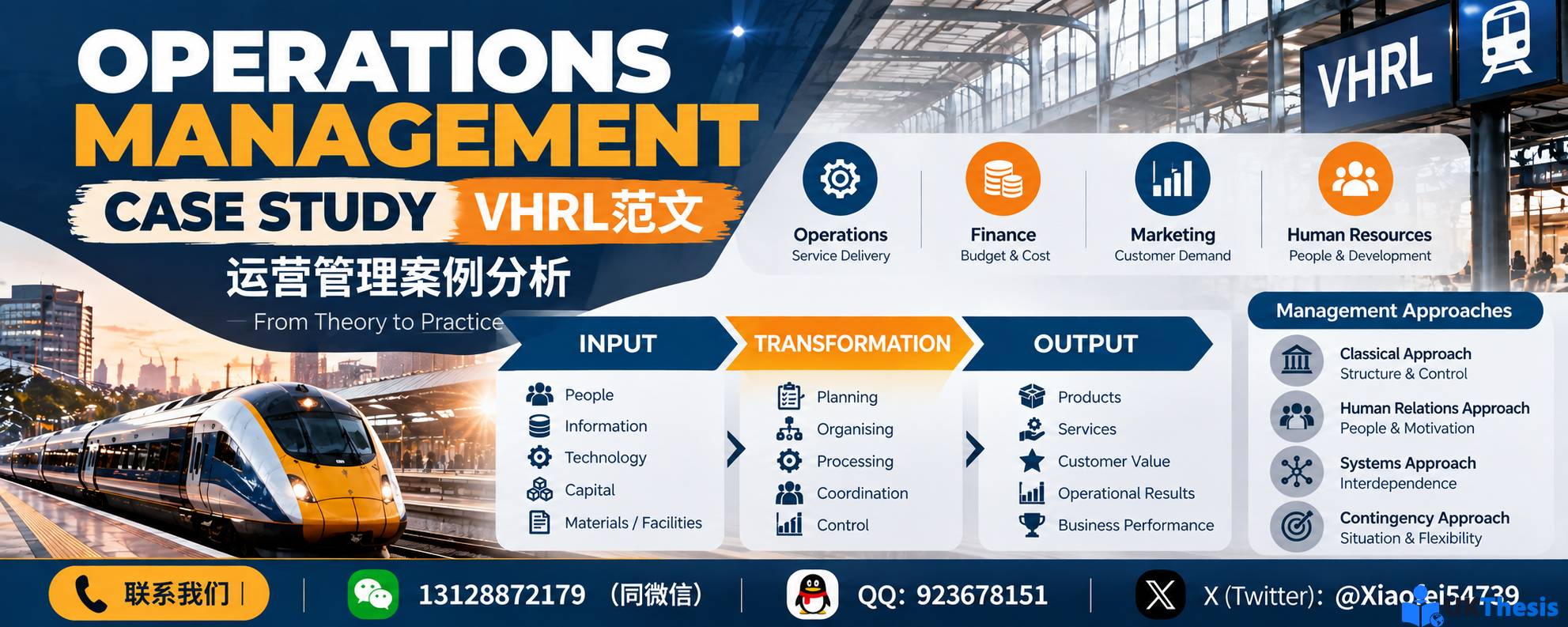
| Inputs | Transformation | Outputs |
|---|---|---|
| Employees | Planning Organising Processing Coordination Control | Products |
| Information | Services | |
| Technology | Customer Value | |
| Capital | Operational Results | |
| Materials / Facilities | Business Performance |
这个Input–Transformation–Output逻辑,也是后面理解VHRL Systems Approach的基础。
三、VHRL的Operations Manager到底负责什么?
在VHRL案例中,Operations Manager是日常Business Operations的重要管理角色。
其工作并不仅仅是“监督员工有没有上班”。
更完整地看,Operations Manager通常需要:
Planning operational activities;
Organising resources;
Monitoring employees and workflow;
Controlling operational performance;
Coordinating different business functions;
Ensuring resources contribute to organisational objectives。
所以Operations Manager更像一个“连接器”。
Finance算清楚钱,HR找到合适的人,Marketing找到Customer,但最终很多资源需要在Operations这一端被组织起来,才能真正形成Service Delivery。
四、VHRL四个Business Functions如何相互配合?
原案例中一个非常值得保留的知识点,就是VHRL并不是只有Operations一个部门,而是由多个Business Functions共同支持企业运行。
| Business Function | 主要职责 | 与Operations的关系 |
|---|---|---|
| Operations | Planning、Control、Resources、Service Delivery | 组织并执行核心业务活动 |
| Finance | Cash Flow、Budget、Capital Investment、Costs | 为运营提供财务约束和资源 |
| Marketing | Customer Needs、Communication、Sales | 把市场需求反馈给运营 |
| Human Resources | Recruitment、Training、Performance、Welfare | 提供能够完成运营任务的人力资源 |
这里最容易犯的错误就是把四个部门分别介绍一遍,然后结束。
Case Study真正应该分析的是:
这些Functions之间如何相互依赖?
五、Finance如何影响Operations?
Finance Manager负责的不只是“算账”。
Cash Flow、Capital Investment、Budget Planning以及Overhead Costs都会直接影响Operations能够使用多少Resources。
比如Operations Manager希望扩大Workforce或者购置新的Equipment,但是Finance认为Cash Flow不足,那么运营计划就必须重新调整。
因此可以形成一条非常清楚的Case Study逻辑:
Financial Resources → Operational Capacity → Service Delivery → Business Performance
这比简单写“Finance Department is important”有分析价值得多。
六、Marketing和Operations为什么不能各干各的?
Marketing负责了解Customer Needs、Market Demand以及Communication。
Operations则负责企业究竟能不能把承诺的Service真正交付出去。
假如Marketing非常豪迈地告诉客户:“没问题,明天全部交付!”
Operations Manager看了一眼People、Equipment和Schedule:“谁答应的?”
这就是为什么两个Functions必须协调。
Marketing产生的Demand Information需要进入Operations Planning,而Operations Capacity同样会限制Marketing能够向客户承诺什么。
七、Human Resources如何支持Operational Efficiency?
VHRL案例中的HR Manager涉及:
Recruitment、Training and Development、Performance Appraisal、Employee Feedback、Welfare以及Working Conditions。
这些工作表面属于HR,实际上都会影响Operational Performance。
| HR Activity | Operational Impact |
|---|---|
| Recruitment | 企业是否拥有足够人员完成任务 |
| Training | 影响Skills和Work Quality |
| Performance Management | 影响Productivity |
| Employee Welfare | 影响Motivation和Retention |
| Working Conditions | 影响Safety和Operational Reliability |
所以Operations Management从来不是Operations Department一个部门自己的事情。
八、Classical Approach:效率很重要,但人呢?
Classical Management Approach强调Formal Structure、Division of Labour、Hierarchy、Planning和Control。
这种方法最大的优势,是职责比较明确。
尤其对于Safety-sensitive Operations,如果每个人都临场自由发挥,现场可能会非常刺激——只不过这种刺激大概不是企业想要的。
因此在Railway等Operational Environment中,Clear Procedures、Authority和Responsibility具有实际价值。
但它的局限同样明显:
Communication可能过度Top-down;
Employee Participation有限;
Human Behaviour容易被忽视;
面对复杂变化时可能缺乏Flexibility。
这就是Case Study里的Critical Analysis:
不要简单说一个理论“好”或者“不好”,而要分析它在什么Operational Context下有效,又在哪里存在局限。
九、Human Relations Approach:员工不是机器零件
Human Relations Approach把注意力从Formal Structure进一步转向People。
它关注Employee Motivation、Social Relationships、Communication、Supervision以及Group Behaviour。
对于VHRL来说,这一点非常重要。
因为Operations最终仍然需要People执行。
如果员工缺乏Motivation、Communication不畅或者Management Relationship紧张,再漂亮的Operations Plan落到现场也可能变形。
因此Human Relations Approach能够帮助管理者认识到:
Operational Efficiency不仅来源于流程,也来源于人的Behaviour和Motivation。
十、Systems Approach:为什么它特别适合分析VHRL?
到了这里,这篇Operations Management Case Study开始真正有意思了。
Systems Approach并不把Finance、Marketing、HR和Operations看成互不相干的四个盒子。
它强调:
Organisation由多个相互依赖的Sub-systems组成。
某一个部分发生变化,很可能会影响其他部分。
例如:
Marketing Demand增加 → Operations需要扩大Capacity → HR需要增加Employees → Finance需要重新配置Budget。
你看,一个Customer Order就把四个部门串起来了。
十一、VHRL Transformation Process怎么分析?
Operations Management里非常重要的一个框架就是:
INPUT → TRANSFORMATION → OUTPUT
| Stage | VHRL Case Example |
|---|---|
| Input | Employees、Information、Capital、Equipment、Customer Requirements |
| Transformation | Planning、Coordination、Training、Operational Activities、Management Control |
| Output | Services、Customer Satisfaction、Operational Results、Revenue |
这个模型的价值就在于,它让我们不再孤立地分析某一个Manager。
而是问:
整个Organisation如何把Resources转化成Customer Value?
十二、Systems Approach有什么局限?
如果写到这里直接说“Therefore, the systems approach is the best”,Critical Analysis就又掉线了。
Systems Approach的确帮助Managers看到Departments之间的Interdependence,也避免把Business Problems孤立处理。
但是它比较宏观。
现实中的Manager还需要回答:
到底应该采用什么Leadership Style?资源不足怎么办?Technology发生变化怎么办?不同情况下是不是应该采用不同Management Structure?
这就自然引出了下一种理论。
十三、Contingency Approach:管理没有万能公式
Contingency Approach一个很重要的思想就是:
There is no single best way to manage every organisation.
换句话说,管理不是做数学题。
不能背下一条公式,然后所有Company、所有Employee、所有Business Environment都往里面套。
Management Decision需要考虑:
Technology;
Business Environment;
Workforce;
Organisational Structure;
Risk;
Specific Operational Situation。
因此在VHRL这样的案例里,Contingency Approach能够补充Systems Approach:
前者告诉我们不同部分彼此相关;后者提醒我们具体怎么管理取决于Situation。
十四、四种Management Approaches放在一起怎么比较?
| Approach | 关注重点 | 优势 | 局限 |
|---|---|---|---|
| Classical | Structure & Control | 职责明确、效率导向 | 容易忽略Human Factors |
| Human Relations | People & Motivation | 关注员工与沟通 | 可能低估Formal Structure |
| Systems | Interdependence | 整体分析Organisation | 比较宏观 |
| Contingency | Situation | Flexible & Context-specific | 实际决策可能更复杂 |
真正成熟的Case Study一般不会简单宣布:
“Approach A is better than all other approaches.”
更合理的分析应该是:
不同Approaches解释了Operations Management的不同维度,实际Management Practice可能需要综合使用。
十五、Ethics、Culture和CSR为什么也会影响Operations?
原VHRL案例还有一个值得保留的部分:企业运营并不是完全脱离Business Environment存在的。
Managers的Decision-making还可能受到:
Ethics、Corporate Values、Culture、Corporate Social Responsibility以及Sustainability影响。
尤其VHRL涉及Railway-related Operations,Safety显然不能只是墙上贴的一句Core Value。
它必须真正进入:
Employee Training、Operational Procedures、Risk Control以及Management Decision-making。
这也是Case Study里从“企业价值观”进一步走向“Operational Consequences”的关键。
十六、什么才叫Operational Efficiency?
Operational Efficiency不能简单理解成:
“少花钱、多干活。”
如果为了节约成本把Training全部取消、Employees压缩到极限,短期Cost可能下降,长期Safety、Quality和Service Reliability却可能一起出问题。
更合理的理解是:
在合理利用Resources的同时,提高Quality、Productivity、Reliability和Customer Value。
| Operational Objective | 需要关注 |
|---|---|
| Cost | Resource Utilisation |
| Quality | Service Standards |
| Speed | Process Efficiency |
| Dependability | Reliable Delivery |
| Flexibility | Ability to Respond to Change |
十七、Case Study范文:怎样从Description升级成Analysis?
普通描述
The operations manager is responsible for planning and controlling the operations of VHRL.
分析型表达
The role of the operations manager at VHRL extends beyond routine supervision because operational performance depends on the coordination of human, financial and informational resources. From a systems perspective, the operations function therefore acts as an integrating mechanism between HR, finance and marketing, enabling organisational inputs to be transformed into services delivered to customers.
前一句没有错。
但后面这段出现了:
Case Evidence + Theory + Relationship + Business Implication。
这才更接近Case Study Analysis。
十八、写Operations Management Case Study最常见的错误
| 常见问题 | 改进方式 |
|---|---|
| 逐个介绍Department | 分析Functions之间的Relationship |
| 大量介绍Theory | 把Theory真正应用到Case |
| 只讲Theory优势 | 同时讨论Limitations |
| 把Operations理解成生产 | 考虑Products与Services |
| Transformation Process只画图 | 解释Input如何形成Output |
| Conclusion重复Introduction | 总结Analysis Findings |
十九、Operations Management Assignment写不下去怎么办?
Operations Management Case Study有一个特别典型的问题:理论很多。
Operations Strategy、Transformation Process、Capacity、Quality、Supply Chain、Inventory、Human Resources、Systems Theory……随便一翻教材感觉哪个都能写。
结果一篇2000字Assignment硬塞进去八个Framework,最后每个理论分到200字,谁都没分析明白。
所以在Case Study论文辅导和Assignment写作支持过程中,更合理的顺序通常是先分析Assignment Brief和Rubric,再识别Case里的Operational Problem,最后决定采用哪些Framework,而不是先找理论再往案例上硬套。
如果题目核心是Transformation Process,就围绕Input → Transformation → Output深入分析;如果核心是Management Approaches,就把篇幅留给Theory Comparison和Critical Evaluation。
少一点“理论大阅兵”,多一点真正的Analysis,通常更有效。
FAQ:Operations Management Case Study常见问题
Operations Management Case Study属于MBA Assignment吗?
它可以出现在MBA课程中,也广泛存在于本科及硕士Business Management课程,因此不应简单把Operations Management Case Study等同于MBA。
Operations Management和Supply Chain Management一样吗?
不完全一样。Operations Management范围更广,关注Organisation如何管理Resources并创造Products或Services;Supply Chain Management则更集中于供应商、采购、物流、库存以及上下游协同等问题。
Transformation Process是什么?
Transformation Process描述Organisation如何将People、Materials、Information、Capital等Inputs,通过Operational Activities转化为Products或Services等Outputs。
Case Study可以同时使用Systems Approach和Contingency Approach吗?
可以,只要Assignment Question需要。Systems Approach适合分析Organisation内部各部分的Interdependence,而Contingency Approach更强调Management Decisions需要根据具体Situation调整。
Operations Management Case Study怎样体现Critical Analysis?
不要只解释一个Theory是什么,而应分析它在Case中的Applicability、Strengths、Limitations以及与其他Approaches之间的差异。
总结:Operations Management不是一个部门,而是一套系统
VHRL这个案例最值得学习的地方,并不是记住Operations Manager有哪些Job Duties,而是理解:
Organisation中的People、Finance、Marketing、Information和Operations如何相互作用,并最终把Inputs转化为Customer能够获得的Outputs。
因此写Operations Management Case Study时,可以一直追问:
What are the inputs?
How are they transformed?
What outputs are created?
How can the process be improved?
当这四个问题能够通过Case Evidence和Management Theory真正连接起来,这篇Assignment才开始有Operations Management的味道。