What Should a Dissertation Proposal Include?10个核心部分与写作要点
What should a Dissertation Proposal include?这是很多硕士生真正开始Dissertation之前最容易卡住的问题。
题目好像有一点想法,Google Scholar里也存了几十篇文章,甚至连Methodology都大概知道想做Interview还是Survey了,可一打开学校要求的Proposal Template,突然发现:
Introduction、Research Aim、Objectives、literature review、Methodology、Ethics、Limitations、Timeline……这些到底分别写什么?
更麻烦的是,不同英国大学甚至不同Department对Dissertation Proposal的要求并不完全相同。有的要求单独写Conceptual Framework,有的要求research Questions独立列出,有的需要Ethics和Timescale,有的则把这些内容合并到Methodology里。
所以,与其死背一个“万能Proposal模板”,更实用的做法是先搞清楚:
一份合格的Dissertation Proposal通常需要回答哪些核心问题。
一、What Is a Dissertation Proposal?
Dissertation Proposal可以理解为正式研究开始之前的一份Research Plan。
它的任务不是提前把最终Dissertation写出来,而是向Supervisor或者Department证明:
你的Research Topic足够清楚;
Research Problem值得研究;
你已经了解相关Literature;
Research Question具有可研究性;
Methodology能够回答这个问题;
研究在时间、资源和Ethics方面是可行的。
简单来说,Proposal需要回答:
What are you researching?
Why does it matter?
What is already known?
What is still unclear?
How will you investigate it?
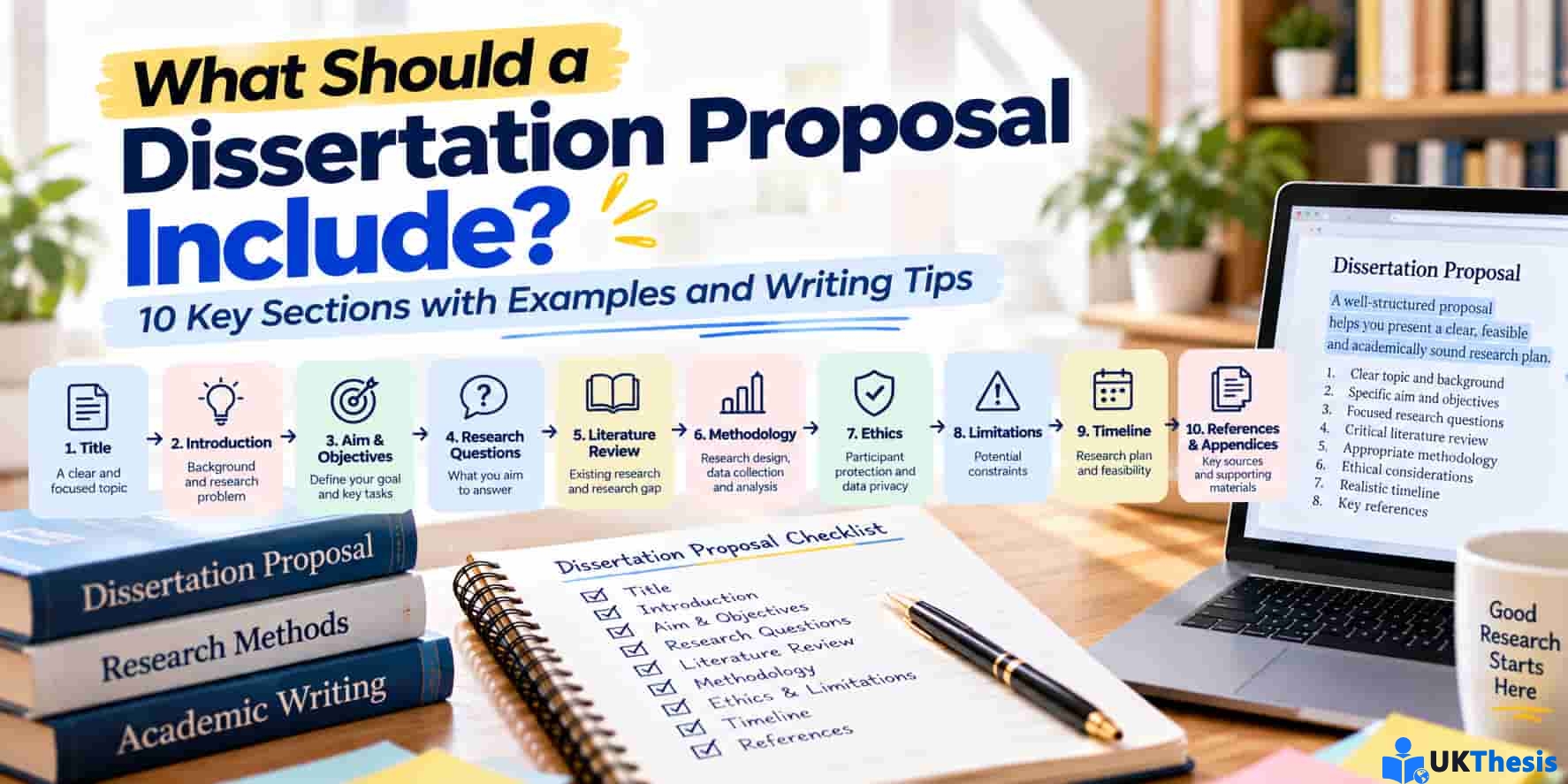
二、Dissertation Proposal通常包括哪些内容?
不同课程要求会有差异,但比较常见的内容包括下面这些部分:
| Proposal Section | 主要回答的问题 |
|---|---|
| 1. Working Title | 你的研究主题是什么? |
| 2. Introduction / Background | 为什么这个问题值得研究? |
| 3. Research Aim & Objectives | 研究准备实现什么? |
| 4. Research Questions / Hypotheses | 最终具体要回答什么问题? |
| 5. Literature Review | 已有研究已经知道什么? |
| 6. Conceptual / Theoretical Framework | 研究准备使用哪些理论或概念? |
| 7. Methodology | 准备怎样收集和分析Evidence? |
| 8. Ethical Considerations | 如何保护Participants和Data? |
| 9. Limitations & Feasibility | 研究可能受到什么限制? |
| 10. Timeline & References | 是否能够按期完成,Academic Sources有哪些? |
这里需要特别提醒:
你的大学官方Proposal Guide永远比网上任何模板优先。
如果Module Handbook要求五个Section,就不要为了“看起来专业”硬加十二个标题。
三、1. Working Title:先有方向,不代表永远不能改
Proposal通常需要一个Working Title。
所谓Working Title,就是:
目前最能准确概括研究方向的标题,但以后仍然可以根据Research进一步调整。
例如:
Too Broad:
Social Media and Marketing
范围太大。
更具体可以写:
The Impact of Influencer Credibility on Gen Z Consumers' Purchase Intentions in UK Fashion Retail
这样已经明确:
研究因素:Influencer Credibility;
Outcome:Purchase Intention;
Population:Gen Z;
Context:UK Fashion Retail。
Proposal最怕的不是标题以后会改,而是一开始范围大到连Research Question都无法控制。
四、一个好的Working Title应该有什么特点?
研究对象清楚;
主要变量或概念比较明确;
必要时体现Population、Industry或Location;
不要使用完全空泛的词;
不要为了显得高级把标题写成半个Abstract。
例如:
Weak:
A Study of Leadership
Better:
The Role of Transformational Leadership in Employee Engagement within UK Technology SMEs
五、2. Introduction / Background应该包括什么?
Introduction需要帮助读者迅速理解研究背景和Research Problem。
一个比较自然的逻辑是:
Background → Specific Problem → Importance → Research Direction
例如研究Hybrid Working:
先交代Hybrid Working已成为许多组织的重要工作模式;
再指出其对Employee Engagement的影响并不一致;
进一步说明为什么这个问题对Organisational Management有价值;
最后引向具体Research Aim。
这里最容易出现的错误是:
Introduction一上来就从工业革命开始。
背景不是越长越专业,而是越相关越好。
六、Introduction里要不要提出Thesis或Hypothesis?
取决于Research Design和学科。
有些Quantitative Research会在Proposal中明确提出Hypotheses。
例如:
H1: Perceived autonomy is positively associated with employee engagement under hybrid working arrangements.
但Qualitative Dissertation通常不会为了形式强行写这种Hypothesis。
它可能更适合Research Question:
How do employees experience autonomy under hybrid working arrangements?
所以不要因为网上模板里有“Hypothesis”,就默认每篇Proposal都必须有。
七、3. Research Aim应该写什么?
Research Aim通常表达整个研究最核心的总体目标。
例如:
The aim of this study is to examine how influencer credibility affects Gen Z consumers' purchase intentions in UK fashion retail.
Aim一般建议保持清楚、集中。
它不是把后面所有Objectives塞成一句。
八、Research Objectives包括什么?
Objectives负责把Aim拆成几个具体、可执行的研究任务。
以上面的Influencer Marketing题目为例:
To review existing literature on influencer credibility and consumer behaviour.
To examine the relationship between perceived credibility and purchase intention.
To explore the role of brand–influencer fit.
To compare different dimensions of influencer credibility.
To develop practical implications for fashion marketers.
一个简单判断方法是:
最终Methodology能不能真的完成这些Objectives?
如果不能,Objectives写得再漂亮也只是愿望清单。
九、Aim和Objectives有什么区别?
| Aim | Objectives | |
|---|---|---|
| 数量 | 通常一个主要Aim | 可以有多个 |
| 作用 | 说明研究总目标 | 拆解具体任务 |
| 范围 | 较宏观 | 更具体 |
| 常见动词 | Examine / Investigate / Explore | Identify / Compare / Analyse / Evaluate |
十、4. Research Questions应该包括什么?
Research Questions应该直接来自Research Problem、Aim和Literature Gap。
好的Research Question通常具备:
Specific;
Researchable;
Relevant;
Feasible;
与Methodology匹配。
例如:
Too Broad:
Does social media affect consumers?
Better:
How does perceived influencer credibility affect Gen Z consumers' purchase intentions in UK fashion retail?
后一种至少知道应该找什么Data。
十一、Research Questions不能和Aim各走各的
Proposal最需要避免的情况之一就是:
Aim研究A,Research Question问B,Methodology最后又收集C的数据。
一个比较好的Alignment应该是:
Research Problem
↓
Aim
↓
Objectives
↓
Research Questions
↓
Methodology
十二、5. Literature Review需要包含什么?
Literature Review是Proposal特别重要的一部分,因为它负责证明:
你的Research Question不是凭空想出来的。
它通常需要包括:
Research Topic相关的主要Theory;
关键Academic Studies;
已有研究的重要Findings;
不同学者之间的Debate;
Methodological Differences;
Existing Limitations;
Research Gap。
十三、Literature Review不是Reference名单
例如:
不太理想:
Smith研究了Remote Working。
Jones也研究了Remote Working。
Brown则认为Remote Working很重要。
这种写法的问题是:
读者只知道你看过三篇文章,却不知道它们之间有什么关系。
更好的方式是按照Theme组织:
Remote Working and Autonomy;
Remote Working and Productivity;
Communication and Isolation;
Managerial Support;
Research Gap。
十四、Proposal里的Research Gap应该怎么体现?
Research Gap不等于:
“Nobody has ever studied this topic.”
这种说法通常风险很高。
更合理的Gap可能是:
某个Population研究较少;
某个Country Context研究不足;
已有研究结果并不一致;
过去研究主要使用Quantitative Methods,而某些Experience尚未深入理解;
新技术或新环境导致旧Research需要重新检验。
例如:
Existing studies have examined hybrid working in large organisations, but comparatively limited attention has been paid to employee engagement within technology SMEs.
这种表达通常比“从来没人研究过”稳妥得多。
十五、6. Conceptual Framework / Theoretical Framework要不要有?
原文提到了Conceptual Framework,这一部分值得保留,但不是所有课程都会要求独立成Section。
Framework主要告诉读者:
你准备使用什么理论或者概念解释Research Problem。
例如Employee Engagement研究可能涉及:
Job Demands–Resources Model;
Self-Determination Theory;
Social Exchange Theory。
重点不是理论越多越专业。
三个互相打架的理论一起上,最后谁都没解释清楚,反而更麻烦。
十六、Conceptual和Theoretical Framework有什么区别?
不同学科对术语使用并不完全一致,但简单理解:
Theoretical Framework通常更加依赖已有Theory。
Conceptual Framework则可能根据Literature整合多个Concept或Variable,说明它们之间预计存在什么关系。
实际写作时应该优先采用Department使用的术语。
十七、7. Methodology应该包含哪些内容?
原文已经明确指出Methodology需要说明Research Methods、Data和研究范围。
现在可以进一步拆成:
| 内容 | 需要回答的问题 |
|---|---|
| Research Approach | Qualitative、Quantitative还是Mixed Methods? |
| Research Design | Survey、Interview、case study还是其他方法? |
| Population | 研究对象是谁? |
| Sampling | 怎样选择Participants? |
| Data Collection | 怎样获得Data? |
| Data Analysis | 收完Data以后怎样分析? |
| Justification | 为什么这些方法适合Research Question? |
十八、Methodology最重要的不是“写了什么方法”,而是Why
比如:
Weak:
This study will use interviews.
Better:
Semi-structured interviews will be used to explore employees' experiences of hybrid working because the research seeks to understand perceptions, meanings and workplace experiences in depth.
后一种至少解释了:
为什么Interview和Research Question匹配。
十九、Survey Proposal需要说明什么?
如果使用Quantitative Survey,可以考虑交代:
Target Population;
Sampling Strategy;
Questionnaire Design;
Variables;
Measurement Scale;
Distribution Method;
Expected Sample Size;
Planned Statistical Analysis。
不是简单写一句:
“A questionnaire will be distributed.”
二十、Interview Proposal需要说明什么?
如果是Qualitative Interview,可以交代:
Participants是谁;
为什么选择他们;
Interview是Structured还是Semi-structured;
预计Interview时长;
是否Recording;
怎样Transcribe;
怎样Analysis,比如Thematic Analysis。
二十一、8. Ethical Considerations必须包含什么?
原文提到,例如Interview之前是否获得Respondent Permission,这其实只是Ethics的一部分。
如果Research涉及Human Participants,通常还需要考虑:
Informed Consent;
Voluntary Participation;
Right to Withdraw;
Anonymity;
Confidentiality;
Data Storage;
Data Protection;
Potential Harm;
Vulnerable Participants;
University Ethical Approval。
当然,具体流程必须按照所在University要求执行。
二十二、Research Ethics不能到最后一天才想起来
这是Proposal阶段提前讨论Ethics的重要原因。
比如你计划访问:
Employees;
Students;
Patients;
Children;
Sensitive Personal Data。
可能涉及不同程度的Approval和Access要求。
如果正式Data Collection前才发现根本拿不到Access,后面的研究计划就会一起塌掉。
二十三、9. Limitations需要包括什么?
原文已经把Limitations列为Proposal的重要组成部分。
常见限制可能包括:
Sample Size;
Participant Access;
Time Constraints;
Single Organisation;
Geographical Scope;
Self-reported Data;
Limited Secondary Data;
Researcher Experience。
主动说明Limitations并不是告诉老师:
“我的Research不行。”
而是在证明:
你知道这项研究能够回答什么,也知道它不能回答什么。
二十四、Limitations和Delimitations可以区分吗?
有些课程会区分:
Limitations:你无法完全控制的限制。
Delimitations:研究者主动设定的研究边界。
例如:
只研究UK Technology SMEs,可以是一种Scope Delimitation。
而Participants Recruitment困难,则可能是Limitation。
如果课程没有要求专门区分,也没必要为了术语复杂化Proposal。
二十五、10. Timeframe需要包含什么?
原文强调Proposal应有现实的Timeframe,这个知识点非常重要。
Timescale的目的不是画一个漂亮的甘特图。
它真正需要证明:
你的研究能够在Deadline之前完成。
例如:
| Stage | Task |
|---|---|
| 1 | Topic Refinement & Initial Reading |
| 2 | Literature Review |
| 3 | Research Design & Ethics Application |
| 4 | Data Collection |
| 5 | Data Analysis |
| 6 | Findings & Discussion Writing |
| 7 | Revision, Proofreading & Submission |
二十六、Timeframe最容易忽略哪些现实问题?
Ethics Approval可能需要时间;
Participants Recruitment不会永远按计划进行;
Interview需要安排时间;
Transcription比想象中慢;
Supervisor Feedback需要预留修改时间;
最后Formatting和Reference检查也需要时间。
所以千万不要安排:
星期一发问卷,星期二收完数据,星期三完成Analysis,星期四写Discussion,星期五提交。
这种Timeline很有勇气,但不太有Feasibility。
二十七、References需要包含什么?
Proposal Reference List应该包含正文实际引用过的Sources。
通常需要注意:
正文Citation与Reference List一一对应;
优先使用Academic Sources;
经典Literature和较新Studies合理结合;
避免为了显得阅读量大塞入完全没使用的Sources。
具体使用Harvard、APA、Chicago、MHRA还是其他格式,应根据University要求。
二十八、Appendices需要包括什么?
原文也提到了Appendices。
并不是所有Proposal都必须有Appendix,但根据课程要求,可能会包括:
Draft Questionnaire;
Interview Guide;
Participant Information Sheet;
Consent Form;
Preliminary Conceptual Model;
Detailed Timeline / Gantt Chart。
Appendix不是把正文塞不下的所有东西都扔进去。
它应该真正支持Research Design。
二十九、Proposal需要Conclusion吗?
原文已经指出,Dissertation Proposal不一定必须有正式Conclusion。
这个判断需要继续保留。
是否添加Conclusion,要看学校Template。
如果需要,可以简短总结:
Research Importance;
Research Aim;
Methodological Direction;
Expected Contribution。
不要在Conclusion重新写一遍整个Proposal。
三十、Dissertation Proposal应该使用现在时还是将来时?
旧文中一处说Proposal“mostly written in the present tense”,后面又说“as a rule, it is written in the future tense”,本身就存在矛盾。
实际上,更合理的做法是根据内容选择时态。
| 内容 | 常见时态思路 |
|---|---|
| Established Knowledge | Present Tense |
| Previous Studies | Past / Present Perfect,根据语境 |
| Planned Research | Future-oriented language |
| Research Aim | Present形式也很常见 |
例如:
Existing research suggests that...
The proposed study will use semi-structured interviews...
没必要强迫整篇Proposal只使用一种Tense。
三十一、一个完整Proposal内容示范
假设研究题目是:
The Role of Influencer Credibility in Gen Z Consumers' Purchase Intentions in UK Fashion Retail
| Section | 应该写什么 |
|---|---|
| Title | 限定Influencer Credibility、Gen Z、Purchase Intention和UK Fashion Context |
| Introduction | Influencer Marketing背景及研究重要性 |
| Aim | Examine how influencer credibility affects purchase intention |
| Objectives | Review literature、analyse credibility dimensions、test relationships等 |
| Research Question | How does perceived influencer credibility affect Gen Z purchase intention? |
| Literature Review | Credibility、Trust、Brand Fit、Consumer Behaviour |
| Framework | 选择与Credibility和Consumer Behaviour相关理论 |
| Methodology | 根据Question选择Survey、Interview或其他适合设计 |
| Ethics | Consent、Privacy、Data Storage |
| Limitations | Sample、Industry、Geographical Scope |
| Timeline | Literature → Ethics → Data → Analysis → Writing |
| References | 所有正文引用Sources |
三十二、Proposal最重要的是各部分互相对得上
很多Proposal并不是缺少某个Section,而是:
Section都有,但彼此没有关系。
比如:
Literature Review在讲Employee Engagement。
Research Question问Productivity。
Questionnaire却主要问Job Satisfaction。
最后准备使用的Theory又是Customer Loyalty。
每一部分单独看都像Academic Writing,合在一起就像四个人坐错了桌。
真正好的Proposal应该形成:
Research Problem → Gap → Aim → Questions → Literature → Method → Analysis
这一条连续Research Logic。
三十三、最常见的Dissertation Proposal内容错误
| 问题 | 修改方向 |
|---|---|
| Title范围过大 | 限制Population、Context、Variables |
| Introduction背景太长 | 快速进入Research Problem |
| Aim和Objectives重复 | Aim写总目标,Objectives写具体任务 |
| Research Question不可研究 | 重新限定问题并考虑可获得Data |
| Literature Review只有Summary | 加入Comparison、Debate与Research Gap |
| Methodology只报方法名称 | 解释Why、How与Data Analysis |
| 没有Ethics | 提前考虑Consent、Privacy和Approval |
| 完全不承认Limitations | 说明Research Scope与现实约束 |
| Timeline过于理想化 | 预留Ethics、Recruitment和Revision时间 |
三十四、Dissertation Proposal Content Checklist
| 检查项目 | Yes / No |
|---|---|
| 是否有Specific Working Title? | □ |
| Introduction是否明确Research Problem? | □ |
| 是否解释Research的重要性? | □ |
| Aim是否清楚? | □ |
| Objectives是否可执行? | □ |
| Research Questions是否可研究? | □ |
| Literature Review是否说明Research Gap? | □ |
| 是否需要Conceptual / Theoretical Framework? | □ |
| Methodology是否说明Why与How? | □ |
| Sampling和Data Collection是否现实? | □ |
| 是否说明Data Analysis? | □ |
| 是否考虑Ethical Issues? | □ |
| 是否说明Limitations? | □ |
| Timeline是否可行? | □ |
| 正文Citation和Reference List是否对应? | □ |
三十五、最后提醒:Proposal不是“格式填空题”
很多同学拿到Proposal Template以后,会很自然地想:
Title填一个。
Aim填一个。
Method填一个。
Timeline再填一个。
全部格子填满以后,任务完成。
但真正影响Proposal质量的并不是“有没有填满”,而是:
这些内容能不能组成一项真正做得出来的Research。
所以,如果Proposal始终写不顺,可以先检查:
Topic是不是太大;
Research Gap是否真实存在;
Research Question是否能够回答;
Method能否获得需要的Evidence;
Time和Access是否现实。
对于正在准备Master’s Dissertation、Research Project或者Proposal的留学生来说,真正有价值的论文写作辅导,也应该优先检查Topic、Research Question、Literature Review、Methodology与Research Feasibility之间的关系,而不是只修改几个表面上的Academic Vocabulary。
相关阅读
Dissertation Proposal Structure怎么写?Introduction、Literature Review与Methodology完整框架
How to Plan and Write a Dissertation Proposal?从选题到Research Plan
How to Start a Thesis Statement?从Research Question到Working Thesis
FAQ:What Should a Dissertation Proposal Include?
Q1:Dissertation Proposal最基本应该包括哪些内容?
常见内容包括Working Title、Introduction、Research Aim、Objectives、Research Questions、Literature Review、Methodology、Ethics、Limitations、Timeline和References。不过不同大学要求不同,应首先参考官方Proposal Guide。
Q2:每篇Proposal都需要Conceptual Framework吗?
不一定。有些学科或课程会明确要求,有些则将Theory整合进Literature Review。是否单独设置Section应根据Module要求决定。
Q3:Proposal必须有Hypothesis吗?
不一定。部分Quantitative Research会提出Hypotheses,而Qualitative Studies通常更加依赖Research Questions。不要为了套模板强行加入Hypothesis。
Q4:Proposal要写Conclusion吗?
有些大学要求,有些不要求。如果需要,一般只需简洁总结Research Importance、Aim和Planned Methodology,不需要重复整篇内容。
Q5:Proposal必须使用将来时吗?
不需要整篇统一使用将来时。介绍已有知识时常使用现在时,描述既有研究可以使用过去时或现在完成时,而说明计划开展的Research时通常使用未来导向表达。
Q6:Proposal需要Reference List吗?
通常需要。凡是正文引用的Academic Sources都应按照课程要求的Referencing Style列入Reference List。
Q7:Appendix必须有吗?
不一定。如果需要提交Draft Questionnaire、Interview Guide、Consent Form、Gantt Chart等辅助材料,可以根据课程要求放入Appendix。
Q8:Proposal里的Literature Review需要多完整?
通常不需要达到最终Dissertation Literature Review的长度,但必须足以证明你理解Research Field、已有Debate和Research Gap。
Q9:Methodology部分最重要的内容是什么?
除了说明使用什么方法,还需要解释为什么这些方法适合Research Question,以及Sampling、Data Collection和Analysis准备怎样实施。
Q10:Proposal提交以后还能修改Research Design吗?
通常可以根据Supervisor Feedback和实际Research情况调整,但如果涉及重大Methodology或Ethics变化,应按照所在University的正式流程处理。