Women in the Labor Market Essay范文:哥伦比亚女性就业与Gender Gap分析
Labour Market类essay有一个很典型的问题:数据很多,但如果只是把unemployment rate、employment rate、labour force participation一项一项抄下来,最后很容易变成“统计数字展览会”。
真正需要分析的是这些数字之间的关系。为什么一个地区working-age women数量不少,但女性劳动参与率仍然低于男性?Education有没有缩小Gender Gap?Paid Work和Unpaid Work之间又有什么关系?
下面这篇英文Research Essay以Colombia及Manizales为研究背景,围绕Women in the Labor Market展开。案例使用的主要统计资料来自2016—2018年前后,因此更适合作为Labour Market Research Essay的结构和数据分析范例,而不是当前就业数据报告。
Women in the Labor Market Research Essay
Women in the Labor Market in the City of Manizales, Caldas, Colombia
The results of the descriptive analysis offer several important points to consider. Despite the fact that there is a greater population of working-aged women in the city, men have higher rates of labor force participation.
This difference is compounded by the average duration of unemployment, which is higher for women. Factors associated with unemployment include the search for adequate working schedules and commuting conditions that allow women to combine employment with household tasks and family responsibilities.
Introduction
In Latin America, women face inequality at different levels of employment and management. Previous studies have suggested that cultural attitudes toward power and organizational hierarchy can contribute to environments in which unequal labor outcomes between men and women are more easily accepted.
This research project attempts to understand women's inclusion in the workplace and the factors that may limit their participation in the labor market.
Understanding and characterizing these limiting factors, together with women's behavior in the labor market, may help identify actions that contribute to greater employment equity.
The gender gap has been debated in many contexts and is connected with cultural traditions, social expectations and access to opportunities. Women have historically faced limitations in developing skills, accessing economic opportunities and participating equally in economic and political spheres.
学姐看这一段:这类Introduction不要只写“gender equality is important”。比较好的路线是从一个可观察的问题进入:working-age population不少,但labour participation为什么不同?这样后面的Statistics才有地方落脚。
Theoretical Approach
The presence of socioeconomic and cultural factors that limit women's competitive development has been widely discussed. These limitations may be associated with reproductive roles, unequal access to educational preparation, economic rights and traditional expectations concerning unpaid care work.
Diversity can be understood as the interaction of individuals with different cultures, ages, genders, educational levels, experiences, abilities and organizational backgrounds. In an employment context, these differences may influence both individual opportunities and organizational behavior.
In Colombia, public policy has increasingly recognised women's participation as an important component of national development. Nevertheless, formal policies do not automatically eliminate the practical barriers that women may experience when entering and remaining in the labor market.
Previous studies in Latin America and Europe have also identified differences in economic participation and wages between men and women, including cases in which disparities remain even when human-capital characteristics are considered.
Population Distribution and Labour Market Participation
For the national population during February–April 2018, women represented 50.7% of the population and men 49.3%. However, the economically active population showed a different distribution: 57.1% were men and 42.9% were women.
Among employed people, men represented 58.5% and women 41.5%. Among the unemployed population, men accounted for 44.4% while women represented 55.6%.
| 2018 Indicator | Men | Women |
|---|---|---|
| Population Share | 49.3% | 50.7% |
| Economically Active Population | 57.1% | 42.9% |
| Share of Employment | 58.5% | 41.5% |
| Share of Unemployment | 44.4% | 55.6% |
These figures reveal an important distinction between population size and economic participation. Women represented slightly more than half of the population, but their share of economically active and employed people was substantially lower.
Men
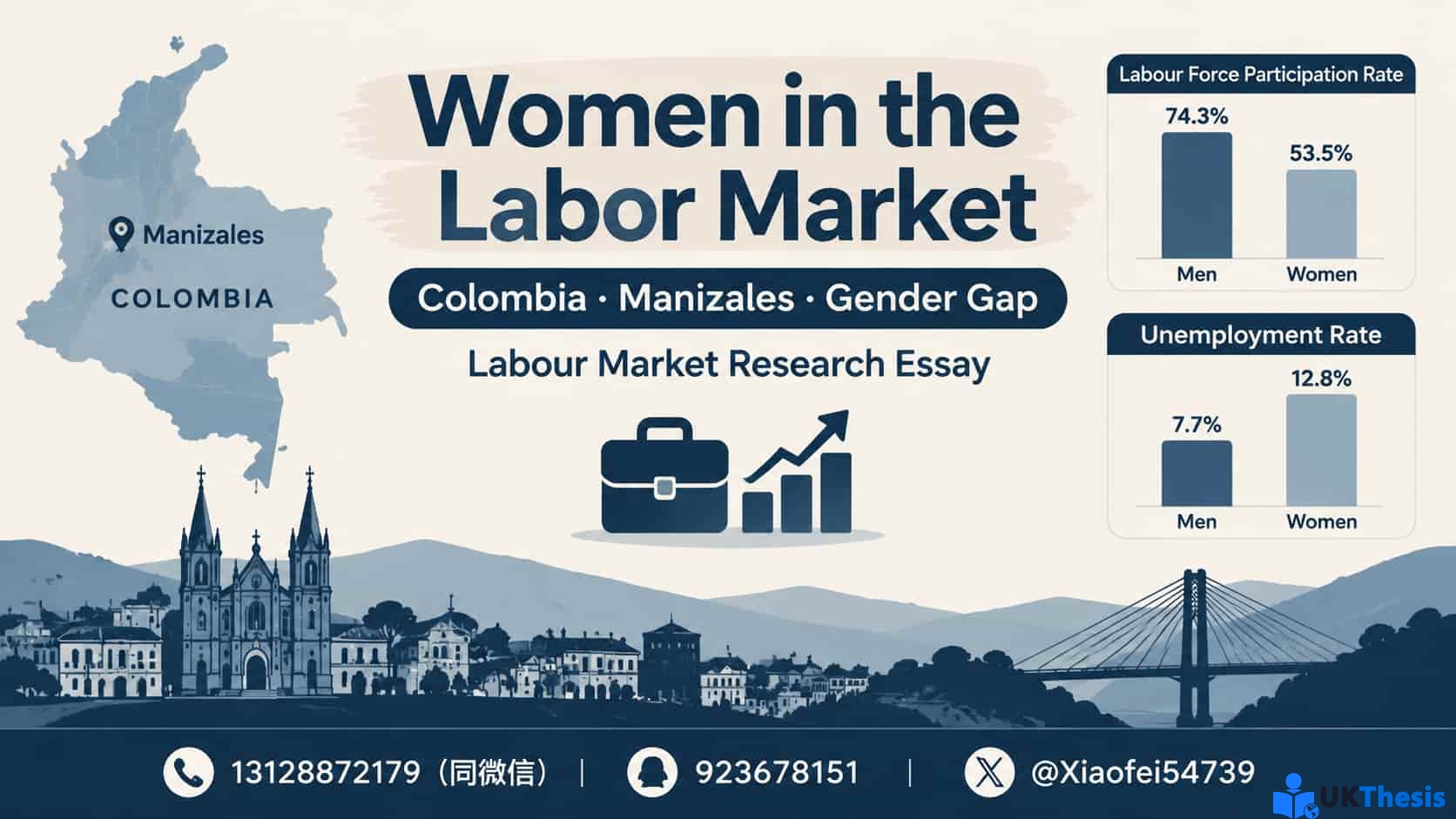
The national unemployment rate for men during February–April 2018 was 7.7%, compared with 7.3% during the same period in 2017.
The labor force participation rate for men was 74.3%, while the employment rate was 68.5%. During February–April 2017, these figures were 74.4% and 69.0% respectively.
The sectors employing the highest proportions of men in 2018 included agriculture, livestock, hunting, forestry and fishing at 22.9%, and businesses, hotels and restaurants at 22.6%.
Women
At the national level, the unemployment rate for women during February–April 2018 was 12.8%. The female labor force participation rate was 53.5%, while the employment rate was 46.6%.
During the corresponding period in 2017, these indicators were 12.8%, 54.4% and 47.4% respectively.
The sectors employing the largest proportions of women included businesses, hotels and restaurants at 33.2%, together with community, social and personal services at 31.0%.
| Indicator | Men | Women | What can be analysed? |
|---|---|---|---|
| Unemployment Rate | 7.7% | 12.8% | 女性失业率明显更高 |
| Labour Force Participation | 74.3% | 53.5% | Participation Gap值得进一步解释 |
| Employment Rate | 68.5% | 46.6% | 就业机会与参与程度存在差异 |
Length of Job Search and Education
When educational levels are considered, women generally require more time to find employment. An exception appears among women with university and graduate-level education, who required an average of 2.4 weeks less than men with the same educational background.
Overall, women required approximately five months to secure employment — around one month longer than men.
This difference has an immediate economic consequence. During that additional period of unemployment, male workers may already have begun receiving employment income.
Education appears to reduce some differences, although it does not remove them completely. The national employment rate for women who had completed higher education was 79.3%, compared with 85.6% for men.
The gender employment gap therefore tended to become smaller among people with higher levels of education.
Among people with secondary education, however, the unemployment rate for women was 18.5%, 7.7 percentage points higher than that of men with the same educational level.
写作观察:这里不能停在“women take longer to find jobs”。更有价值的问题是:为什么Higher Education能够缩小部分Gap,却没有完全消除它?一旦开始问这个问题,文章才从Descriptive Statistics慢慢进入Analysis。
Hours Worked and Unpaid Work
The national average number of paid working hours for men was greater than that for women. However, the picture changes when paid and unpaid work are considered together.
Women had an average total workload of 67 hours, approximately 10 hours more than men. When these hours were separated into paid and unpaid work, men spent more time in paid employment while women carried a larger burden of unpaid work.
This distinction is particularly important in labor-market analysis. Looking only at formal employment hours may underestimate the total amount of work performed by women.
| Variable | Research Meaning |
|---|---|
| Paid Working Hours | 观察正式劳动市场参与 |
| Unpaid Work | 观察家庭照护与家务负担 |
| Total Workload | 更完整地比较男女实际劳动时间 |
| Employment Rate | 观察进入正式就业体系的程度 |
Demographics and Business Participation in Manizales
According to figures reported for 2016, Manizales had a population of 397,466 inhabitants.
Approximately 28% of the population was under 20 years of age and 16% was over 60, leaving around 56% between the ages of 21 and 59.
Men represented approximately 48% of the city's population and women 52%, corresponding to 190,784 men and 206,682 women.
A business survey in Manizales, originally initiated by the city government and Chamber of Commerce, also provides another perspective on economic participation.
The survey identified 11,225 registered businesses. Of these, 9,232 establishments, or approximately 82%, belonged to individuals, while 1,993 were registered as legal entities.
Among individually owned entities, approximately 53% were associated with men and 47% with women.
This difference is smaller than some of the employment gaps discussed earlier, but it still provides another way of examining women's economic participation beyond conventional employment statistics.
Results and Discussion
The findings concerning women's economic participation reveal both continuing obstacles and areas of opportunity.
Women represent a substantial share of the population in Manizales, yet this demographic presence is not reflected proportionally across all indicators of employment and labor force participation.
The theoretical review also suggests that gender inequality in employment cannot be explained by one variable alone. Education, family responsibilities, unpaid care work, cultural expectations and access to employment opportunities may interact with one another.
Although public policy in Colombia has increasingly supported women's participation, the available figures in this case indicate that formal commitments to equality had not yet produced proportional outcomes across the labor market.
Women also continued to spend more time on unpaid domestic work and caring responsibilities. Time devoted to unpaid work may reduce the time available for formal employment and can therefore influence wider patterns of economic participation.
For Manizales, the findings suggest that improving women's labor-market participation requires more than simply increasing the number of available jobs. Employment schedules, childcare and family responsibilities, education, occupational opportunities and workplace practices may all influence whether women are able to participate fully in paid employment.
Conclusion
The analysis of women in the labor market in Manizales highlights a clear difference between demographic representation and economic participation.
Although women represented a slightly larger share of the population, the historical data used in this case showed lower labor force participation and employment rates, higher unemployment, and longer average job-search periods for women.
Higher education appeared to narrow some employment differences, but it did not eliminate the gender gap entirely.
The distinction between paid and unpaid work is also important. Women may spend fewer hours in formal paid employment while carrying a larger total workload once unpaid domestic and caring responsibilities are included.
These findings suggest that labor-market gender inequality cannot be understood through unemployment figures alone. Education, household responsibilities, working conditions, social expectations and access to economic opportunities need to be considered together.
Continued analysis of these indicators can help researchers and policymakers understand where employment inequalities remain and which areas may require further attention.
这篇Research Essay值得学什么?
我觉得这篇最值得保留的地方,其实不是某一个百分比,而是它提供了一条比较完整的Labour Market分析路线:
| 分析步骤 | 对应内容 |
|---|---|
| Population | 先确认男女总体人口结构 |
| Participation | 比较Labor Force Participation |
| Employment | 比较Employment与Unemployment |
| Education | 观察Human Capital是否缩小差距 |
| Workload | 加入Paid与Unpaid Work |
| Discussion | 解释数字背后的社会经济因素 |
很多同学写Economics Essay最容易出现的情况就是:Excel里的数字搬进Word以后,自己也松了一口气——“好了,我有Evidence了。”
其实Marker接下来真正想看的通常是:So what?
为什么女性人口比例更高,劳动参与率却更低?为什么Higher Education缩小了Gap?为什么只看Paid Hours可能低估女性的Workload?这些才是Statistics后面真正需要写出来的Analysis。
FAQ
Women in the Labor Market属于Economics Essay吗?
可以。特别是题目涉及employment、unemployment、labour force participation、wages、human capital和labour supply时,可以归入Labour Economics或Economics Essay。如果课程来自Gender Studies或Sociology,也可能采用不同理论角度。
这篇属于Descriptive Essay吗?
不太准确。虽然文章使用Descriptive Statistics描述就业现象,但学术文章类型更接近Research Essay或Labour Market Analysis。“Descriptive Statistics”和“Descriptive Essay”并不是同一个概念。
旧统计数据还能放在Essay Sample里吗?
可以作为历史案例使用,但应该清楚标明数据年份。涉及当前经济状况的assignment,则需要重新查询最新的官方数据,而不能把历史统计直接当成当前情况。
Economics Essay有数据就够了吗?
不够。Statistics是Evidence,Analysis才负责解释Evidence。比较不同群体、时期或地区以后,还需要讨论这些Difference可能意味着什么,以及是否存在其他解释。
Labour Market Essay不知道怎么分析怎么办?
可以先把题目拆成Population、Participation、Employment、Education、Wages或Workload等变量,再判断哪些数据真正回答Essay Question。如果资料很多却不知道如何组织,也可以通过Essay写作辅导先整理research Question、Structure和Analysis路线。
相关文章阅读
如果你正在写类似的Employment、Economics或Gender Studies作业,与其一开始就拼命堆Statistics,不如先确定每一组数据到底准备回答什么问题。数字本身不会替你完成Argument,但用对了以后,它确实比一句“this is a serious problem”有说服力得多。