Argumentative Essay Topics推荐:College、Family、Society与Immigration选题

Argumentative essay最让人头疼的地方,有时候还真不是正文,而是选题。题目太大,3000字写到最后像世界和平宣言;题目太小,查了半天Reference发现根本没人研究;还有一种更尴尬——题目看起来很热闹,其实双方根本没有什么可以争论。
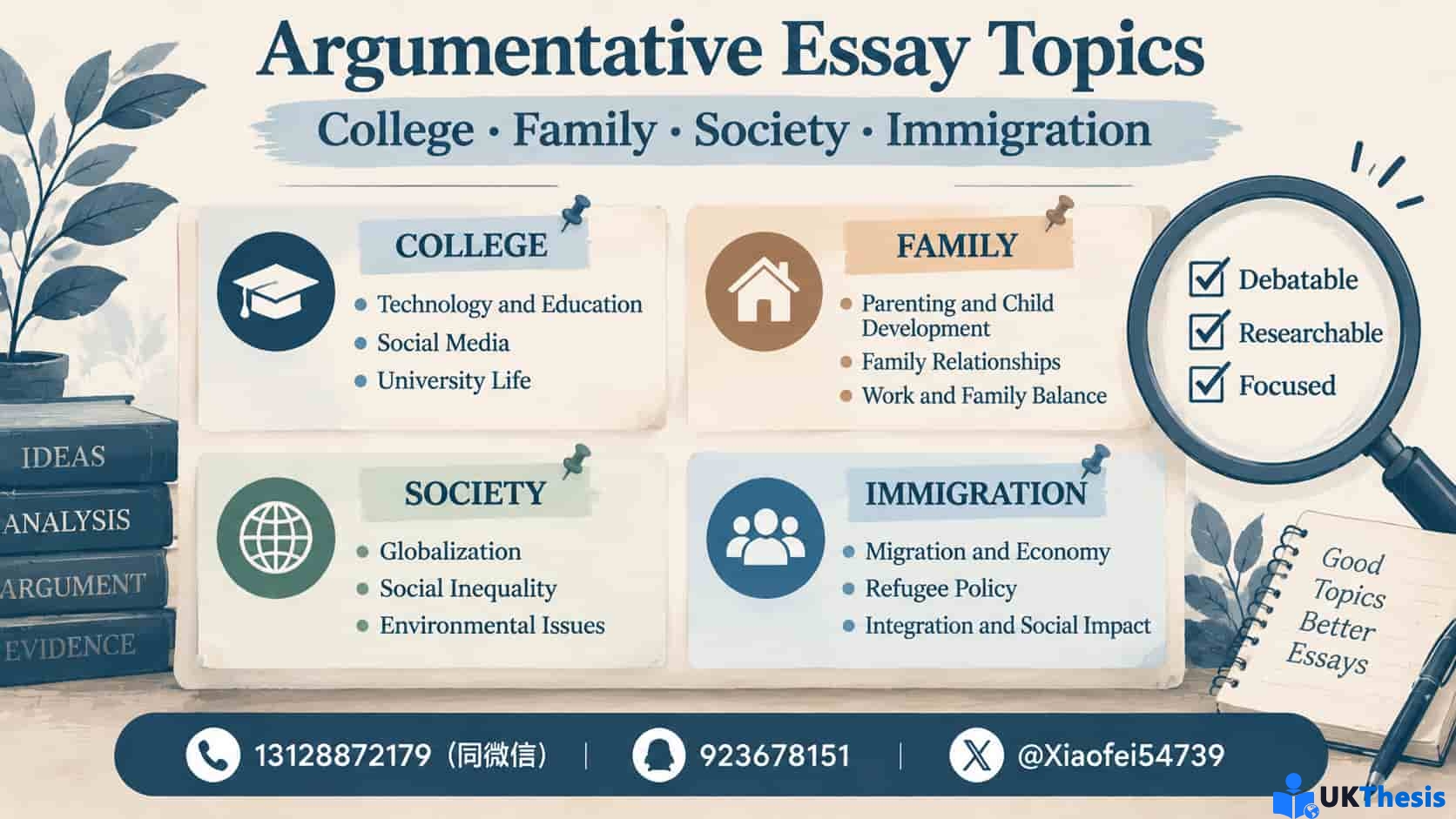
一个比较好的Argumentative Essay Topic,应该允许你提出明确的Position,同时能够找到足够的Evidence,也确实存在值得认真回应的Counterargument。下面整理College、Family、Society与Immigration等常见方向的选题,并保留一些比较典型的题目思路,方便拿到Essay assignment以后继续缩小范围。
Argumentative Essay Topic到底怎么选?
Argumentative Essay不是简单写“我支持”或者“我反对”。真正的Argument需要一个可以讨论的Claim,并通过Research、Evidence和Reasoning建立自己的Position。
选题之前,我一般会先问三个很实际的问题:
| 检查 | 需要考虑的问题 |
|---|---|
| Debatable | 这个问题真的存在不同Position吗? |
| Researchable | 能不能找到Academic Sources、Data或可靠Evidence? |
| Focused | 在规定Word Count内能不能真正回答? |
| Counterargument | 反方有没有值得认真回应的理由? |
| Course Relevance | 是否符合Module内容和Assignment Brief? |
我以前见过一个同学选“Is technology good or bad?”,看上去特别有话可说,真正开始写以后就傻眼了:technology是什么?AI、手机、社交媒体还是医疗技术?good又是对谁good?
这种题最大的问题不是没东西写,而是东西多到根本写不完。
一个简单办法:把Topic不断加限制条件。比如从“Social Media”缩小到“Social Media and University Students”,再缩到“Should universities provide structured digital-wellbeing support for first-year students?”,Argument马上就清楚很多。
一个Argumentative Essay基本需要什么?
虽然不同学校和专业的要求不一样,但比较常见的逻辑还是:
| 部分 | 作用 |
|---|---|
| Introduction | 说明Context、Essay Question和Thesis Statement |
| Main Argument | 通过Evidence与Analysis支持Central Claim |
| Counterargument | 公平呈现Opposing View并作回应 |
| Conclusion | 综合Argument并重新回答Essay Question |
Outline还是值得提前做。它不需要漂亮,哪怕先写成“Argument 1 → Evidence → Argument 2 → Counterargument → Conclusion”,都比写到1200字突然发现第二段和第四段在说同一件事强。
Argumentative Essay Topics for College
College essay选题通常需要比“我觉得……”更进一步。最好能让Research真正参与Argument,而不是先决定答案,再满世界找支持自己的资料。
| Topic Idea | 可以分析的方向 |
|---|---|
| Are mobile phones making people less social? | Social interaction、digital communication、age differences |
| Should technology-aided learning become standard in universities? | Learning outcomes、access、cost、digital divide |
| Does money increase happiness? | Income、well-being、inequality、life satisfaction |
| Should university attendance be compulsory for some professional careers? | Qualifications、skills、alternative education |
| Does AI improve or weaken university learning? | Learning support、critical thinking、assessment、academic integrity |
这种题目不要急着选Position。先Research两边,再形成Working Thesis,通常会比一开始“站死”写得更自然。
Argumentative Essay Topics for High School
High School Argumentative Essay通常更适合选择和学生日常生活、Education或者Technology直接相关的问题。
Are digital technologies beneficial for children?
Is celebrity culture good or bad for teenagers?
Should schools restrict mobile phone use during lessons?
What are the effects of sex education on students?
Is traditional classroom education ready for major reform?
Should homework be reduced for secondary-school students?
Should schools teach financial literacy as a compulsory subject?
Does social media improve or damage teenage friendships?
这里有个小经验:题目最好不要一上来就写成“Technology is destroying young people”。这种题已经把Conclusion写进Question了,很容易让Research变成找证据证明自己。
Argumentative Essay Topics about Family
Family是Argumentative Essay里很常见的一类Topic,因为它同时涉及Sociology、Psychology、Education、Culture以及Public Policy。
家庭结构和社会角色一直在变化,因此很多看似“家庭内部”的问题,其实都可以延伸到更大的社会讨论。
How does reading to children affect their long-term development?
Are children better off in two-parent households?
What are the long-term effects of corporal punishment on children?
Should parents limit children's screen time?
How should childcare responsibilities be divided between parents?
Does remote working improve family life?
Should schools play a larger role in parenting education?
How does parental social-media use affect children?
Family Essay最容易踩的坑,是把价值判断当成Evidence。例如“good parents should…”本身不能证明什么。最好把问题转换成可以Research的变量,例如child development、educational outcome、mental well-being或者work-family balance。
Society Argumentative Essay Topics
我们生活在社会关系里,家庭、教育、工作、文化、Technology都会影响个人选择。因此Society Essay能写的范围特别大,也正因为太大,更需要缩题。
What positive and negative effects does globalization have on society?
Does workplace diversity reduce or increase organisational tension?
Should governments provide stronger social safety nets?
How should societies balance individual freedom and public responsibility?
Does social media strengthen or weaken community participation?
Should governments regulate harmful online misinformation?
Has remote working increased social isolation?
Should digital privacy be treated as a basic social right?
如果是政治、法律或公共政策类Topic,尤其不要只找支持一个Position的资料。Argumentative Essay真正有价值的地方,是让最强的Opposing View也进入文章,然后比较Evidence、Context和Limitation。
Argumentative Essay Topics on Immigration
Immigration长期以来都是社会科学和公共政策课程中的常见议题。它可以从Economics、Labour Market、Public Services、Integration、Human Rights以及Demography等多个角度展开。
How do countries benefit economically from immigration?
What factors cause people to emigrate from their home countries?
How does immigration affect local labour markets?
What are the long-term economic effects of immigration?
How should countries balance border control and refugee protection?
Does immigration increase entrepreneurship and innovation?
What policies improve the social integration of immigrants?
How does skilled migration affect both origin and destination countries?
Immigration这种Topic尤其需要先缩小Country、Period和Population。例如“How does immigration affect the economy?”实在太大;改成“How does skilled immigration affect labour shortages in the UK healthcare sector?”以后,research Question就明显可操作多了。
Topic选好以后,别忘了Counterargument
Argumentative Essay和普通Opinion Essay最大的区别之一,就是不能假装反方不存在。
一个实用的Outline可以先写成:
Introduction → Context + Research Question + Thesis
Body 1 → Main Argument + Evidence + Analysis
Body 2 → Second Argument + Evidence + Analysis
Counterargument → Opposing View + Evidence + Response
Conclusion → Synthesis + Final Answer
Counterargument也不要故意挑一个特别弱的观点来“打”。如果反方被你写得像三岁小朋友,那通常不是你Argument太强,而是你没有真正面对这个Debate。
Research时应该找什么?
| 需要的材料 | 作用 |
|---|---|
| Academic Studies | 支持或挑战核心Claim |
| Statistics / Data | 说明问题规模或趋势 |
| Theory | 解释现象为什么发生 |
| Counter-evidence | 测试自己的Argument是否站得住 |
| Case Evidence | 把抽象Argument放入具体Context |
真正开始写之前,也可以先做一次Pre-writing:把想到的Arguments、Examples、Questions全部记下来,再分类。这个方法看起来有点笨,但比盯着Word文档第一行半小时强多了。
一个Topic怎样变成Thesis Statement?
Topic:Social media and university students
太宽:Social media has advantages and disadvantages for students.
进一步:Excessive social-media use may affect university students' academic engagement.
可以继续论证:Although social media supports peer communication and access to academic communities, excessive use may reduce sustained concentration and contribute to fragmented study habits among university students.
区别就在这里:Topic告诉Reader“你准备谈什么”,Thesis Statement告诉Reader“你对这个问题形成了什么Argument”。
FAQ
Argumentative Essay Topic一定要有争议吗?
通常需要存在合理的不同Position,否则很难形成真正的Argument和Counterargument。不过“争议”不代表一定要选择特别敏感的话题,一个普通的Education或Technology问题同样可以产生学术争论。
Argumentative Essay和Persuasive Essay一样吗?
两者高度相关,但不同课程使用术语的方式并不完全一致。Argumentative Essay通常特别强调Evidence、Reasoning和Counterargument;具体还是要看Assignment Brief。
Topic越特别是不是越容易拿高分?
不一定。独特Topic当然可能让文章更有意思,但前提是能找到足够的Academic Evidence。一个特别到几乎没人研究的题目,写起来反而会很痛苦。
Argumentative Essay一定要写Counterargument吗?
不是所有课程都规定必须单独设置Counterargument Section,但在需要Critical Thinking的大学Essay里,认真处理不同观点通常会让Argument更加完整。
有Topic但不知道怎么变成Essay怎么办?
可以先把Topic变成Research Question,再写一个Working Thesis,然后分别寻找Supporting Evidence和Counter-evidence。如果题目、Thesis、Outline和Evidence一直连不起来,也可以通过Argumentative Essay写作辅导先把论证路线整理清楚,再进入正文。
相关文章阅读
如果已经选好Topic,下一步建议进入站内Argumentative Essay专题继续看Thesis Statement、Evidence、Counterargument和Essay Structure;如果发现自己写的是“如何说服Audience”而不只是Academic Argument,也可以继续阅读Persuasive Essay相关指南。
最后给第一次选Argumentative Essay Topic的同学一个很实际的建议:不要问“哪个题目最厉害”,先问哪个题目我能找到Evidence,而且真的有两边可以讨论。题目听起来普通并不可怕,真正可怕的是题目气势恢宏,打开数据库以后一个能用的Source都没有。