Dissertation Proposal Structure怎么写?Introduction、Literature Review与Methodology完整框架

Dissertation Proposal Structure到底应该怎么安排?很多留学生第一次写毕业论文Proposal时,最容易出现的情况不是完全没东西写,而是脑子里资料很多,却不知道哪些内容应该放Introduction,哪些应该放literature review,Methodology究竟要写到多细。
结果Proposal写到最后,有点像搬家时没有贴标签的纸箱——research Question在这里出现一次,Methodology过两页又出现一次,Literature Review里突然开始讲问卷怎么发,老师看完以后只能自己帮你重新整理逻辑。
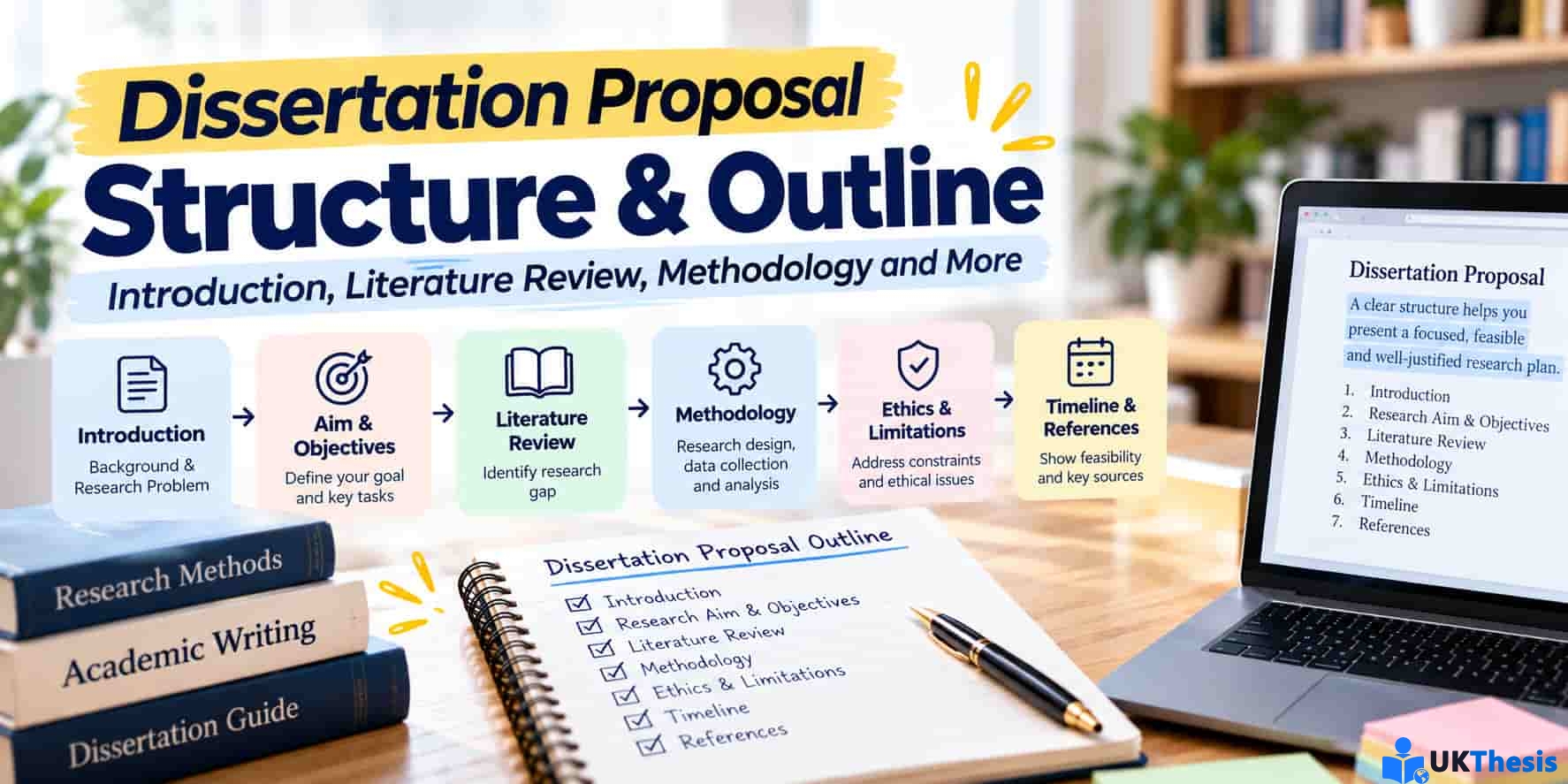
其实Dissertation Proposal最重要的作用之一,就是在正式研究开始之前,把你的Research Problem、Research Question、Literature、Methodology和Feasibility连接成一条完整的研究路线。
所以这篇不只回答“How to write a dissertation proposal”,而是重点拆解:
一份Dissertation Proposal到底应该由哪些部分组成,每一个Section分别解决什么问题,以及各部分之间应该怎样连接。
一、What Is a Dissertation Proposal?
Dissertation Proposal可以理解为正式Dissertation开始之前的一份Research Plan。
它并不是最终论文的缩短版,也不是提前把Introduction写一遍。
它真正需要向Supervisor或者Department说明的是:
你准备研究什么问题;
为什么这个问题值得研究;
已有研究已经知道什么;
还有什么问题没有解决;
你准备通过什么方法回答Research Question;
数据从哪里来;
研究是否符合Ethical Requirements;
在现有时间、资源和能力范围内是否可行。
如果把Dissertation比作一次比较长的旅行,Proposal并不是提前写好的旅行日记,而是:
路线图 + 交通方案 + 时间安排 + 风险评估。
二、Dissertation Proposal和Dissertation有什么区别?
| 比较 | Dissertation Proposal | Final Dissertation |
|---|---|---|
| 主要目的 | 说明准备怎样开展研究 | 呈现已经完成的研究及结果 |
| Research Question | 提出并论证其价值 | 通过研究正式回答 |
| Methodology | 解释计划采用什么方法以及为什么 | 详细说明实际采用的方法和过程 |
| Findings | 通常没有正式研究结果 | 需要呈现并分析Research Findings |
| Literature Review | 证明Research Gap及研究必要性 | 建立完整理论和研究背景 |
| 写作重点 | Feasibility + Justification | Evidence + Analysis + Conclusion |
这也是为什么Proposal里不应该假装自己已经知道最终研究结果。
Proposal最重要的是证明:
这个Research值得做,而且你知道怎样把它做出来。
三、Dissertation Proposal Structure通常包括哪些部分?
不同英国大学、学院和专业的要求可能不同,所以最终一定要优先参考自己的Module Handbook、Dissertation Guide或者Proposal Template。
但一份比较完整的Dissertation Proposal通常会包含以下内容:
| Section | 主要回答的问题 |
|---|---|
| Working Title | 你研究的主题是什么? |
| Introduction / Background | 为什么这个问题值得研究? |
| Research Problem / Gap | 已有研究还缺少什么? |
| Research Aim | 研究最终想实现什么? |
| Research Objectives | 为了实现Aim,需要完成哪些具体任务? |
| Research Questions | 研究最终需要回答什么? |
| Literature Review | 已有学术研究怎么说? |
| Methodology | 准备用什么方法回答问题? |
| Research Ethics | 参与者、数据和隐私怎样保护? |
| Limitations | 研究可能受到什么限制? |
| Timescale | 什么时候完成每一个阶段? |
| References | Proposal依据了哪些Academic Sources? |
四、1. Working Title:标题不是越大越专业
Proposal第一步通常需要一个Working Title。
这里的Working非常重要。
它意味着这个标题并不是刻在石头上的,随着Literature Review和Research Design进一步明确,后面完全可以调整。
例如:
Too Broad:
The Impact of Remote Working on Business
这个范围太大。
Business是什么?
影响什么?Revenue?Productivity?Engagement?Culture?
可以进一步缩小:
The Impact of Hybrid Working on Employee Engagement in UK Technology SMEs
这样至少已经限定:
Working Arrangement:Hybrid Working;
Outcome:Employee Engagement;
Industry:Technology;
Organisation Type:SMEs;
Context:UK。
Proposal会立刻变得更容易控制。
五、2. Introduction:不要一上来写半部行业发展史
Proposal Introduction最主要的任务,是让读者快速理解:
你研究什么,以及为什么值得研究。
比较常见的逻辑是:
Broad Context → Specific Problem → Academic/Practical Importance → Research Direction
例如研究Hybrid Working,可以先介绍:
Hybrid Working已经成为不少组织的工作安排;
组织开始关注它对Employee Experience的长期影响;
现有讨论对Productivity关注较多,但Employee Engagement仍可能受到不同组织条件影响;
因此有必要进一步研究特定Context中的关系。
Introduction不需要把Literature Review提前全部写完。
它的任务是把门打开,而不是把整栋房子的家具一次全部搬出来。
六、Introduction应该包含哪些信息?
| 内容 | 作用 |
|---|---|
| Research Context | 说明研究发生在什么背景 |
| Research Problem | 指出具体需要解决的问题 |
| Importance | 解释为什么值得研究 |
| Scope | 限定行业、地区、群体或变量 |
| Research Direction | 自然引向Aim和Research Questions |
七、3. Research Problem和Research Gap怎么区分?
这是很多Proposal里最容易写糊的一部分。
Research Problem通常指现实或者理论中需要进一步理解的问题。
Research Gap则更强调已有Academic Literature在哪个方面还不充分。
例如:
Research Problem:
Hybrid Working可能影响Employee Engagement,但不同组织环境下影响并不一致。
Research Gap:
已有研究大量关注大型企业或者总体Employee Productivity,但对UK Technology SMEs中的Employee Engagement机制研究相对不足。
注意:
不能因为自己Google了一下午没找到文章,就直接宣布:
“No previous research has examined this topic.”
这种“世界上从来没人研究过”的句子风险很高。
更谨慎的写法通常是:
Existing research has paid comparatively limited attention to...
或者:
Further research is needed to understand...
八、4. Research Aim:一篇Dissertation最好有一个清楚的总目标
Research Aim回答的是:
这项研究最终想实现什么?
例如:
The aim of this study is to examine how hybrid working influences employee engagement in UK technology SMEs.
Aim一般比较宏观。
它不需要塞进所有研究步骤。
如果一句Aim里面同时有:
identify、analyse、compare、evaluate、recommend、measure、investigate……
通常说明Objectives已经偷偷跑进Aim里开会了。
九、5. Research Objectives:把Aim拆成可以完成的任务
Objectives应该比Aim更加具体。
继续使用上面的例子:
Research Aim:
To examine how hybrid working influences employee engagement in UK technology SMEs.
Possible Objectives:
To review existing literature on hybrid working and employee engagement.
To examine employees' perceptions of autonomy under hybrid working arrangements.
To explore the role of managerial communication in employee engagement.
To identify challenges associated with social interaction and team cohesion.
To develop recommendations for managing hybrid work in technology SMEs.
一个简单检查方法是:
你的Methodology有没有办法真正完成这些Objectives?
如果Objective写着:
“To determine the impact of hybrid working on every employee in the UK.”
而Methodology只有12个Interview,那么Aim和Methodology显然没有对上。
十、Research Aim、Objectives和Questions是什么关系?
| 作用 | 简单理解 | |
|---|---|---|
| Aim | 整个研究的大方向 | 我要去哪 |
| Objectives | 完成研究需要执行的任务 | 我要完成哪些步骤 |
| Research Questions | 最终需要回答的问题 | 我要得到哪些答案 |
三者应该互相对应,而不是各写各的。
十一、6. Research Questions:不要写成可以用“Yes/No”结束的问题
好的Research Question通常应该:
足够Specific;
能够通过研究回答;
与Aim保持一致;
适合当前Methodology;
在Word Count和时间内可完成。
例如:
Too Broad:
Is hybrid working good?
Better:
How does perceived autonomy under hybrid working influence employee engagement in UK technology SMEs?
或者:
What role does managerial communication play in maintaining employee engagement under hybrid working arrangements?
这些问题更容易真正通过Research进行分析。
十二、7. Literature Review:不是“我看过这些文章”的名单
原文已经把Literature Review列为Proposal的重要组成部分,这一点必须保留。
但Literature Review最容易被写成:
Smith说A。
Jones说B。
Brown说C。
然后结束。
这样的写法只能证明你找到了一些PDF,并不能真正证明你理解Research Field。
Proposal里的Literature Review应该回答:
当前主要理论是什么?
已有研究主要得出了什么结论?
学者之间有哪些争议?
不同研究方法为什么可能产生不同结果?
目前还有什么问题没有得到充分解释?
你的Research Question怎样从这些Literature中产生?
十三、Literature Review可以怎样组织?
比起“作者A → 作者B → 作者C”,更推荐按Theme组织。
例如Hybrid Working题目:
Theme 1:Hybrid Working and Employee Autonomy
Theme 2:Communication and Managerial Support
Theme 3:Social Interaction and Team Cohesion
Theme 4:Employee Engagement
Theme 5:Research Gap in SMEs
这样Literature Review就开始为你的Conceptual Logic和Methodology服务。
十四、Literature Review里最重要的是Research Gap
Proposal不需要证明你读了世界上所有文章。
它真正需要说明:
在已有知识基础上,为什么还需要你的研究。
一个比较自然的逻辑可以是:
We know X → Existing studies disagree about Y → Context Z is less understood → Therefore this study examines...
这条逻辑一旦成立,Proposal后面的Research Questions会顺很多。
十五、8. Methodology:Proposal最容易被老师追问的部分
Methodology不仅要告诉老师:
“我要发问卷。”
还要解释:
为什么问卷适合这个Research Question?
同样,如果选择Interview,也不能只写:
“Interviews will be used because they provide useful information.”
需要进一步解释Interview与Research Aim之间的关系。
十六、Methodology通常应该交代哪些内容?
| 部分 | 需要说明 |
|---|---|
| Research Approach | Qualitative、Quantitative或Mixed Methods |
| Research Design | Survey、case study、Interviews等 |
| Population | 研究对象是谁 |
| Sampling | 怎样选择Participants |
| Data Collection | 怎样获得数据 |
| Data Analysis | 怎样分析数据 |
| Ethics | 怎样保护Participants和Data |
| Limitations | 研究设计可能有什么不足 |
十七、Qualitative还是Quantitative?不要先选工具,再找问题
一个很常见的错误是:
“我比较会做Survey,所以我要用Quantitative。”
正确顺序应该反过来:
Research Question → Data Needed → Research Method
比如:
如果你想研究:
How do employees experience social isolation under hybrid working?
那么Qualitative Interviews可能有优势,因为你需要理解Experience和Meaning。
如果问题是:
What is the relationship between perceived autonomy and employee engagement?
那么Quantitative Survey可能更适合测量Variables之间的Relationship。
十八、Empirical和Non-Empirical Dissertation有什么区别?
原文提到了Empirical和Non-Empirical,这个知识点值得继续保留。
| Empirical Research | Non-Empirical Research | |
|---|---|---|
| 数据 | 通常收集Primary Data或分析现有Dataset | 主要分析已有Academic Literature或Documents |
| 常见方法 | Survey、Interview、Experiment等 | Systematic Review、Conceptual Analysis等 |
| Proposal重点 | Sampling、Collection、Analysis、Ethics | Search Strategy、Selection Criteria、Analytical Framework |
注意:Non-Empirical并不代表“不需要Methodology”。
如果是Systematic Literature Review,你依然需要解释:
Database;
Search Terms;
Inclusion Criteria;
Exclusion Criteria;
Analysis Process。
十九、9. Sampling:不要只写“我会找一些学生”
如果涉及Participants,Proposal通常需要考虑:
Target Population是谁;
Sample从哪里获得;
使用什么Sampling Strategy;
大概需要多少Participants;
为什么这个Sample适合回答Research Question;
Recruitment是否现实。
例如:
The study will recruit employees working in UK technology SMEs that currently use hybrid working arrangements.
至少比:
“Some employees will be interviewed.”
清楚很多。
二十、10. Data Analysis:收完数据以后怎么办?
很多Proposal把Methodology写到“发问卷”或者“做Interview”就结束了。
但老师还会问:
然后呢?
所以必须提前考虑Data Analysis。
例如:
| Data | Possible Analysis |
|---|---|
| Interview Transcripts | Thematic Analysis |
| Survey Descriptive Data | Descriptive Statistics |
| Variables | Correlation / Regression等,视研究设计而定 |
| Documents | Content Analysis / Thematic Analysis |
Proposal不一定需要把最终统计模型写得像Methodology Chapter那么细,但至少要说明:
你获得Data以后,有办法把它变成能够回答Research Question的Evidence。
二十一、11. Research Ethics不能只写一句“I will follow ethical rules”
如果Research涉及Human Participants,这部分通常非常重要。
可能需要考虑:
Informed Consent;
Voluntary Participation;
Right to Withdraw;
Anonymity;
Confidentiality;
Data Storage;
Potential Harm;
Vulnerable Participants;
Institutional Ethical Approval。
例如Interview研究可能需要说明:
参与者会提前收到Participant Information Sheet,并在参与之前提供Informed Consent;数据会进行匿名化处理,并按照大学规定安全保存。
这里不要自己创造学校没有规定的Ethics Procedure。
最终还是必须按照所在University或Department的正式要求执行。
二十二、12. Research Limitations:主动承认限制不是给自己扣分
原文把Research Constraints列为Proposal的重要部分,这一点非常有价值。
有些同学害怕写Limitations,觉得:
“我主动告诉老师这个研究有问题,不是自己拆台吗?”
其实恰恰相反。
没有任何Dissertation是无限预算、无限时间、无限样本。
能够提前识别限制,反而说明Research Design比较成熟。
常见Limitations可能包括:
Sample Size;
Limited Access to Participants;
Single Organisation / Industry;
Self-Reported Data;
Time Constraints;
Geographical Scope;
Availability of Secondary Data。
二十三、Limitation和Research Failure不是一回事
比如你只研究UK Technology SMEs。
这意味着研究结果未必能直接推广到:
大型跨国企业、Healthcare Organisations或者其他国家。
但这不代表Study没有价值。
正确做法是:
明确Scope,并避免过度Generalisation。
二十四、13. Timescale:证明这项研究真的做得完
Proposal不是只有“学术价值”,还要有Feasibility。
你可以设计一个简单Timescale:
| 阶段 | 主要任务 |
|---|---|
| Stage 1 | Topic refinement + Initial Literature Search |
| Stage 2 | Literature Review + Research Design |
| Stage 3 | Ethics Application / Access Approval |
| Stage 4 | Data Collection |
| Stage 5 | Data Analysis |
| Stage 6 | Writing Findings and Discussion |
| Stage 7 | Revision + Final Submission |
具体时间不要照网上模板机械复制。
应该根据你自己的Submission Date、Ethics Process和Data Access情况安排。
二十五、14. References:Proposal一样需要Academic Sources
Proposal不是“未来准备做什么”的随笔。
你对Research Problem、Theory、Research Gap和Methodology的判断,都应该尽可能有Academic Evidence支持。
Reference需要:
与Research Topic相关;
优先使用可靠Academic Sources;
兼顾经典研究与较新的研究;
按照学校要求的Referencing Style统一格式。
不同学校可能要求Harvard、APA、MHRA或者其他格式,因此不要假设所有英国大学都使用同一种Referencing Style。
二十六、一个完整Dissertation Proposal Outline示范
假设Topic是:
The Impact of Hybrid Working on Employee Engagement in UK Technology SMEs
Proposal可以按照下面的逻辑展开:
| Section | 示例内容 |
|---|---|
| Introduction | Hybrid Working发展背景及Employee Engagement的重要性 |
| Research Problem | Hybrid Working对Engagement的影响并不一致 |
| Research Gap | UK Technology SMEs Context研究相对有限 |
| Aim | Examine how hybrid working influences employee engagement |
| Objectives | Analyse autonomy、communication、social interaction等因素 |
| Research Questions | How does hybrid working influence engagement and through what mechanisms? |
| Literature Review | Hybrid Work、Autonomy、Communication、Engagement相关研究 |
| Methodology | 根据Question选择Interview、Survey或其他适合的方法 |
| Ethics | Consent、Confidentiality、Data Protection |
| Limitations | Sample、Industry、Time、Access |
| Timescale | 从Literature到Submission的阶段安排 |
二十七、Dissertation Proposal各部分应该写多少?
这个问题没有一个所有大学都通用的答案。
如果学校已经给了Section Word Limit,就必须优先按照学校要求。
如果没有明确规定,可以按照“重要程度”分配,而不是平均分。
通常来说:
Introduction不需要无限扩展Background;
Literature Review需要足够Evidence支撑Research Gap;
Methodology必须详细到能够判断Research是否可行;
Aim和Objectives反而应该简洁;
Ethics与Limitations根据Research Design决定篇幅。
不要因为Introduction比较容易写,就一不小心占掉Proposal一半Word Count,然后Methodology只剩两百词。
这个场面非常常见。
二十八、Proposal里最重要的不是每部分单独漂亮,而是Alignment
这是整篇最值得记住的一点。
一个好的Proposal应该形成:
Research Problem
↓
Research Gap
↓
Research Aim
↓
Research Questions
↓
Methodology
↓
Data Analysis
每一步都应该能够回答:
为什么下一步是这个?
如果Research Question想研究“员工如何体验某种现象”,Methodology却完全无法捕捉Experience,那么结构再漂亮也没有用。
二十九、最常见的Dissertation Proposal错误
| 问题 | 为什么会出问题 | 修改方向 |
|---|---|---|
| Topic太大 | 无法在Word Count和时间内深入分析 | 限定Population、Context、Variables |
| Introduction太长 | 挤压Literature与Methodology篇幅 | 只保留与Research Problem相关的Background |
| 没有Research Gap | 无法证明研究必要性 | 比较已有研究并识别不足 |
| Aim和Objectives重复 | 研究路线不清楚 | Aim写总目标,Objectives写具体任务 |
| Methodology只写方法名称 | 无法判断设计合理性 | 解释Why + How |
| Research Question和Method不匹配 | 收集的数据无法回答问题 | 重新检查Alignment |
| 完全不谈Limitations | 研究看起来缺乏现实评估 | 说明Scope与潜在限制 |
| 忽略Ethics | 涉及Participants时风险很大 | 提前考虑Consent、Privacy、Data |
三十、Dissertation Proposal Checklist
提交前可以按照下面这张表自己检查:
| 检查项目 | Yes / No |
|---|---|
| Working Title是否足够Specific? | □ |
| Introduction是否说明Research的重要性? | □ |
| 是否明确Research Problem? | □ |
| 是否通过Literature说明Research Gap? | □ |
| Aim是否清楚且不过度宽泛? | □ |
| Objectives是否可以真正完成? | □ |
| Research Questions是否能够被Method回答? | □ |
| Literature Review是否包含Critical Analysis? | □ |
| Methodology是否解释Why和How? | □ |
| 是否说明Sampling与Data Collection? | □ |
| 是否说明Data Analysis方法? | □ |
| 是否考虑Research Ethics? | □ |
| 是否诚实说明Limitations? | □ |
| Timescale是否现实? | □ |
| reference格式是否统一? | □ |
三十一、Proposal写不好,往往不是英语的问题
这是很多留学生特别容易误判的地方。
有时候你会觉得:
“是不是我的Academic Vocabulary不够高级?”
于是把:
important
换成:
significant、critical、substantial、fundamental
结果Proposal依然没有说服力。
因为真正的问题可能是:
Research Question太宽;
Research Gap没有证明出来;
Objectives与Methodology不匹配;
Sample根本拿不到;
Method无法回答Research Question。
这些问题不是多加几个“高级词”能够解决的。
对于Dissertation Proposal来说,真正有价值的论文写作辅导应该首先检查Topic、Research Gap、Aim、Questions、Literature Review和Methodology之间的逻辑与可行性,然后再处理语言表达和格式问题。