Globalization and Tourism Essay范文:全球化对旅游业的影响分析

Globalization和Tourism之间到底有什么关系?很多同学第一反应可能是:全球化让出国旅游更方便了。这个答案当然没错,但如果Tourism essay写到这里就结束,老师大概也只能礼貌地点点头。
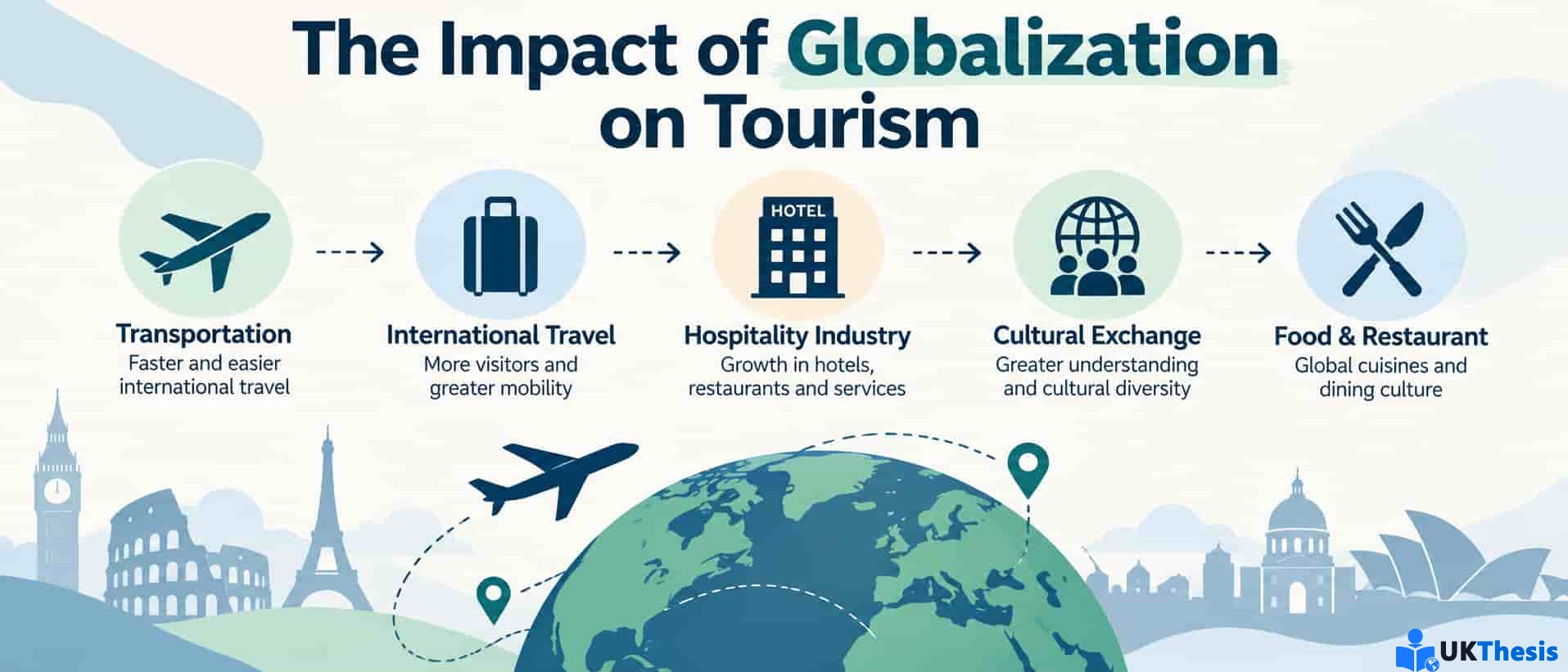
真正值得分析的是:全球化怎样通过Transportation、Hospitality、Technology、Language、Culture以及Food & Restaurant Industry改变旅游活动?这些变化又怎样影响游客、Destination和Tourism Business?
下面这篇Globalization and Tourism Essay就是围绕这条逻辑展开。原Essay使用了一些2018–2019年前后的Hotel、International Travel和Restaurant Industry资料,因此更适合作为一个历史Essay Sample学习Structure与Argument。如果现在用于Tourism assignment,相关统计数据需要重新Research。
| Globalization因素 | 对Tourism的可能影响 |
|---|---|
| Transportation | 降低Travel Barrier,提高Destination Accessibility |
| Hospitality | International Travel Demand推动Accommodation和Hotel Industry发展 |
| Culture | Cross-cultural Communication增加,同时也可能产生Cultural Homogenization |
| Language | Common Language降低International Communication Barrier |
| Food & Restaurants | Food、Brands与Dining Culture跨国传播 |
Globalization为什么会影响Tourism?
Globalization可以简单理解为不同国家、企业、社会与个人之间在Economic、Technological、Political、Social和Cultural层面的联系不断增强。
Tourism本身就是一种跨地域流动,因此它和Globalization天然存在联系。
当Transportation Technology改善、International Communication更加方便、Information流动速度加快以后,一个Destination对海外游客而言会变得更加Accessible。
与此同时,游客的大规模流动又会继续推动Hotels、Restaurants、Airlines、Retail和Attractions的发展。
Globalization → Mobility & Connectivity → International Travel → Tourism Demand → Hospitality & Service Growth
1. Globalization与Hospitality Industry
Globalization has resulted in the expansion of the tourism industry. As international tourism develops, demand for accommodation also increases, creating opportunities for hotels and other hospitality businesses.
The original essay used the U.S. hotel industry as an example. At the time of writing, industry forecasts suggested continued growth in hotel occupancy and accommodation demand.
这里真正值得借鉴的并不是记住某个年份的Hotel Occupancy,而是这个Argument:
More International Mobility → More Visitors → More Accommodation Demand → Hospitality Industry Growth
如果今天重新写这一段,可以使用最新Hotel Occupancy、International Arrivals或Accommodation Revenue,然后分析Tourism Demand怎样传导到Hospitality Sector。
2. Transportation Technology让国际旅游更容易
原文另一个比较清楚的Argument是Transportation。
Globalization has been accompanied by technological development in transportation, particularly aviation. Improvements in transport have made long-distance travel faster and more convenient, allowing more people to travel internationally for business, education and holidays.
原Essay使用China与Australia之间的Air Travel作为例子,并提到Xi'an与Sydney之间Direct Flight带来的便利。
这个例子虽然数据已经比较旧,但逻辑很好理解:
Direct Flights → Lower Travel Friction → Better Accessibility → More Potential Visitors
Tourism Essay如果只是写“飞机越来越先进,所以旅游业发展”,会有点薄。更好的写法是继续追问:Direct Route有没有减少Travel Time?有没有扩大Source Market?有没有让原来不方便到达的Destination获得新的Visitor Demand?
3. Globalization怎样改变Culture与Tourism?
Culture是原文非常重要的一部分。
In the twenty-first century, international communication, global brands, digital media and increased mobility have made cultures more visible to people in different parts of the world. Travellers can become interested in destinations because they want to experience different languages, food, traditions, lifestyles and cultural environments.
从Tourism角度看,这会产生两种同时存在的力量。
| 可能的积极影响 | 值得Critical Analysis的问题 |
|---|---|
| 更多Cross-cultural Communication | Local Culture会不会逐渐Commercialised? |
| 游客更容易了解其他Culture | Global Brands会不会削弱Local Identity? |
| Cultural Tourism获得发展 | Authenticity如何保持? |
| Local Culture可以走向International Audience | 文化传播是否完全双向? |
这一点正好可以补足原Essay一个比较明显的弱点:原文基本认为Globalization对Tourism产生Positive Effect,但大学Essay如果加入Limitations和Alternative View,Critical Analysis会明显更完整。
4. English作为Common Language降低Communication Barrier
原文认为English的广泛使用也是Globalization的重要表现之一。
A common language can reduce communication barriers between travellers, businesses, universities and service providers. English is widely used in international tourism, aviation, education and business communication, making it easier for people from different countries to interact.
从Tourism角度,这个观点可以进一步拆成:
游客更容易获取Destination Information;
Hotel、Airport和Tour Operator更容易提供International Service;
跨国Education和Business Travel更加便利;
Tourism Marketing更容易面向International Audience。
不过这里也不能简单写成“大家都会English,所以Globalization很好”。Language Accessibility与Local Language Preservation之间,同样存在值得讨论的关系。
5. Globalization与Restaurant Industry
原Essay还讨论了Food和Restaurant Industry,这一点其实挺有意思。
Globalization has made food, ingredients, restaurant concepts and dining cultures more mobile. Improvements in transportation and international supply networks make it easier for food products and culinary ideas to move between countries.
因此今天去Sydney、London、New York或者其他International City,游客通常可以接触到来自世界不同地区的Cuisine。
Food本身也逐渐成为Tourism Experience的一部分。
Global Food Mobility → Diverse Restaurants → Visitor Experience → Culinary Tourism
这里如果继续展开,就可以从普通Restaurant Industry进一步延伸到Culinary Tourism / Food Tourism,这会比简单写“全球化让餐厅变多”更有Academic Value。
Globalization对Tourism只有Positive Impact吗?
原文最后的结论比较明确:Globalization促进了Tourism Industry的发展。
这个观点可以保留,但如果作为现在的大学Essay,只写Positive Effects会显得有些单薄。
一个更完整的Tourism Assignment至少应该考虑另一面:
| Positive Impact | Potential Negative Impact |
|---|---|
| International Visitor Growth | Overtourism |
| Hospitality Employment | Seasonal or Low-paid Employment |
| Cross-cultural Exchange | Cultural Homogenization |
| Better Connectivity | Environmental Pressure from Travel |
| Global Tourism Investment | Dependence on International Markets |
这样Conclusion就不需要硬说“Globalization is good”。更成熟的判断是:Globalization显著扩大了Tourism的Scale和Connectivity,但Economic、Cultural和Environmental Outcomes并不一定全部是Positive。
英文Essay Sample
Topic: The Impact of Globalization on Tourism
Introduction
The travel industry and globalization are powerful forces for change across the world. Globalization has contributed to the expansion of tourism, including growth in hotels, restaurants and international transportation. It has also influenced cultural exchange and communication. This essay discusses the effects of globalization and tourism on economic, social and cultural life. It first considers the meaning of globalization and then examines its influence on hospitality, transportation, culture, language and the restaurant industry.
Globalization and Tourism
Globalization is the process through which individuals, organisations and governments in different parts of the world become increasingly connected. These connections can involve international trade, technology, ideas, culture and communication. Economic, technological, political, cultural, ecological and social dimensions of globalization can all influence the way people live and travel.
Tourism is particularly connected with globalization because international travel depends on mobility, communication and access between different countries and destinations.
Hospitality Industry
Globalization has contributed to the expansion of the tourism industry. As more people travel internationally, demand for accommodation increases and this can support growth in hotels and other hospitality businesses.
The original research for this essay used U.S. hotel occupancy forecasts from 2018–2019 as an example of strong accommodation demand. Although these figures now represent a historical period, the underlying relationship remains useful for analysis: increased visitor demand can create additional demand for lodging and hospitality services.
Transportation and International Mobility
Globalization has been accompanied by developments in transportation technology, particularly air travel. Improvements in transportation have made international travel faster and more convenient.
More people are therefore able to travel internationally for business, education and holidays. The original essay used travel between China and Australia as an example and discussed the convenience created by direct flights between cities such as Xi'an and Sydney.
Improved connectivity can make destinations more accessible and can therefore support the expansion of international tourism.
Culture and Globalization
Globalization has also contributed to cultural change. International brands, media, technology and increased travel mean that people are exposed to cultures and lifestyles beyond their own countries.
This can influence tourism because people may travel in order to experience different cultures, food, languages, traditions and places.
At the same time, cultural exchange is not necessarily one-directional. Countries can also use tourism, education and cultural institutions to introduce their own language, traditions and values to international audiences.
Globalization can therefore encourage cross-cultural communication, although it may also raise questions about cultural identity and homogenization.
English and International Communication
Another feature of globalization is the widespread use of English as a common language in international communication, education, tourism and business.
A shared language can reduce communication barriers for travellers and service providers. It can make it easier for tourists to obtain information, communicate in hotels and airports, and travel for education or work.
International education is itself another form of global mobility, as students travel between countries and experience different cultures and societies.
Restaurants, Food and Globalization
Globalization has also influenced the restaurant industry. Improvements in transportation and international supply networks make it easier for ingredients, food products and culinary ideas to move between countries.
As a result, international cities can offer food from many parts of the world. This diversity can become part of the visitor experience and can also support the development of food and culinary tourism.
Critical Discussion
Globalization has created significant opportunities for tourism by improving connectivity, communication and international mobility. It has supported the development of hospitality businesses and increased opportunities for cultural exchange.
However, these benefits should not be considered in isolation. Rapid tourism growth can also create environmental pressure, overtourism and cultural homogenization. Tourism businesses and destinations may also become more dependent on international markets and global economic conditions.
The impact of globalization on tourism is therefore complex. It can create economic and social opportunities while also producing challenges that require careful tourism management.
Conclusion
Globalization has played an important role in the expansion of tourism. Developments in transportation, international communication, hospitality and global food networks have made travel more accessible and have connected destinations with larger international markets.
Globalization has also increased opportunities for cultural exchange and interaction. However, its impact on tourism is not entirely positive, as rapid international tourism growth can create cultural and environmental pressures.
Overall, globalization has transformed the scale and nature of tourism, but its long-term effects depend on how destinations and tourism businesses manage both the opportunities and the challenges created by greater global connectivity.
这篇范文现在应该怎么参考?
这篇Essay最值得参考的是Argument Structure,而不是把里面十年前左右的数据直接拿去交作业。
如果现在重新完成同一个题目,可以继续使用:
Globalization → Transportation → Tourism Mobility → Hospitality → Cultural Exchange → Critical Evaluation
然后重新查找最新Tourism Arrivals、Aviation、Hotel、Employment或Tourism Revenue数据。
如果你的Assignment Brief要求Critical Analysis,还应该主动加入Overtourism、Environmental Impact、Cultural Homogenization或者International Market Dependency,而不是只证明Globalization促进Tourism Growth。
学姐提醒:这种题最容易写成“交通方便了、酒店多了、英语普及了,所以全球化促进旅游业”。逻辑没错,就是有点像一条笔直的大马路,开到底什么弯都没有。大学Essay真正能拉开差距的地方,是继续问一句:谁从这种增长中获益?谁承担Cost?Culture和Environment发生了什么?这一问,Critical Thinking基本就出来了。
FAQ
Q1:The Impact of Globalization on Tourism属于什么类型?
最适合定位为Tourism Essay / Tourism Assignment,同时属于Globalization Essay主题,不属于Dissertation、Methodology或PESTEL。
Q2:Globalization对Tourism有哪些主要影响?
常见分析方向包括Transportation、International Mobility、Hospitality、Technology、Culture、Language、Food Industry以及International Investment。
Q3:这篇旧Essay里的2018–2019数据还能直接使用吗?
不建议直接作为Current Evidence使用。可以把它作为Historical Example,但如果课程要求分析当前Tourism Industry,应重新查找最新数据。
Q4:Globalization对Tourism一定是积极的吗?
不是。除了Connectivity、Visitor Growth和Employment,也可以分析Overtourism、Environmental Pressure、Cultural Homogenization和对International Markets的依赖。
Q5:Globalization Essay可以写Hospitality Industry吗?
可以。International Travel Demand与Hotel、Accommodation、Restaurant和其他Hospitality Services存在直接联系。
Q6:这篇文章可以加PESTEL Tag吗?
不建议。虽然涉及Economic、Social和Technological Factors,但正文并没有按照PESTEL Framework组织。
Q7:Tourism Assignment应该怎样避免只做Description?
每提出一个Trend,都继续解释Cause、Impact、Evidence和Limitation。例如不要只写Direct Flights增加,而要解释Accessibility改善为什么可能影响Visitor Demand。
Q8:Globalization and Tourism Essay不知道怎么搭结构怎么办?
可以先从Assignment Question确定Globalization的2–4个核心机制,再分别寻找Tourism Evidence。如果在Outline、Argument、Critical Analysis或英文表达方面比较乱,也可以通过UKThesis的Essay写作辅导梳理文章结构和论证方向。
相关阅读
Ireland Tourism Essay范文:Tourism Sector对Irish Economy的影响分析
Sustainable Tourism Essay:Northern Ireland旅游规划与发展政策分析