How to Plan a Dissertation Proposal?从Research Problem到可执行Research Plan
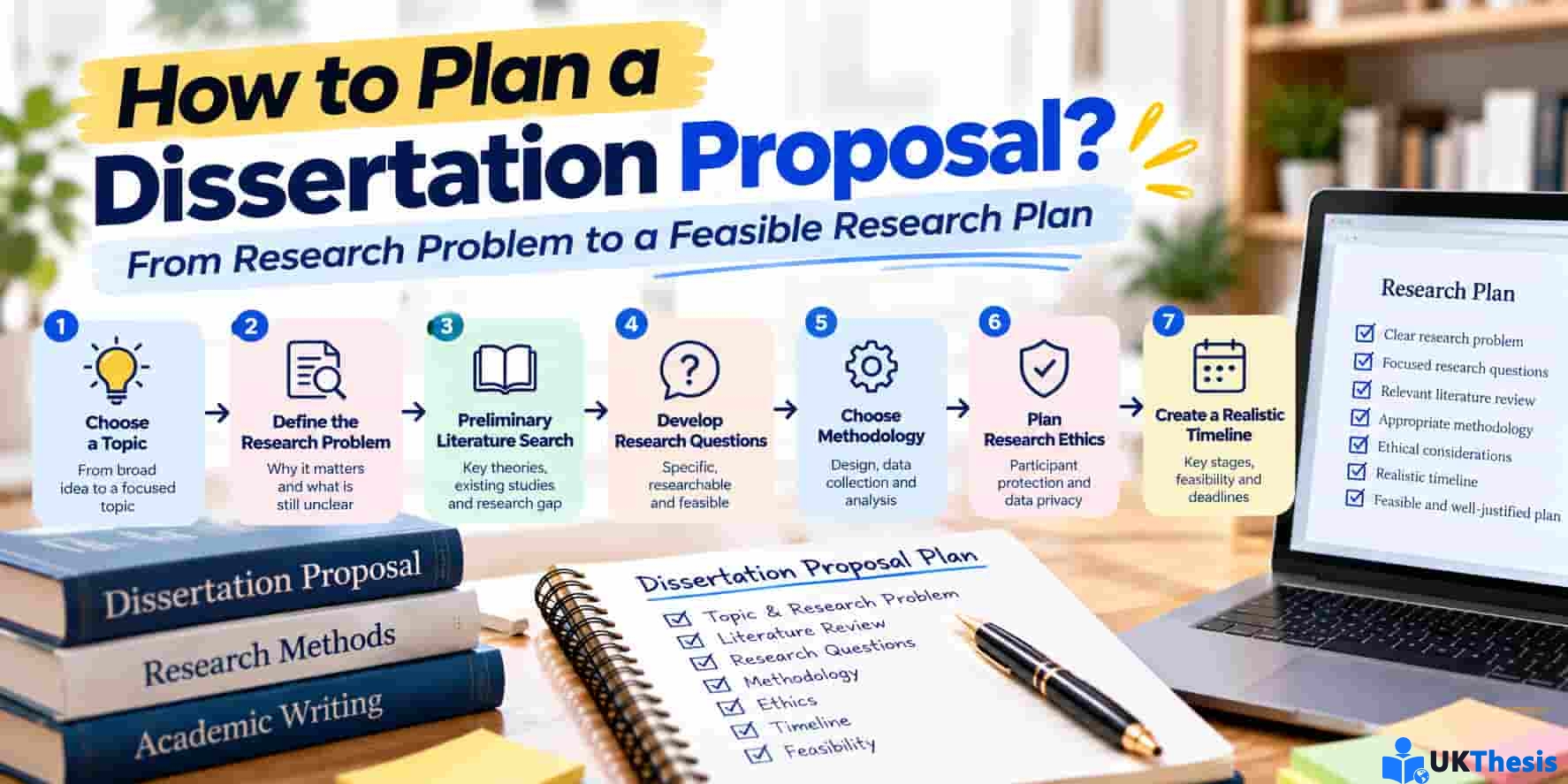
How to plan a Dissertation Proposal?很多留学生第一次准备Dissertation时,会把Proposal理解成“正式论文开始之前先交的一份小作业”。
于是最常见的操作就是:先想个题目,找几篇Reference,再挑一个Methodology,把Introduction、literature review和Methodology分别填进去,字数凑够以后提交。
但真正有用的Dissertation Proposal并不是格式填空题。
它更像整个Dissertation的Research Blueprint:你要研究什么、为什么值得研究、已经有哪些Literature、准备回答什么research Question、需要什么Data、用什么方法获得这些Data,以及这项研究到底能不能在Deadline之前做完。
所以Proposal真正应该先解决的不是:
“第一段怎么写?”
而是:
“这项Research到底应该怎样一步一步规划?”
一、为什么正式写Dissertation之前要先做Proposal?
Proposal最重要的作用之一,是迫使你在真正投入大量时间之前,把Research Logic先想清楚。
如果Proposal阶段没有发现问题,到了Data Collection或者正式写Chapter的时候才发现Research Question太宽、Participants找不到、Methodology不匹配,那时候返工会痛苦很多。
一个好的Proposal至少可以帮助你提前确认:
Research Topic是否足够集中;
Research Problem是否真实存在;
Research Question是否可研究;
是否有足够Academic Literature;
Methodology是否能够回答问题;
Data是否真的能够获得;
Ethics是否可行;
整个项目能否在规定时间内完成。
二、Proposal不是最终Dissertation的缩小版
这点特别重要。
Proposal描述的是:
你计划怎样完成Research。
Final Dissertation呈现的是:
你最终进行了什么Research、获得了什么Evidence,以及这些Evidence说明什么。
| 比较 | Dissertation Proposal | Final Dissertation |
|---|---|---|
| 核心任务 | 规划研究 | 报告并分析研究 |
| Research Question | 提出并论证 | 正式回答 |
| Methodology | 说明计划采用什么方法 | 说明实际采用的方法 |
| Findings | 通常尚未产生 | 必须根据实际Research呈现 |
| 重点 | Justification + Feasibility | Evidence + Analysis + Conclusion |
三、Planning的第一步不是写Introduction,而是确认要求
开始之前,先打开Module Handbook、Assessment Brief或者Department给的Proposal Template。
因为不同英国大学、学院甚至不同Programme的Proposal要求可能明显不同。
需要先确认:
Word Count;
Deadline;
Required Sections;
是否要求Abstract;
是否要求Research Questions或Hypotheses;
是否需要Ethics Form;
是否要求Timeline / Gantt Chart;
Referencing Style。
这一点看似很基础,但真的很重要。
网上某个模板写了Abstract,不代表你的课程一定要求Abstract;别人Proposal有Conceptual Framework,也不代表你必须复制。
四、Step 1:从Broad Topic开始,但不要停在那里
Planning通常从一个大方向开始。
例如:
Broad Topic:
Remote Working
这当然可以作为兴趣方向,但还完全不能直接变成Dissertation。
因为你还不知道:
Remote Working影响谁?
影响什么?
在哪个行业?
哪个国家?
通过什么机制?
所以需要不断缩小:
Remote Working
↓
Hybrid Working and Employees
↓
Hybrid Working and Employee Engagement
↓
Hybrid Working and Employee Engagement in UK Technology SMEs
到这里才逐渐进入可以研究的范围。
五、一个Topic是否适合做Dissertation,可以先检查什么?
| 检查项目 | 需要问自己 |
|---|---|
| Academic Value | 这个问题是否值得研究? |
| Literature | 是否有足够Academic Sources? |
| Research Gap | 还有什么值得进一步解释? |
| Data | 我能够获得需要的数据吗? |
| Time | 规定时间内能完成吗? |
| Ethics | 是否涉及复杂伦理问题? |
| Scope | Word Count能够真正分析吗? |
六、Step 2:Define the Research Problem
原来的Proposal规划方法里提出了几个很实用的问题:
What is the problem under investigation?
Why is it a problem?
Why is addressing it important?
这个逻辑非常值得保留。
Research Problem不是简单说:
“Remote Working is important.”
而应该指出一个真正需要进一步理解的现象、矛盾或者知识不足。
例如:
Hybrid Working越来越普遍,但已有研究对它是否稳定提升Employee Engagement并没有完全一致的结论。
这个时候才开始出现Research Problem。
七、Research Problem和Research Topic有什么区别?
Topic:
Influencer Marketing
Research Problem:
不同类型Influencer对消费者Purchase Intention的影响并不一致,而Credibility、Authenticity与Brand Fit可能共同影响这种效果。
Topic告诉读者:
你研究什么领域。
Research Problem告诉读者:
这个领域里到底有什么值得进一步调查。
八、Step 3:Preliminary Literature Search
正式写Literature Review之前,先进行一轮Preliminary Literature Search。
目的不是马上读完50篇论文。
而是先确认:
这个Topic有没有足够Literature;
有哪些主要Theory;
最近几年研究在关注什么;
主要学术Debate是什么;
哪些Variables经常被研究;
可能存在什么Research Gap。
如果搜索一轮以后发现几乎没有可以使用的Academic Evidence,可能需要重新考虑Research Scope。
九、文献搜索阶段不要只找“支持自己想法”的文章
例如你最开始认为:
Remote working definitely improves employee productivity.
不要只搜索:
Benefits of remote working.
也应该看看:
Remote Working Challenges、Productivity Decline、Isolation、Communication Barriers,以及不同Industry中的研究。
Proposal阶段越早发现不同Evidence,后面越容易形成真正有Critical Thinking的Research Question。
十、Step 4:Identify the Research Gap
Research Gap并不是为了硬证明:
“全世界从来没有任何人研究过这个问题。”
真正可用的Gap有很多形式。
| Gap类型 | 例子 |
|---|---|
| Context Gap | 其他国家研究很多,但UK Context相对较少 |
| Population Gap | 研究大型企业较多,SMEs较少 |
| Methodological Gap | Survey很多,但员工实际Experience了解较少 |
| Evidence Gap | 已有Studies结论不一致 |
| Temporal Gap | 旧Research可能不足以解释新技术或新环境 |
| Theoretical Gap | 某个理论关系还没有得到充分检验 |
十一、Step 5:Turn the Problem into a Research Question
Research Question是整个Proposal最重要的连接点之一。
因为后面的Literature、Methodology和Data都应该围绕它展开。
例如:
Too Broad:
Does remote working affect employees?
Better:
How does perceived autonomy under hybrid working influence employee engagement in UK technology SMEs?
后一种Question已经限定:
Working Model、Variable、Outcome、Population和Context。
十二、一个好的Research Question需要满足什么?
Focused;
Researchable;
Relevant;
Specific;
Feasible;
能够通过实际Evidence回答。
如果Research Question需要访问全国所有公司才能回答,而你只有三个月时间,那就不是一个很现实的Dissertation Plan。
十三、Step 6:Define Research Aim
有了Research Question以后,再明确Research Aim。
例如:
Research Question:
How does perceived autonomy under hybrid working influence employee engagement in UK technology SMEs?
Aim:
The aim of this study is to examine the relationship between perceived autonomy and employee engagement under hybrid working arrangements in UK technology SMEs.
Aim应该表达整个Research的大方向。
不要把五六个Objectives全部塞进一句Aim。
十四、Step 7:Break the Aim into Objectives
Objectives相当于Research Plan中的任务清单。
例如:
To review literature on hybrid working, autonomy and employee engagement.
To examine employees' perceptions of autonomy under hybrid working.
To investigate the relationship between autonomy and engagement.
To explore the role of managerial communication.
To develop practical implications for technology SMEs.
每一个Objective最好都能够在Methodology和Final Dissertation里找到对应位置。
十五、Step 8:Choose the Research Approach
原文强调Proposal应该围绕Research Questions安排相应Methodology,这一点非常重要。
正确顺序应该是:
Research Question → Evidence Needed → Methodology
而不是:
“我会SPSS,所以我一定做Quantitative。”
或者:
“我觉得Interview比较容易,所以Question也往Interview上靠。”
十六、Qualitative、Quantitative还是Mixed Methods?
| Approach | 比较适合 |
|---|---|
| Qualitative | Experience、Meaning、Perception、Process |
| Quantitative | Relationship、Difference、Measurement、Hypothesis Testing |
| Mixed Methods | 确实需要数字Patterns与深入Experience结合时 |
Mixed Methods不是“两个都做所以显得更高级”。
它通常意味着更多Data Collection、Analysis和时间成本。
如果Research Question并不需要,就没必要给自己增加工作量。
十七、Step 9:Plan the Data You Actually Need
很多Proposal会写:
Primary and secondary data will be used.
但没有说明这些Data到底用来回答什么。
更实用的方法是建立:
Research Question → Required Data → Data Source
例如:
| Research Need | Possible Data |
|---|---|
| 了解Employee Experience | Semi-structured Interviews |
| 测量Autonomy和Engagement关系 | Survey Data |
| 研究Company Policy | Organisational Documents |
| 比较Industry Trends | Reliable Secondary Dataset |
十八、Step 10:Think About Access Before You Promise the Method
这一点特别现实。
你当然可以在Proposal里写:
“I will interview senior managers from 30 multinational companies.”
问题是:
他们为什么要接受你的Interview?
所以Methodology Planning一定需要提前考虑:
Participants从哪里来;
有没有Gatekeeper;
是否需要Organisation Permission;
预计Response Rate;
Recruitment失败有没有Backup Plan。
十九、Step 11:Plan Data Analysis before Data Collection
Data Collection不是Proposal Planning的终点。
还要提前想:
收完数据以后怎么办?
例如Interview:
Record → Transcribe → Code → Thematic Analysis。
例如Survey:
Data Cleaning → Descriptive Statistics → 根据Research Question进一步分析Relationships或Differences。
具体方法要和Research Design匹配,不要为了显得专业乱塞统计术语。
二十、Step 12:Plan Research Ethics Early
Ethics不是最后在Proposal末尾补一句:
“Ethical issues will be considered.”
而应该从Planning阶段就开始考虑。
尤其如果研究涉及Human Participants,需要关注:
Informed Consent;
Voluntary Participation;
Right to Withdraw;
Anonymity;
Confidentiality;
Data Storage;
Potential Harm;
Institutional Approval。
最终以所在University的Ethics要求为准。
二十一、Step 13:Identify Limitations before Research Starts
一个现实的Research Plan一定会有Constraints。
例如:
Limited Time;
Small Sample;
Single Industry;
Participant Access;
Self-reported Data;
Geographical Scope。
提前看到这些限制,可以帮助你调整Research Question,而不是Data收完以后才发现无法回答最初的问题。
二十二、Step 14:Build a Realistic Timeline
Proposal Planning必须回答:
这项研究究竟什么时候做完?
可以按照阶段安排:
| 阶段 | 任务 |
|---|---|
| Stage 1 | Topic Refinement + Preliminary Reading |
| Stage 2 | Literature Review + Research Questions |
| Stage 3 | Methodology + Ethics Application |
| Stage 4 | Participant Recruitment / Data Access |
| Stage 5 | Data Collection |
| Stage 6 | Data Analysis |
| Stage 7 | Findings + Discussion |
| Stage 8 | Revision + Final Submission |
二十三、Timeline最容易低估什么?
最容易被低估的往往不是Writing本身,而是:
Ethics Approval;
Participant Recruitment;
等待回复;
Interview Transcription;
Data Cleaning;
Supervisor Feedback;
最后Reference和Formatting检查。
一个好的Timeline应该给“不顺利”留一点空间。
二十四、Step 15:Create a Preliminary Dissertation Outline
Proposal阶段可以先想一下未来Dissertation大概怎样组织。
例如:
Chapter 1 — Introduction
Chapter 2 — Literature Review
Chapter 3 — Methodology
Chapter 4 — Findings / Results
Chapter 5 — Discussion
Chapter 6 — Conclusion
不同学科结构可能不同,但提前有一个Outline,可以帮助你判断Research Plan是不是完整。
二十五、Proposal中的Abstract一定需要吗?
原文把Abstract列为Proposal常见部分,但这不能当成所有学校统一规则。
有些课程要求Abstract或者Proposal Summary,有些不要求。
如果学校要求,通常需要简要说明:
Research Topic;
Problem / Context;
Aim;
Proposed Methodology;
Research Significance。
如果Template里没有要求,不需要为了模仿网上范文强行加一个。
二十六、Research Context到底写什么?
原文把Research Context单独列出,这也是一个可以保留的概念。
Research Context可以交代:
Industry;
Country;
Organisation Type;
Population;
Historical or Current Setting。
例如:
研究Employee Engagement时,大型跨国企业和10人规模Startup的Context可能完全不同。
Context越清楚,Research Question通常越容易控制。
二十七、Literature Review在Planning阶段的真正作用
Literature Review不只是Proposal里的一个Section。
它其实贯穿整个Planning过程。
因为你需要靠Literature来:
确定重要Concepts;
识别Theory;
发现Research Gap;
形成Question;
决定Variables;
比较Methodology;
判断Research是否值得做。
所以最好不要先把Question彻底定死,再去找Literature证明自己。
二十八、Supervisor Feedback应该放在Planning哪个阶段?
越早越好。
特别适合与Supervisor讨论的节点包括:
Topic已经初步缩小时;
Research Question形成以后;
Methodology确定以前;
发现Participant Access困难时;
需要调整Research Scope时。
不要等Proposal全部写完才第一次确认Question是否合理。
二十九、Proposal Planning Example:从Topic到Research Plan
我们用一个完整例子走一遍。
Broad Topic:
Influencer Marketing
Narrowed Topic:
Influencer Credibility and Gen Z Purchase Intention
Context:
UK Fashion Retail
Research Problem:
Influencer Marketing被广泛采用,但不同Influencer的营销效果差异明显,Credibility可能是重要解释因素。
Research Question:
How does perceived influencer credibility affect Gen Z consumers' purchase intentions in UK fashion retail?
Aim:
To examine the relationship between influencer credibility and Gen Z consumers' purchase intentions.
Literature Themes:
Source Credibility、Trust、Authenticity、Brand Fit、Purchase Intention。
Possible Methodology:
根据Research Question和课程要求,可考虑合适的Quantitative、Qualitative或Mixed Design。
Ethics:
Consent、Privacy、Data Storage。
Limitations:
Sample、Age Group、Retail Sector、Geographical Scope。
到这里才真正形成一个Research Plan。
三十、Research Question和Methodology必须Alignment
这应该是Proposal Planning最核心的检查之一。
| Question类型 | 可能需要的Evidence |
|---|---|
| How do employees experience...? | 深入的Experience Data |
| What is the relationship between X and Y? | 可测量Variables的数据 |
| How has policy changed over time? | Historical / Documentary Evidence |
| What themes appear in...? | Textual / Qualitative Data |
先确定Question,再决定怎样获得真正需要的Evidence。
三十一、Proposal Planning最常见的错误
| 常见问题 | 修改方向 |
|---|---|
| Topic过于宽泛 | 限制Population、Context和Outcome |
| 没有Research Problem | 从Literature和现实问题中找到具体Issue |
| 先决定Method再找Question | 重新按照Question → Evidence → Method规划 |
| Research Gap靠想象 | 通过Literature证明 |
| Participants无法获得 | 提前检查Access与Backup Plan |
| Timeline过度乐观 | 预留Ethics、Recruitment和Revision时间 |
| Aim、Questions和Methodology不一致 | 重新检查Research Alignment |
三十二、Dissertation Proposal Planning Checklist
| 检查内容 | Yes / No |
|---|---|
| 我是否确认了University官方Proposal要求? | □ |
| Topic是否足够Specific? | □ |
| 是否明确Research Problem? | □ |
| Preliminary Literature是否足够? | □ |
| Research Gap是否有Evidence支持? | □ |
| Research Question是否可以真正回答? | □ |
| Aim和Objectives是否一致? | □ |
| Methodology是否来自Research Question? | □ |
| Participants或Data是否能够获得? | □ |
| 是否提前考虑Data Analysis? | □ |
| 是否考虑Ethics? | □ |
| 是否识别Limitations? | □ |
| Timeline是否现实? | □ |
| 是否与Supervisor确认关键决策? | □ |
三十三、真正好的Proposal,是一个可执行的Research Plan
Proposal写得长,不代表Research Plan好。
真正值得检查的是这条逻辑:
Topic
↓
Research Problem
↓
Literature & Gap
↓
Research Question
↓
Aim & Objectives
↓
Methodology
↓
Data
↓
Analysis
↓
Timeline & Feasibility
如果任何一环断了,后面都会受到影响。
三十四、Proposal规划不好,不一定是英语问题
很多留学生发现Proposal写不顺以后,会先怀疑自己的Academic English。
于是开始疯狂替换:
important → significant → critical → fundamental
但如果Research Question本身太宽,换十个高级词也救不了。
Proposal真正困难的地方经常是:
Topic不知道怎么缩;
Research Gap找不到;
Question和Method对不上;
Data Access不现实;
Timeline不够;
不知道Literature怎样支持Research Design。
所以对于正在准备Master’s Dissertation、Research Project或者Proposal的留学生来说,真正有效的论文写作辅导应该先帮助梳理选题、Research Question、Literature、Methodology和Research Feasibility,再处理语言、格式和表达。