Industrial Relations vs HRM Essay范文|Human Resource Management比较 - UKThesis

Industrial Relations和Human Resource Management(HRM)都在研究“企业怎样管理人与雇佣关系”,所以刚开始接触这两个概念时,很容易觉得它们只是名字不同。可真正开始写HRM essay,就会发现两者看问题的角度并不完全一样。
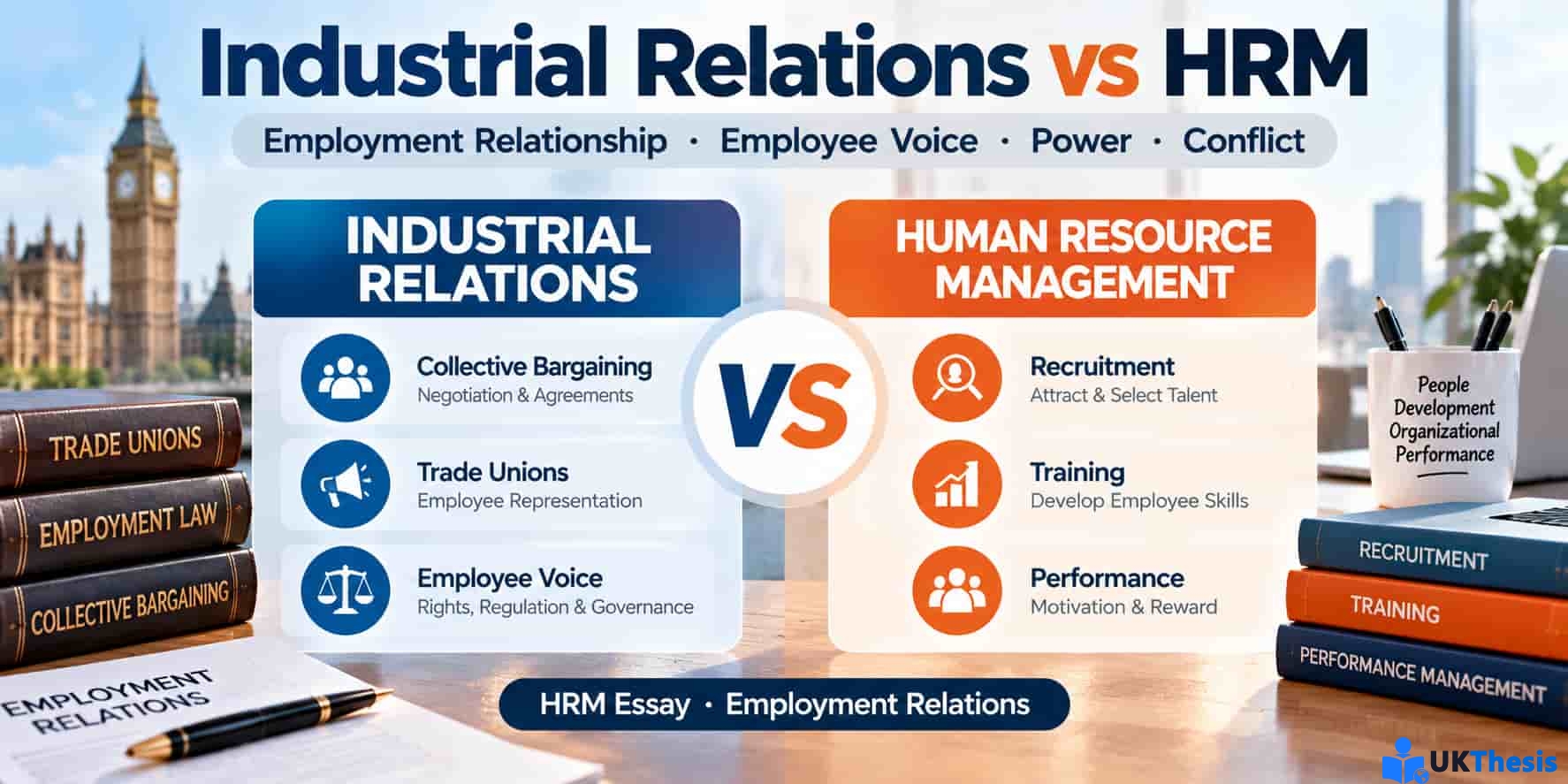
HRM通常更关注企业内部如何Recruit、Select、Train、Motivate和Reward员工,以及怎样通过People Management改善Organizational Performance;Industrial Relations则把镜头拉得更远,不只看Employee和Management,还会关注Trade Unions、Collective Bargaining、Government、Employment Regulation以及Employment Relationship中的Power和Conflict。
所以,与其问“Industrial Relations和HRM谁更好”,不如问:这两个领域分别看到了Employment Relationship的哪一面?本文从两者的Focus、Employee Welfare、Individualism与Collectivism、Employee Voice、Power、Conflict以及Management Role等方面进行比较,并讨论为什么在现代组织中,IR与HRM并不一定需要互相取代。
Industrial Relations和Human Resource Management有什么区别?
Industrial Relations主要关注Employment Relationship的Regulation、Control和Governance。它并不把Employment Relationship简单理解成“老板管理员工”,而是认为Employment受到多个Actors影响,包括Employees、Employers、Trade Unions、Government以及其他Institutions。
Human Resource Management的出发点有所不同。HRM更加关注组织怎样通过一系列People Management Practices获得和发展所需要的Workforce,并使员工能力与Organizational Objectives相匹配。
Recruitment、Selection、Training、Performance Appraisal、Reward、Motivation和Employee Development,因此经常成为HRM讨论的核心内容。
如果一定要用一句比较生活化的话区分:
HRM更常问:企业怎样把People管理得更有效?
Industrial Relations更常问:Employment Relationship中的不同利益、权力、规则和Employee Voice应该怎样协调?
当然,这只是为了方便理解。现实中的HRM和Industrial Relations存在大量交叉,并不是两条完全不相干的研究路线。
| Comparison | Industrial Relations | Human Resource Management |
|---|---|---|
| Main Focus | Employment relationship及其regulation与governance | Managing people以支持organizational objectives |
| Orientation | 更强调Collective Employment Relationship | 更强调Individual Employee Management |
| Key Actors | Employees、Employers、Trade Unions、State | Employees、Managers、HR Function |
| Employee Voice | Collective Bargaining、Union Representation等 | Participation、Engagement、Internal HR Practices等 |
| Conflict | 承认不同Employment Interests可能产生Conflict | 更强调内部Management Practices和Commitment |
| Typical Topics | Unions、Power、Collective Bargaining、Employment Regulation | Recruitment、Training、Performance、Reward、Motivation |
Organizational Performance与Employee Welfare
HRM与Industrial Relations之间一个很有意思的区别,是两者如何理解Organizational Performance和Employee Welfare之间的关系。
一些传统和批判性的HRM观点,更加强调Competitive Advantage、Flexibility以及Organizational Performance。企业通过有效的Recruitment、Selection、Training、Performance Management和Reward获得需要的员工能力,从而提高整体Performance。
从这个角度看,Employee Development并不是和Business Performance分开的。企业培训员工、改善工作环境和建立Reward System,也可能是因为更有能力、更投入的员工最终有助于组织发展。
Industrial Relations则更加明确地提醒我们:企业和员工的利益虽然有重叠,却不意味着在所有问题上都完全一致。
例如:
企业可能希望控制Labour Cost,而员工希望获得更高Pay;
企业可能希望提高Flexibility,而员工可能更加重视Job Security;
Management可能希望快速调整Working Practices,而Employees可能希望参与相关决策;
企业关注Productivity,员工同时会关注Workload、Fairness和Working Conditions。
所以Industrial Relations更加重视如何在不同Employment Interests之间建立制度和协商机制。
这并不意味着HRM“只关心公司赚钱”,也不意味着Industrial Relations“只站在员工一边”。比较这两个Academic Fields时,最好避免这种过于简单的二分法。
Individualism vs Collectivism:两种不同的Employee视角
原本看起来有点抽象的Individualism和Collectivism,其实放到Workplace里就容易理解很多。
HRM往往以Individual Employee为重要管理单位。
比如:
这个员工需要什么Training?
他的Performance怎么样?
应该给他怎样的Reward?
怎样提高他的Motivation?
他的Career Development应该怎样规划?
Performance-related Pay就是比较典型的Individualistic思路:Employee的Performance与个人Reward之间建立更加直接的联系。
Industrial Relations则更加关注Employees作为一个Collective Group时怎样表达利益和意见。
它可能问:
Working Conditions应该怎样协商?
员工怎样形成Collective Voice?
Trade Union在Employment Relationship中扮演什么角色?
Management与Employees出现利益分歧时,应该通过什么机制解决?
HRM Perspective:How can we motivate and develop this employee?
Industrial Relations Perspective:How can employees collectively participate in shaping their employment conditions?
两个问题都重要,只是分析层次不同。
Trade Unions、Collective Bargaining与Employee Voice
Trade Unions和Collective Bargaining是Industrial Relations中非常重要的主题。
Industrial Relations通常认为Employment Relationship并不只是一个Private Relationship。Employee和Employer之间可能存在Power Difference,因此Collective Representation可以为Employees提供表达共同利益和Grievances的渠道。
Collective Bargaining则允许Employee Representatives与Employer围绕Pay、Working Conditions以及其他Employment Issues进行协商。
传统HRM采取的路径有所不同。HRM更加重视通过企业内部People Management Practices改善Employment Relationship,例如:
Recruitment and Selection;
Training and Development;
Performance Management;
Employee Engagement;
Reward and Recognition;
Internal Communication。
这里特别容易写成“Trade Union vs HR Department”,好像企业只能二选一。
其实没有这么简单。一个Organization完全可能既拥有完善的HRM Practices,同时又存在Trade Union Representation和Collective Bargaining。
所以真正值得分析的是:Individual Employee Voice和Collective Employee Voice如何同时存在?
Power与Employment Relationship
Power是Industrial Relations特别重视的问题之一。
Employment Relationship本身并不是完全对等的市场交换。Management通常拥有配置工作、组织Resources、制定部分Policies以及进行Management Decisions的Authority,而Employees则依赖Employment获得Income和Career Opportunities。
因此,Industrial Relations会进一步研究:
谁拥有Decision-making Power?员工怎样参与?法律和Institutions如何影响这种关系?
HRM并不是完全忽视Power,但通常会从Management和Organizational Effectiveness的角度处理People Management。例如通过Knowledge Sharing、Employee Participation、Reward以及Communication提高Trust和Commitment。
这形成了一个非常适合Essay讨论的差异:
| Employment Issue | HRM Lens | Industrial Relations Lens |
|---|---|---|
| Employee Voice | Participation、Engagement、Communication | Representation、Trade Unions、Collective Voice |
| Conflict | Internal management、communication、HR practices | Negotiation、collective bargaining、institutional mechanisms |
| Reward | Individual/performance-oriented approaches may be used | Collective arrangements may have a stronger role |
| Power | Managed through organizational practices and relationships | Explicitly analysed as part of the employment relationship |
HRM和Industrial Relations怎样看待Conflict?
这是两者最值得比较的地方之一。
传统Unitarist HRM Perspective往往更加重视Organization内部共同的Goals和Interests。如果Employee和Management之间出现问题,可以尝试通过Communication、Training、Reward、Employee Development以及Management Practices进行解决。
Industrial Relations中的Pluralist Perspective则更愿意承认:
Employer和Employees可以属于同一个Organization,但依然可能拥有不同而且合理的Interests。
因此,Conflict不一定意味着“有人把公司管理坏了”。某些Conflict可能来自Employment Relationship本身的利益差异。
比如Management希望减少Cost,Employees希望提高Pay,这两个目标完全可能同时合理,却又存在明显Tension。
这时候Collective Bargaining、Negotiation和Employee Representation就有了意义。
所以写HRM assignment时,如果只是写:
“Industrial Relations has more conflict while HRM has less conflict.”
就有点太简单了。
更好的分析应该是:两个领域对Conflict的Assumptions和解决机制有什么区别?
Government和Management分别扮演什么角色?
Industrial Relations通常给Government和Institutions更明显的位置。
Employment Relationship并不是完全由一家公司自己制定规则。Pay、Working Time、Health and Safety、Equality、Dismissal以及Collective Employment等问题,都可能受到Employment Law和Institutional Framework影响。
所以Industrial Relations会把Workplace放在更大的Social和Institutional Context中分析。
HRM则更集中研究Management怎样在Organization内部使用和发展Human Resources。
例如Manager怎样Recruit People、怎样设计Training、怎样建立Performance Appraisal以及怎样形成Organizational Culture。
两者的差别可以理解为镜头距离不同:
HRM:把镜头更多放在Organization内部的People Management。
Industrial Relations:把镜头拉远,同时观察Organization、Employees、Trade Unions、Government和Institutions之间的关系。
Industrial Relations真的被HRM取代了吗?
随着HRM越来越受到Business Schools和Organizations重视,一个很自然的问题是:Industrial Relations是不是已经过时了?
如果只看Recruitment、Training、Performance和Employee Development,似乎HRM已经能够解释很多Workplace Problems。
但事情没有这么简单。
HRM擅长回答很多Organization内部的People Management问题,但Employment Relationship还涉及Collective Voice、Power、Employment Regulation、Trade Unions以及不同利益之间的Negotiation。
这些问题并不会因为公司建立了HR Department就自动消失。
反过来,如果只使用Industrial Relations的Collective Perspective,也可能忽略Individual Employee在Training、Career Development、Performance和Motivation方面的差异。
所以,两者更适合被理解成Complementary Perspectives。
IR与HRM可以形成Complementary Relationship
这也是这篇Comparison最重要的结论。
Industrial Relations与Human Resource Management虽然在Scope、Assumptions和Methods上存在差异,但它们最终都在处理Employment Relationship以及Organization中的People问题。
HRM的Individualistic Orientation可以帮助企业理解不同Employees的Skills、Performance、Motivation和Development Needs。
Industrial Relations的Collectivistic Orientation则提醒企业:Employment Relationship不仅包含Individual Employee,还包含Collective Interests、Power、Representation以及Institutional Context。
如果把两者结合起来,一个Organization既可以问:
“怎样让Employees获得更好的Training和Development?”
同时也可以问:
“怎样让Employees在影响他们Working Conditions的Decision中拥有合理的Voice?”
这两个问题并不冲突。
Conclusion
Industrial Relations和Human Resource Management都研究Employment Relationship,但两者采取了不同的分析视角。
HRM更加关注Organization内部的People Management,包括Recruitment、Selection、Training、Performance、Reward、Motivation和Employee Development,并强调如何通过Human Resources支持Organizational Performance。
Industrial Relations则更加重视Employment Relationship中的Collective Interests、Trade Unions、Collective Bargaining、Power、Conflict以及Government和Institutions的作用。
因此,两者之间一个重要区别可以概括为Individualistic与Collectivistic Orientation的不同。但这种区别并不意味着必须选择其中一个而放弃另一个。
现实中的Employment Relationship同时存在Individual Needs和Collective Interests,也同时受到Management Decisions与External Institutions影响。因此,与其把Industrial Relations和HRM理解成互相竞争的Academic Fields,不如把它们看成理解现代Workplace的两个互补视角。
一个帮助我们理解企业怎样Manage People,另一个提醒我们理解Employment Relationship背后的Power、Voice、Rules和Collective Interests。把这两个视角放在一起,反而更容易理解真实组织为什么远比一本HRM教科书复杂。
FAQ:Industrial Relations vs HRM常见问题
Industrial Relations和HRM最大的区别是什么?
简单来说,HRM更加关注Organization内部怎样Recruit、Develop、Motivate和Manage Employees;Industrial Relations则更加关注Employment Relationship中的Collective Interests、Trade Unions、Collective Bargaining、Power、Conflict以及Institutional Regulation。
Industrial Relations属于HRM吗?
两个领域存在明显交叉,但不宜简单把Industrial Relations理解为现代HRM下面的一个小模块。Industrial Relations具有自己的Academic Tradition,并更加重视Collective Employment Relationship和Institutional Context。
为什么Trade Unions在Industrial Relations中很重要?
Trade Unions可以提供Collective Employee Voice,并在Pay、Working Conditions以及其他Employment Issues上参与Collective Bargaining,因此是传统Industrial Relations分析的重要Actor。
HRM是不是完全不考虑Employee Conflict?
不是。现代HRM同样会处理Grievance、Employee Relations和Workplace Conflict。主要区别在于一些传统HRM Perspectives更加重视内部Management Practices和Employee Commitment,而Pluralist Industrial Relations更加明确地承认Employer和Employees可能存在不同利益。
Individualism和Collectivism在HRM Essay里是什么意思?
Individualism更加关注Individual Employee的Performance、Reward、Motivation和Development;Collectivism则更关注Employees作为群体的共同利益、Representation和Collective Voice。两种视角都可以用于分析Employment Relationship。
Industrial Relations vs HRM Essay怎样写出Critical Analysis?
不要只列出两者的Definitions。可以选择Employment Conflict、Employee Voice、Power、Reward或Trade Unions等具体Dimension,比较两个领域的Assumptions和Approaches,再分析各自能够解释什么、又容易忽略什么。
相关阅读
如果正在学习Human Resource Management,可以继续阅读本站与HRM Assignment相关的Essay与Assignment案例,进一步了解Training、Employee Development、Performance与Workplace Management等主题。
如果课程涉及Employee Behaviour和Organization内部关系,也可以结合Organizational Culture Assignment范例进行阅读,比较Organizational Culture与Employment Relationship的不同分析角度。
写作提示:Industrial Relations与HRM这种Compare and Contrast Essay,最容易出现的问题就是前半篇介绍IR、后半篇介绍HRM,最后才写一句“两者不同”。更好的方法是按照同一个Dimension直接比较,例如Employee Voice、Conflict、Power和Reward。如果在HRM Essay、Employment Relations Assignment的Structure、Comparison或Critical Analysis方面遇到困难,也可以根据具体Assessment Brief进行针对性的Academic Writing辅导。