Management and Organizational Theories Essay范文|三大管理理论比较 - UKThesis

Management Theory看起来是Business Management里比较“老派”的知识点,但真正开始写assignment时,很多同学才发现它并不好对付。Classical Management Theory强调Efficiency和Structure,Humanistic Theory开始把注意力转向People,而Contingency Theory干脆告诉管理者:不存在一种放在哪里都好用的管理方法。
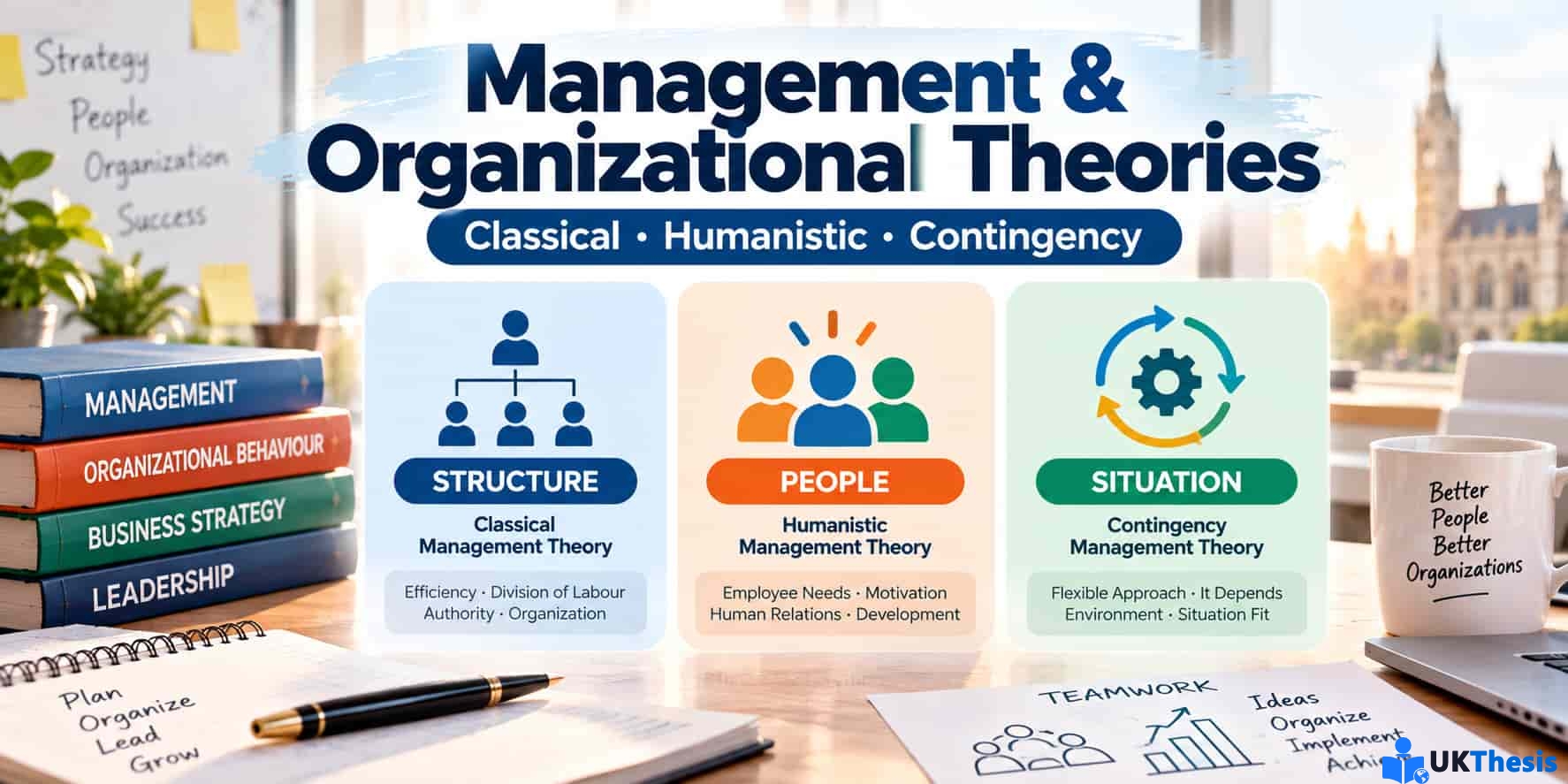
三种理论并不是简单的“旧理论—新理论—更好的理论”。它们实际上回答了不同的Management问题。企业什么时候需要明确的Authority和Division of Labour?什么时候应该更加重视Employee Needs?为什么同一种Leadership Style换一个团队以后可能突然不好用了?这些问题,才是Management and Organizational Theories essay真正值得分析的地方。
本文围绕Classical Management Theory、Humanistic Theory和Contingency Theory展开,比较三种理论的主要贡献、Strengths和Weaknesses,并进一步讨论它们与Organizational Structure、Employee Motivation及Leadership之间的关系。
Three Major Schools of Management and Organizational Theory
管理理论的发展,很大程度上来自企业不断面对的新问题。早期组织首先关心的是如何提高Efficiency、Productivity和Control;随着企业规模扩大,人们逐渐发现员工并不是生产流程中的“零件”,Motivation、Communication和Human Relations同样会影响Performance。
后来,管理研究又进一步意识到,即使一种方法在A公司有效,也不代表搬到B公司就一定有效。Industry、Technology、Employees、Task Structure和External Environment不同,合适的Management Approach也可能不同。
| Theory | Core Idea | Main Strength | Main Limitation |
|---|---|---|---|
| Classical Management Theory | Structure, efficiency, authority and division of labour | Clear responsibilities and efficient processes | Can become rigid and overlook human factors |
| Humanistic Theory | People, needs, relationships and employee development | Recognises employees as people rather than production inputs | Human behaviour is difficult to standardise and predict |
| Contingency Theory | The appropriate approach depends on the situation | Flexible and adaptable | Can make management decisions more complex |
Classical Management Theory
Classical Management Theory developed around the problem of how organizations could arrange work more efficiently. Its central concern is relatively straightforward: if managers can define responsibilities, establish authority, divide work appropriately and coordinate employees, organizational productivity should improve.
One of its most important contributions is the emphasis on Division of Labour. Instead of expecting every employee to perform every activity, work is divided into specialised tasks. Employees can develop expertise in particular activities, while managers coordinate those activities within an organizational hierarchy.
这种思路直到今天都没有消失。去一家大型制造企业、物流中心,甚至快餐店看一圈,就会发现Division of Labour依然存在。不是因为管理者还生活在一百年前,而是因为在重复性、标准化程度比较高的工作中,Specialisation确实可以提高Efficiency。
Strengths of Classical Management Theory
Classical Theory最大的贡献之一,是让Management本身变得更加系统。Authority、Responsibility、Hierarchy和Division of Labour不再只是老板凭经验随意安排,而开始形成相对明确的管理原则。
Clear authority:员工更容易知道向谁汇报以及谁负责最终决策。
Division of labour:专业化能够提高某些重复性工作的效率。
Standardisation:明确流程有助于保持工作质量的一致性。
Accountability:职责清楚以后,更容易判断任务由谁负责。
Scalability:大型组织可以通过层级结构协调大量员工。
例如,一个组织采用President、CEO、Manager、Supervisor、Employees这样的层级结构时,每一级通常具有不同的Authority和Responsibility。对于规模较大的企业而言,如果完全没有Hierarchy,反而可能造成Decision-making和Accountability混乱。
Weaknesses of Classical Management Theory
问题也恰恰出现在这里。为了追求Efficiency,组织很容易变得过度Rigid。
如果员工只负责严格执行上级制定的Task,Management只关心Output和Productivity,那么Creativity、Communication以及Human Relations就可能受到忽视。
这种问题在需要Innovation和Knowledge Work的环境中特别明显。生产线上一个动作能不能再缩短几秒,与一个Designer能不能想出好创意,本来就是两种不同的问题。把管理第一种工作的方式原封不动搬去管理第二种工作,效果未必理想。
所以Classical Theory并不是“错误理论”。更准确的评价是:它对Structure、Authority和Efficiency的贡献依然重要,但不能单独解释现代组织中所有人的行为。
Humanistic Theory:员工不是机器上的一个零件
Humanistic Management把关注点从纯粹的Efficiency进一步转向People。员工不仅提供Labour,也有Needs、Emotions、Relationships、Personal Development以及对工作的不同期待。
这意味着Management不能只问:
“怎样让这个员工做得更快?”
还应该问:
“什么因素会让这个员工愿意投入工作?”
这个变化看起来很小,实际上改变了很多Management Thinking。
Strengths of Humanistic Theory
Humanistic Approach的一个明显优势,是它更加完整地看待Employee。人的工作表现不仅受到工资或者Manager命令影响,还可能受到Recognition、Belonging、Communication、Development Opportunities以及Work Environment影响。
因此,它能够帮助管理者理解为什么两个能力相近的员工,在不同Organizational Environment下可能表现完全不同。
它也推动管理者更加重视:
Employee Motivation;
Communication;
Participation;
Job Satisfaction;
Employee Development;
Quality of Work Life。
Weaknesses of Humanistic Theory
Humanistic Theory的问题之一是:人比机器难预测得多。
同一种Reward可能让一个员工非常兴奋,对另一个员工却没有明显效果。有人更重视Pay,有人更在意Recognition,也有人更关心Flexibility、Job Security或者Career Development。
因此,Humanistic Management虽然提醒管理者重视“人”,但在实际管理中很难把所有Human Needs转换成一个统一、精确的Management Formula。
写Management Essay时一个很好用的思路:
不要把Classical和Humanistic写成“一个坏、一个好”。Classical解决的是Structure与Efficiency问题;Humanistic提醒企业注意Motivation和Human Relations。真正值得讨论的是:不同工作环境中,两者各自解决了什么问题,又忽略了什么问题。
Contingency Theory:管理学里很实用的一句“It Depends”
Contingency Theory的基本观点可以用一句很接地气的话概括:
It depends.
也就是说,不存在一种Management Style能够在所有Organizations、Teams和Situations中始终产生最佳效果。
管理者需要根据具体环境选择Approach。Task是不是高度标准化?员工经验怎么样?Leader拥有多少Authority?团队关系如何?外部环境稳定还是快速变化?这些因素都可能改变一种管理方式的效果。
Fiedler's Contingency Model
Fiedler's Contingency Model把Leadership Effectiveness与Situation联系起来。其基本思路并不是要求所有Leader最终变成同一种“完美领导者”,而是考虑Leadership Orientation与Situation之间是否匹配。
例如,Task-oriented Leader更关注任务完成、Structure和Performance,而Relationship-oriented Leader更加重视Interpersonal Relationships和Team Interaction。
关键问题不是简单判断哪一种Leader“更好”,而是:
哪一种Leadership Orientation更适合当前Situation?
Strengths of Contingency Theory
Contingency Approach最大的优势就是Flexibility。
它承认Organizations存在差异,因此管理者不应该机械复制某一家成功公司的Management Practice。
同样,一个非常Autocratic的Management Style可能在Emergency Situation下提高Decision Speed,但在Creative Team中可能压制Employee Participation。Participative Management可能适合需要Knowledge Sharing的团队,但在所有决策中都进行广泛协商,也可能降低Decision-making Speed。
Weaknesses of Contingency Theory
灵活同时也是它的麻烦。
如果“一切取决于Situation”,管理者就必须先准确判断Situation。而现实世界里的变量往往很多:Technology、Employee Skills、Power、Organizational Culture、Task Structure、Competition甚至时间压力都会改变结果。
所以Contingency Theory没有提供一个特别简单的万能答案。它要求Manager具有较强的Judgement。
三种Management Theory到底谁更适合现代企业?
如果Essay写到这里直接宣布“Contingency Theory最好”,其实又掉进了另一个坑。
现代组织通常同时保留三种理论留下来的东西。
| 现实管理问题 | 理论提供的视角 |
|---|---|
| 谁负责?谁向谁汇报? | Classical:Authority、Hierarchy、Responsibility |
| 为什么员工缺乏积极性? | Humanistic:Needs、Motivation、Relationships |
| 为什么同一种Leadership在不同Team效果不同? | Contingency:Situation、Fit、Flexibility |
换句话说,现代Management并没有简单抛弃Classical Theory,而是吸收了不同理论中仍然有用的部分。
这也是比较三种理论时比较成熟的Argument:Management Theory的发展更像是不断增加新的分析维度,而不是后一种理论彻底把前一种理论删除。
Management Theory与Employee Motivation
当Management Theory开始关注People以后,Motivation自然成为Organizational Behaviour中的重要问题。
Maslow's Hierarchy of Needs提供了一个很容易理解的视角。员工可能具有不同层次的Needs,包括Physiological Needs、Safety Needs、Belonging、Esteem以及Self-actualization。
在Workplace里,可以把它理解得简单一点:
| Need | Possible Workplace Connection |
|---|---|
| Physiological | Income and basic working conditions |
| Safety | Job security and safe working environment |
| Belonging | Team relationships and inclusion |
| Esteem | Recognition, responsibility and status |
| Self-actualization | Development, achievement and challenging work |
不过在Essay里不要把Maslow写成一张绝对的员工说明书。真实员工不会严格排队,一个Need完全满足以后才允许下一个Need出现。
理论真正有价值的地方,是提醒Manager:Pay并不是Employee Motivation的唯一来源。
Pay、Performance与Quality of Work Life
Pay确实可以影响Employee Behaviour。Performance-related Pay试图把Reward与Performance联系起来,让员工看到额外努力与经济回报之间的关系。
但是只盯着工资也有局限。如果工作环境很差、Manager缺乏Communication、员工没有Development Opportunity,再精细的Pay Grid也未必能够解决所有Motivation问题。
这就是Quality of Work Life值得加入分析的原因。它把注意力扩展到Work Environment、Employee Well-being、Communication以及员工参与工作的体验。
这又回到了Humanistic Management的核心:组织里的Employee不是一个只对Money产生反应的变量。
Autocratic还是Participative Management?
Autocratic Management中,Manager拥有较集中的Decision-making Authority。它的优势是决策速度可能较快、责任比较清楚;缺点则是Employee Voice和Participation可能受到限制。
Participative Management则让Employees更多参与Decision-making。它可能提高Commitment并利用员工的Knowledge,但也可能增加讨论和协调所需要的时间。
这里Contingency Thinking再次出现。
不是:
Autocratic = Bad,Participative = Good。
而是:
什么Situation下,哪一种方式更适合?
Management和Leadership有什么区别?
Management和Leadership经常一起出现,但两者并不完全相同。
Management更强调Planning、Organising、Coordinating以及Control;Leadership则更多涉及Direction、Vision、Influence以及带领People面对Change。
| Management | Leadership |
|---|---|
| Planning | Vision |
| Organising | Direction |
| Controlling resources | Influencing people |
| Maintaining operations | Leading change |
不过在现实企业里,一个Manager当然也可能同时承担Leadership Role。把两者完全切开也不现实。
怎样把Management Theory写成Analysis,而不是Theory Notes?
这是这类Management Assignment最容易拉开差距的地方。
只写:
“Classical Theory focuses on efficiency.”
这是Description。
继续解释:
“Division of labour can improve efficiency because employees specialise in particular tasks.”
开始进入Analysis。
如果再往前一步:
“However, the same level of standardisation may be less appropriate in creative or knowledge-intensive work where autonomy and experimentation are important.”
这才出现Evaluation。
所以写三种Management Theory时,我更建议每一部分按照一个很自然的小逻辑走:
Core Idea → Contribution → Strength → Limitation → Modern Application
不需要每个Theory都硬塞七八个小标题。Argument顺了,文章自然就好读。
Conclusion
Classical Management Theory、Humanistic Theory和Contingency Theory分别代表了理解Organizations的不同视角。
Classical Theory的重要贡献在于Structure、Authority、Division of Labour和Efficiency,它帮助企业建立清晰的组织与管理体系,但过度依赖Rigid Structure可能忽略Creativity和Human Relations。
Humanistic Theory进一步强调Employees的Needs、Motivation和Relationships,提醒管理者不能把员工仅仅视为Production Inputs。不过Human Behaviour本身具有复杂性,因此Humanistic Approach也很难提供适用于所有人的统一管理公式。
Contingency Theory则把问题进一步推进:Management Effectiveness取决于Situation。不同Task、Employee、Leadership Relationship和Organizational Environment可能需要不同的方法。
因此,这三种理论与其说是互相替代,不如说提供了三个互补的问题:组织应该怎样建立Structure?应该怎样理解People?又应该怎样根据Situation调整Management Approach?能够把这三层关系讲清楚,比单纯背下每个Theory的Definition更接近Management and Organizational Theories Essay真正需要展示的分析能力。
FAQ:Management and Organizational Theories常见问题
Management Theory和Organizational Theory有什么区别?
Management Theory更关注Manager如何Planning、Organising、Leading和Controlling;Organizational Theory通常更关注Organization本身的Structure、Behaviour、Relationships以及环境之间的关系。实际Assignment中两者经常会交叉。
Classical Management Theory现在还适用吗?
仍然有应用价值。Hierarchy、Division of Labour、Authority和Standardisation在很多组织中依然存在。不过现代企业通常不会只依赖Classical Approach,还会同时考虑Motivation、Culture、Communication和Environmental Change。
Contingency Theory是什么意思?
核心观点是不存在一种适用于所有Situation的最佳Management Approach。有效的管理方式需要结合Task、People、Leadership、Structure以及Environment判断。
Humanistic Theory的优势是什么?
它把Employee视为具有Needs、Relationships和Development Requirements的人,而不仅仅是完成Task的生产要素,因此对Motivation、Job Satisfaction和Employee Engagement等问题具有重要启发。
Management Assignment怎样避免写成纯理论介绍?
介绍Theory之后继续回答三个问题:它解决了什么Management Problem?它在哪些Situation下可能有效?它又忽略了什么?这样更容易形成Analysis和Evaluation。
Management Theory Essay需要写Leadership和Motivation吗?
需要根据Assessment Question判断。如果题目主要比较Management Theories,Leadership和Motivation可以作为理论应用的延伸,而不应该反过来占据全文主体。
相关阅读
如果正在学习Management与Organization相关内容,可以继续阅读本站的Organizational Culture Assignment范例,进一步了解Organizational Culture与Employee Behaviour之间的关系。
如果课程进一步涉及Business Strategy,也可以结合本站Strategic Management、Organizational Behaviour等相关Essay与Assignment案例进行比较阅读。
写作提示:Management Assignment最重要的通常不是把Theory数量堆得越多越好,而是根据Assessment Brief选择真正相关的理论,再通过Strengths、Limitations、Application和Critical Evaluation建立Argument。如果在Management Essay的Structure、Critical Analysis或者Theory Application上遇到困难,也可以结合具体Module要求进行针对性的Academic Writing辅导。