Nando's Cross-Cultural Marketing案例|International Marketing Assignment - UKThesis

同一个广告,在一个国家可能让消费者觉得“这品牌真会玩”,到了另一个文化环境里,却可能直接变成Public Relations Crisis。
这也是International Marketing最麻烦、同时也最有意思的地方:企业全球化以后,面对的不只是不同货币、不同竞争者和不同市场规模,还有Culture(文化)。
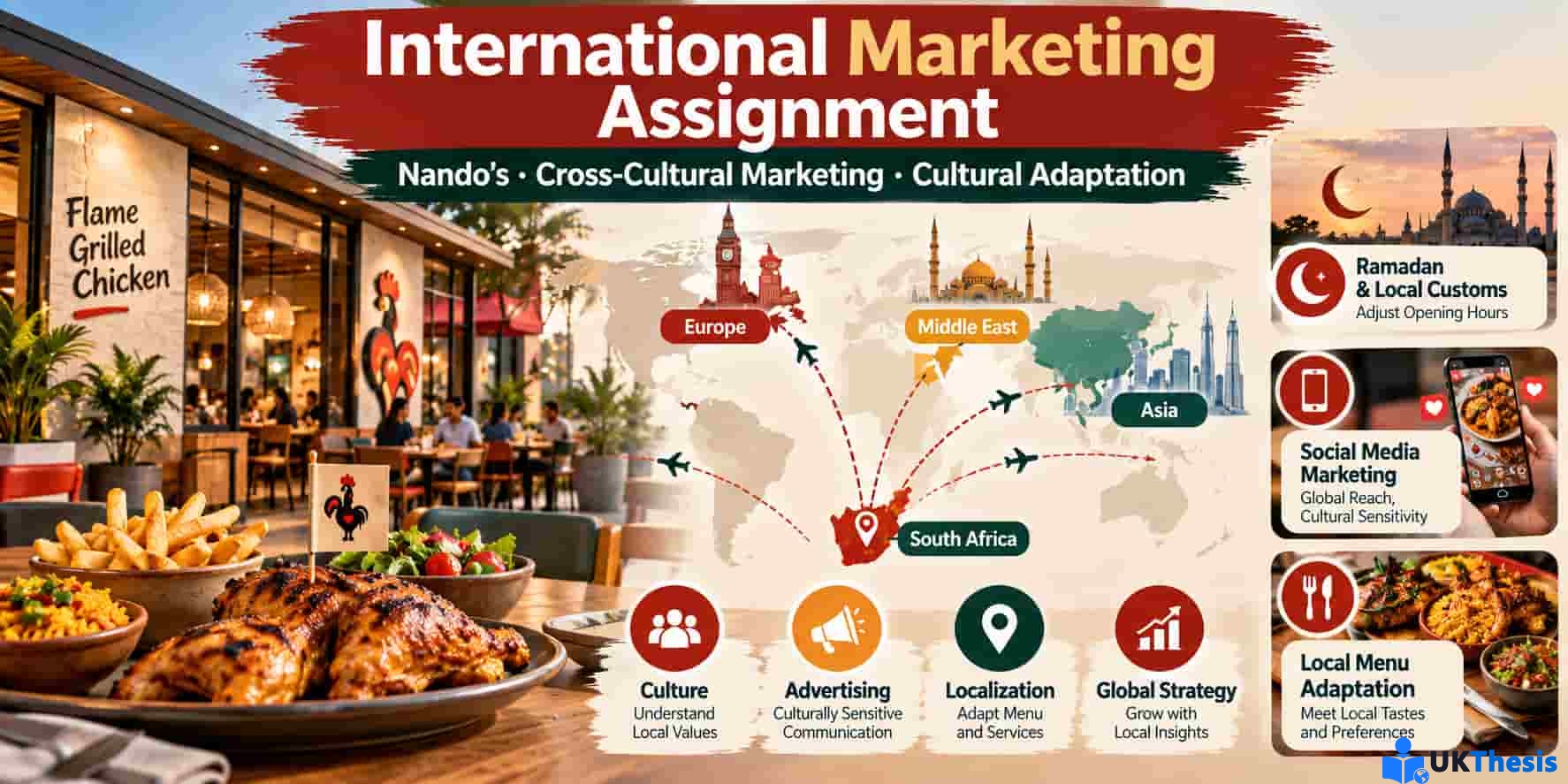
下面这篇International Marketing Assignment范文以Nando’s为案例,讨论Cross-Cultural Marketing、Cultural Adaptation、Social Media Advertising以及Corporate Culture。原案例最值得看的地方,并不是简单告诉我们“不同国家文化不同”,而是展示文化差异如何进一步影响广告、消费者反应、海外管理甚至供应商关系。
范文定位:本文适合作为International Marketing、Cross-Cultural Marketing及International Business相关assignment案例参考。文章重点是分析企业全球扩张过程中,National Culture如何影响Marketing Strategy以及Cultural Adaptation。
The Impact of Culture on International Marketing
Nando’s is an international restaurant business that originated in South Africa and subsequently expanded into markets around the world.
When a business expands internationally, one of the important considerations is whether its products, services and marketing communications are appropriate for the cultural environment of the target market.
The original case argues that difficulties can emerge when a company transfers approaches developed within its home-country culture directly into markets with different cultural expectations.
This gives us the first important Cross-Cultural Marketing question:
Should a global brand keep the same marketing strategy everywhere, or adapt it to local culture?
这其实就是International Marketing里非常典型的Standardization vs Adaptation问题。
Standardization能够帮助企业保持统一Brand Identity,也可能降低Marketing Cost;但如果完全忽视Local Culture,品牌信息到了不同市场以后,消费者未必按照企业预想的方式理解。
National Culture vs Corporate Culture
The original case suggests that Nando’s initially adhered strongly to aspects of the corporate culture developed in its South African environment.
However, national cultures in European, Asian and Middle Eastern markets may differ considerably from the cultural environment in which a company originally developed.
Therefore, international expansion requires businesses to distinguish between two concepts:
| Concept | Meaning | Marketing Implication |
|---|---|---|
| National Culture | Values, norms and social expectations within a country or society | Influences how consumers interpret products and advertising |
| Corporate Culture | Values and behaviours developed within an organisation | Influences how the company makes decisions and communicates its brand |
A strong corporate culture can help maintain a consistent global identity. However, difficulties may arise if headquarters assumes that its own cultural expectations will automatically be accepted in every overseas market.
Cultural Adaptation:Ramadan案例
The original Nando’s case also provides an example of cultural adaptation in a Middle Eastern market during Ramadan.
During Ramadan, Muslim consumers who observe the fast do not eat or drink between dawn and sunset. Restaurant demand and eating patterns may therefore change significantly during this period.
The case describes Nando’s adjusting restaurant operating arrangements so that customers could dine later after sunset.
从Marketing角度看,这个案例很有意思,因为企业没有改变自己的核心产品,而是调整了Service Delivery。
也就是说,Cultural Adaptation不一定意味着:
“到了一个新国家,就把整个品牌重新做一遍。”
它也可能只是调整:
Opening Hours
Promotional Timing
Advertising Message
Menu Options
Communication Style
Customer Experience
真正重要的是判断哪些Brand Elements应该保持一致,哪些需要根据Local Culture调整。
Social Media and Cross-Cultural Advertising
Social media gives international brands an efficient way to communicate with consumers across multiple markets.
However, global reach creates another problem: an advertisement originally designed for one audience can quickly be viewed and discussed by consumers in completely different cultural environments.
This makes cultural sensitivity particularly important in Social Media Marketing.
| Global Marketing Advantage | Cross-Cultural Risk |
|---|---|
| Fast international reach | Content travels beyond its intended audience |
| Lower communication barriers | Meaning may change across cultures |
| Strong consumer engagement | Negative reactions can spread rapidly |
| Consistent global brand voice | One message may not suit every market |
Nando’s Advertising Controversy
The original case refers to a controversial advertisement using humorous and suggestive language about Nando’s food products.
Although the advertisement was intended to use the cheeky style associated with the brand, contemporary reports cited in the original case described negative reactions, including criticism that the wording could be interpreted as sexist.
The company subsequently apologised.
For an International Marketing Assignment, the important point is not simply whether an advertisement was “good” or “bad”. The more useful question is:
Why can the intended meaning of an advertisement change when it crosses cultural boundaries?
Humour is especially difficult to standardise internationally because it can depend on language, gender norms, religion, social values and local expectations.
Critical Thinking:Global Social Media意味着企业实际上很难再假设“这则广告只给某一个国家的人看”。即使Marketing Campaign针对Local Market,截图、转发和新闻报道也可能让它瞬间成为Global Content。
Culture and International HR Management
Culture can influence not only consumers but also the way an international organisation is managed.
The original case identifies religion, political and economic philosophies, education, language and social structure as cultural factors that may influence international business.
Employees and managers working across countries need to understand how corporate values should be applied within different national environments.
The case argues that excessive control from headquarters can limit the ability of overseas management teams to develop strategies appropriate to their local environment.
这里就从Marketing进入了Cross-Cultural Management。
总部当然希望维持统一品牌,但Local Management比总部更接近当地消费者。如果总部把所有Marketing Decision都锁死,本地团队即使发现文化问题,也未必有空间及时调整。
Global Standardization vs Local Adaptation
| Standardization | Adaptation |
|---|---|
| Consistent global brand | Better fit with local consumers |
| Potentially lower marketing costs | Greater cultural relevance |
| Simpler brand management | Allows response to local differences |
| Risk of cultural mismatch | Higher complexity and management costs |
For Nando’s, the challenge is therefore not to choose complete standardisation or complete localisation.
A stronger international strategy attempts to maintain recognisable brand characteristics while adapting elements that are culturally sensitive.
Culture and Supplier Relationships
The original assignment also extends its cultural analysis into relationships with local suppliers and agents.
This is useful because international business does not consist only of relationships between a brand and its customers. Companies also negotiate with suppliers, distributors, governments and other stakeholders.
The original case discusses historical media criticism concerning conditions within parts of the chicken supply chain and considers how reputational concerns could affect supplier relationships.
Rather than treating those historical allegations as a description of the company's current supply chain, the case can be used to demonstrate a broader International Business principle:
Supplier reputation can become part of brand reputation.
If consumers associate a supplier controversy with the main brand, supplier selection stops being purely a Purchasing Decision and becomes a Marketing and Business Ethics issue as well.
Business Ethics and International Brand Reputation
The original case also refers to historical media scrutiny concerning the ownership structure and taxation arrangements associated with Nando’s owners.
For the purpose of this Assignment, the historical controversy is less important than the underlying principle.
International brands operate under scrutiny from multiple stakeholder groups. Decisions involving taxation, suppliers, labour practices, advertising or environmental issues may therefore influence Brand Reputation even when those decisions do not form part of a traditional marketing campaign.
这也是International Marketing一个特别容易被忽略的地方:
消费者看到的Brand,不只是广告部门创造出来的Brand。
Supply Chain、Business Ethics、Management Decision甚至企业面对争议时怎么回应,都可能成为Brand Image的一部分。
What Could Nando’s Improve?
Based on the issues raised in the original case, several areas can be considered.
1. Improve Cross-Cultural Review of Advertising
International advertising should be reviewed not only for language accuracy but also for possible cultural interpretations.
A message considered humorous in one market may be offensive or inappropriate in another.
2. Give Local Teams Appropriate Decision-Making Space
Local managers may possess knowledge that headquarters does not have. Allowing appropriate local input can help international companies identify cultural risks earlier.
3. Train Social Media Teams
Employees responsible for global social media should understand Cross-Cultural Communication and the reputational consequences of online content.
4. Consider Local Menu Adaptation
The original author also suggested adapting menu options according to local pReferences.
This does not necessarily mean replacing the brand's core products. Localised menu items can be used alongside globally recognisable products to increase relevance to local consumers.
5. Monitor Supplier and Ethical Risk
Supplier practices can affect consumer perceptions of the main brand. International companies therefore need to consider ethical and reputational factors alongside price and product quality when managing supplier relationships.
Cross-Cultural Marketing Analysis Framework
如果以后遇到类似Nando’s、McDonald’s、Starbucks、KFC这种International Marketing Assignment,可以按照下面这条线分析,而不是只写“不同国家有不同文化”:
National Culture → Consumer Behaviour → Marketing Message → Local Adaptation → Customer Response → Brand Reputation
再进一步,可以加入第二条线:
Corporate Culture → Headquarters Decisions → Local Management → Market Adaptation → International Performance
这样文章就会从Culture Description进入真正的International Marketing Analysis。
FAQ:Cross-Cultural Marketing常见问题
What is Cross-Cultural Marketing?
Cross-Cultural Marketing examines how cultural differences influence consumer behaviour, communication and marketing strategy across different markets. Companies may need to adapt products, services or promotional messages according to local cultural expectations.
How does culture affect International Marketing?
Culture can influence consumer preferences, language, humour, religious practices, social norms and perceptions of advertising. These differences can affect how an international brand and its marketing messages are interpreted.
What is the difference between Standardization and Adaptation?
Standardization uses similar products and marketing strategies across markets, while Adaptation changes elements of the marketing mix according to local market requirements. International brands often combine elements of both approaches.
Why is social media difficult for global brands?
Social media content can quickly move beyond its intended target market. A campaign designed for one cultural audience may therefore be interpreted by consumers with very different values and expectations.
Nando’s这篇属于MBA essay还是Marketing Assignment?
原稿以MBA Essay形式出现,但从实际内容判断,更准确的学术定位是International Marketing或Cross-Cultural Marketing Assignment。MBA可以作为课程背景,但没有必要作为页面的主要SEO关键词。
International Marketing Assignment怎么避免只写理论?
最有效的方法之一是把每个Marketing Concept对应到具体Business Decision。例如讨论Cultural Adaptation时,不要停在定义,可以继续分析Advertising、Opening Hours、Menu、Social Media以及Local Management究竟需要怎样调整。UKThesis可围绕已有Assessment Brief和Draft提供Assignment结构梳理、案例分析、语言润色及International Marketing写作辅导。
Conclusion
The Nando’s case demonstrates that culture can influence several dimensions of international business, including marketing communications, consumer reactions, management practices and supplier relationships.
A strong global brand needs consistency, but complete standardisation can create problems when cultural expectations differ significantly between markets.
International companies therefore need to identify which elements of their brand should remain consistent and which elements require Cultural Adaptation.
The historical advertising controversy discussed in the case also demonstrates why Social Media and global communication require particular care. Content intended as humour may be interpreted differently once it reaches consumers in another cultural environment.
At the organisational level, headquarters also needs to balance Corporate Culture with the knowledge possessed by local management teams.
Ultimately, effective Cross-Cultural Marketing is not simply about translating an advertisement into another language. It requires understanding how consumers interpret products, messages and business behaviour within their own cultural environment.