Performance Appraisal Assignment|绩效考核系统、Feedback与Fairness

Performance Appraisal:为什么员工怕它,Organisation却离不开它?
第一次接触Performance Appraisal时,我一直觉得这件事有点矛盾:Manager觉得它重要,HR觉得它不能少,可轮到Employee坐下来接受Appraisal时,气氛往往一下子严肃起来。原因其实不难理解——绩效评估不只是“聊聊最近工作怎么样”,它可能与Feedback、Training、Promotion、Reward甚至Career Development联系在一起。所以真正值得讨论的不是企业要不要考核,而是:怎样建立一个有效、相对公平,而且真的能改善Performance的Appraisal System?
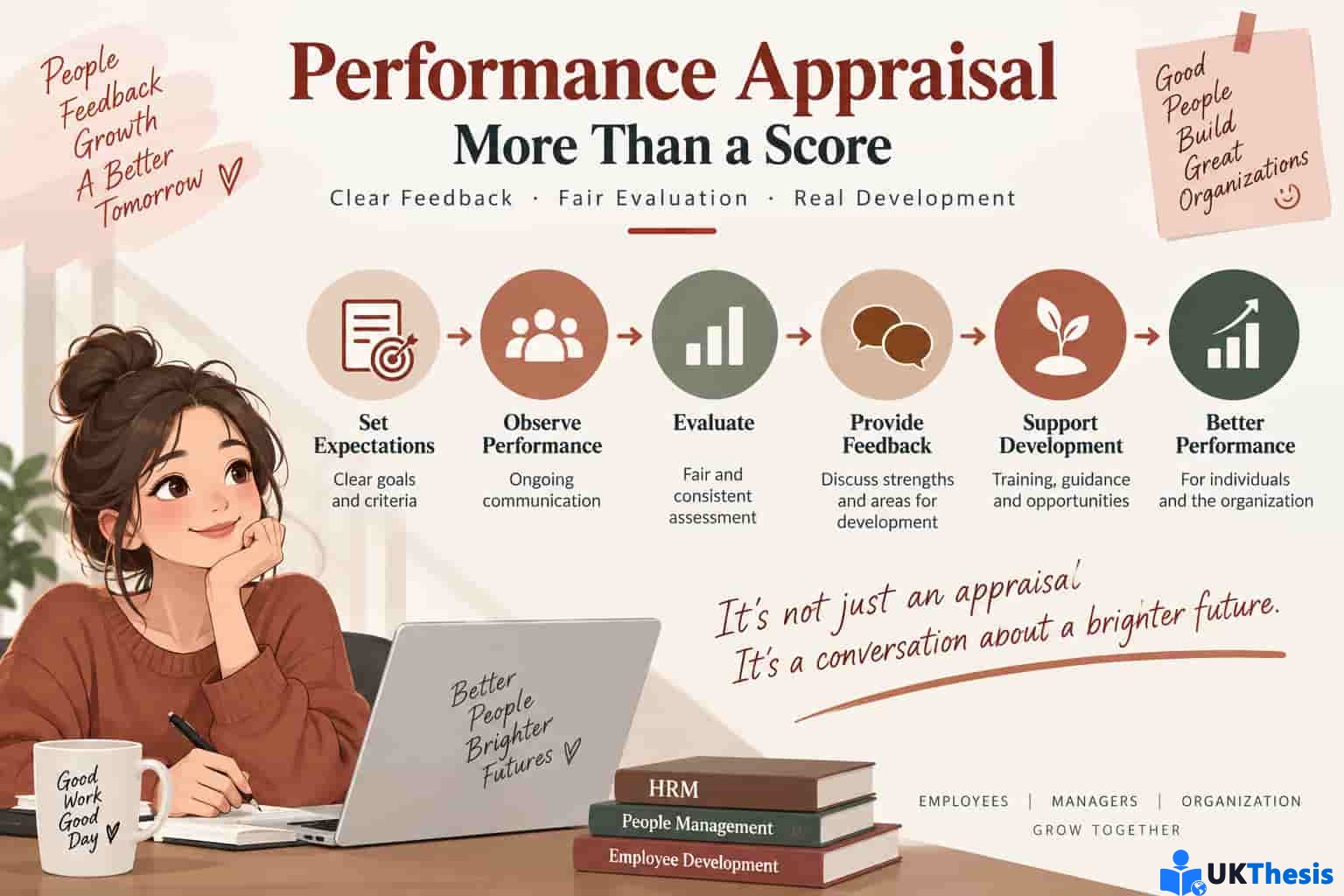
Performance Appraisal并不是Organisation中新出现的Management Practice。无论正式还是非正式,Organisation一直需要了解Employees的Performance,并据此进行Reward、Promotion、Training、Transfer以及其他People Management Decisions。
随着Organisation规模扩大,单纯依靠Manager平时的印象已经越来越难满足Management需要,于是Formal Performance Appraisal System逐渐变得重要。但Formal并不自动等于Fair,更不代表做一张复杂的评分表,Performance就会自己变好。
这也是Performance Appraisal assignment真正有讨论价值的地方:一个好的Appraisal System既要服务Organisational Objectives,也要让Employee获得清晰的Feedback,并知道自己的Strengths、Weaknesses和Development Direction。
先记住一个核心逻辑:
Performance Appraisal不是单纯“给员工打分”。
更完整的过程应该是:Expectations → Observation → Evaluation → Feedback → Development → Improvement
Performance Appraisal到底有什么作用?
Performance Appraisal最直观的作用当然是评价Employee Performance。但如果只写这一句话,HRM essay基本就停留在Definition层面了。
Organisation进行Performance Appraisal,往往同时存在几个目的。它可以帮助Manager判断Employee Performance是否符合Expectations,识别Strengths和Weaknesses,发现Training Needs,也可以为Promotion、Reward、Transfer等Management Decisions提供信息。
换句话说,Appraisal同时面对Organisation、Manager和Employee三个不同Stakeholders,而这三方想从Appraisal中得到的东西不一定完全一样。
| Stakeholder | 希望从Appraisal获得什么? |
|---|---|
| Organisation | Performance information、人才配置、Promotion、Reward及Training依据 |
| Manager / Appraiser | 了解员工表现、发现问题、Clarify Expectations并改善Team Performance |
| Employee / Appraisee | 获得Feedback、了解Strengths和Weaknesses、讨论Development与Career Direction |
问题也恰恰出现在这里。如果Organisation只想用Appraisal决定奖金,Manager想赶紧把表填完,而Employee期待获得真正有用的Career Feedback,那么三方对这个Process的Expectations从一开始就没有对齐。
Formal与Informal Performance Appraisal有什么区别?
Organisation在没有正式Appraisal Form的年代照样可以评价员工。一个好的Manager平时就会观察Staff的工作表现,发现错误时指出问题,表现好的时候给予Encouragement,这其实就是一种Informal Appraisal。
那么为什么还需要Formal Appraisal?
Organisation越大,Management Decision越难仅凭Manager个人印象完成。谁应该Promotion?谁需要Training?Reward应该怎样分配?如果不同Manager使用完全不同的判断标准,很容易产生Inconsistency。
| 比较 | Formal Appraisal | Informal Appraisal |
|---|---|---|
| 形式 | 有正式标准、周期与记录 | 日常观察与沟通 |
| Feedback | 通常周期性 | 可以即时发生 |
| Documentation | 相对完整 | 通常较少 |
| 优点 | Consistency、可比较、便于Management Decision | 灵活、及时、更贴近日常工作 |
| 主要风险 | Bureaucracy、形式主义 | Bias、标准不一致、缺乏记录 |
所以Formal与Informal并不是简单的“谁替代谁”。现实中更合理的做法往往是两者结合:日常持续Feedback,再通过Formal Review进行阶段性总结。
Performance Appraisal的三个核心Objectives
原本讨论Performance Appraisal时,一个很实用的分类是把Objectives理解为Administrative、Informative和Motivational三个方向。
| Objective | 主要作用 | 例子 |
|---|---|---|
| Administrative | 支持People Management Decisions | Promotion、Transfer、Reward、Salary Decisions |
| Informative | 提供Performance Information | Strengths、Weaknesses、Training Needs |
| Motivational | 帮助Employee学习和改善 | Goal Setting、Feedback、Development Plan |
这里有个特别容易写出Critical Discussion的地方:三个Objectives有时候会互相冲突。
比如Employee知道这次谈话直接决定Salary,他在Appraisal Meeting里可能更倾向于证明“我表现很好”,而不是坦诚讨论自己的Weaknesses。于是Administrative Purpose和Development Purpose之间就可能产生Tension。
这也是为什么Performance Appraisal不能只靠一张万能表格解决所有问题。
Individual Performance还是Team Performance?
传统Performance Appraisal经常把注意力集中在Individual Employee身上。但现代Organisation越来越依赖Teamwork和Project-based Work,于是一个很现实的问题出现了:
如果所有Reward都只看Individual Performance,大家为什么还要认真帮助Team Member?
过度强调Individual Result,可能导致Employees更关注自己的Score,而不是Collective Outcome。但如果只考核Team Performance,又可能出现Individual Contribution难以识别的问题。
| Individual Appraisal | Team Appraisal |
|---|---|
| 容易识别个人Contribution | 强调Collaboration和Collective Result |
| 适合明确Individual Targets | 适合高度Interdependent Work |
| 可能造成内部Competition | 可能难以区分Individual Contribution |
所以更实际的Performance Appraisal System通常需要说明:哪些Performance Dimensions属于个人,哪些属于Team,以及两者在Overall Evaluation中怎样平衡。
Performance-related Pay:绩效一定要和工资挂钩吗?
许多Organisation会把部分Reward Decisions与Individual或Team Performance联系起来,但具体关系可以非常不同。
从Management角度看,这个逻辑很好理解:Performance好的人得到更多Reward,可以强化Goal的重要性,也可以让Employees看到Performance与Outcome之间存在联系。
但事情没有这么简单。
| 可能的优势 | 同时存在的风险 |
|---|---|
| 提高Goal Focus | Employees只关注可获得Reward的指标 |
| Reward Performance | Perceived Unfairness |
| 区分不同Performance | 可能影响Teamwork |
| 增强Accountability | 可能诱发Short-term Behaviour |
所以真正的问题不是“Pay要不要和Performance挂钩”,而是Performance怎样被Measured、Employee是否理解Criteria,以及大家是否认为这个Process是Fair的。
为什么员工会害怕Performance Appraisal?
被别人评价,本身就容易让人紧张。尤其当一个Employee知道Appraisal可能影响Promotion、Reward或者Career Prospects时,Defensive Behaviour并不奇怪。
我以前看这类HRM题目时,总觉得“员工抵触绩效考核”是Employee的问题。后来再看会发现,很多Resistance其实来自System本身。
例如Criteria说不清楚、Manager一年只在Appraisal Meeting出现一次、平时没有Feedback,到了年底突然列出一长串问题——换谁坐在对面都很难觉得舒服。
一个有效的Appraisal Process至少应该让Employee提前知道:
What am I expected to achieve?
How will my performance be measured?
Who will evaluate it?
What evidence will be used?
What happens after the appraisal?
当这些问题都不清楚时,再复杂的Rating Scale也很难建立Trust。
Culture为什么会影响Performance Appraisal?
Performance Appraisal不能简单从一个Organisation复制到另一个Organisation,更不能假设某一种Management Practice在所有国家和Culture中都会产生完全相同的效果。
例如,有些工作环境习惯Direct Feedback;另一些环境中,过于直接的Negative Feedback可能让Employee感到尴尬甚至被公开否定。
Individual-oriented的Performance System放到高度强调Collective Work的环境中,也可能产生意料之外的Behaviour。
| Cultural Factor | 对Appraisal可能产生的影响 |
|---|---|
| Feedback Culture | 影响Employee如何接受Positive / Negative Feedback |
| Power Distance | 影响Employee是否愿意Challenge Manager的评价 |
| Individual / Collective Orientation | 影响Individual与Team Measures的接受程度 |
因此,Best Practice更适合作为Reference,而不是拿过来直接Copy。
Performance Appraisal有哪些Advantages和Problems?
如果Appraisal设计和执行得好,Employee可以更清楚地知道自己的Performance、Strengths和Weaknesses,也能够与Manager讨论Training、Development和Career Direction。
Manager则可以更系统地了解Staff Performance,Clarify Department Priorities,并发现哪些员工需要Support。
对Organisation而言,一个有效的Appraisal System还可能改善Communication、Goal Alignment以及People Decisions。
但反过来也一样。
如果Appraiser投入的Time和Effort很少、Top Management并不真正支持、Criteria模糊或者Feedback只是走形式,Appraisal很容易变成大家每年不得不完成的一项Administrative Exercise。
| 设计得好 | 设计/执行得不好 |
|---|---|
| Clear Expectations | Confusion |
| Constructive Feedback | Defensive Behaviour |
| Development Planning | Tick-box Exercise |
| Better People Decisions | Bias / Perceived Unfairness |
| Improved Communication | Loss of Trust |
Performance Appraisal的历史,其实比想象中早得多
对Performance进行Measurement并不是现代HR Department发明的。历史上长期存在根据能力、行为或者结果进行Selection与Evaluation的实践。随着Industrial Organisation和Professional Management的发展,Employee Appraisal才逐渐形成更加Formal、Systematic的Management Process。
这段历史真正值得我们注意的,不是哪一年出现了第一张评分表,而是Appraisal一直随着Organisation和Work本身发生变化。过去相对稳定、Hierarchical的Organisation与今天更加Decentralised、Project-based、Flexible的工作环境,对Performance Measurement的要求显然不会完全一样。
Appraisal记录与Fairness为什么越来越重要?
Performance Appraisal可能影响Reward、Promotion、Development甚至其他Employment Decisions,因此Documentation、Consistency和Fairness非常重要。
不同国家和地区的Employment Law要求并不完全相同,所以不能简单写成“所有Organisation法律上都必须怎样做”。更稳妥的分析方式是:如果Appraisal Criteria不清楚、Documentation不足或者类似Employees受到明显不同的评价方式,Organisation可能面临Employee Relations甚至Employment-law Risk。
如果Assignment涉及Legal Issues,应根据题目所在国家或地区进一步查阅相应Employment Law,而不是直接把某一个国家的规则套到所有Organisation。
写Performance Appraisal Assignment时,别只堆Theory
我见过比较常见的问题,是资料搜了一大堆:Appraisal、360-degree Feedback、KPIs、Reward、Motivation、Training全都有,最后却像把HRM词典复制进Essay。
真正需要先看的反而是Assessment Brief中的动词。
Describe通常要求解释;Compare需要找Similarity和Difference;Evaluate则不能只写Advantages;如果题目要求Critically Discuss,就更需要讨论不同Stakeholders、Fairness、Culture以及Performance-related Pay可能产生的矛盾。
如果已经整理了很多Performance Appraisal资料,却不知道怎样从“知识点罗列”变成有Argument的HRM Essay,可以通过留学生论文辅导或Assignment写作指导先把Question、Theory和Critical Discussion之间的关系梳理出来。这样通常比继续往正文里塞更多Management Models有效。
FAQ
Q1:Performance Appraisal和Performance Management一样吗?
不完全一样。Performance Appraisal通常是对某一阶段Performance进行评价和Feedback;Performance Management范围更广,还可能包括Goal Setting、Continuous Feedback、Development和Performance Improvement等持续过程。
Q2:Formal和Informal Appraisal哪个更好?
没有简单答案。Formal Appraisal有利于Consistency和Documentation;Informal Appraisal更加及时灵活。实际Management中,两者结合往往比只依赖一种方式更合理。
Q3:Performance Appraisal一定应该与Pay挂钩吗?
不一定。Pay linkage可能强化Performance Focus,但也可能带来Short-term Behaviour、Competition和Fairness问题,需要结合Job、Team Structure和Reward System分析。
Q4:为什么Employee会抵触Performance Appraisal?
可能涉及评价焦虑、Criteria不透明、Manager Bias、缺少日常Feedback以及Appraisal与Reward或Promotion之间的联系。Resistance不一定只是Employee“不接受批评”。
Q5:Performance Appraisal属于HRM Essay还是Assignment?
两种形式都很常见。它通常属于Human Resource Management / HRM Assignment范畴,也可以作为Essay题目进行理论比较与Critical Discussion。
相关阅读
Human Resource Management Assignment专题
Employee Motivation Theories Assignment:员工激励理论分析
Conclusion
Performance Appraisal看起来只是HRM中的一个工具,实际却同时牵涉Organisation、Manager和Employee的不同需求。
Organisation需要Performance Information支持People Decisions;Manager需要知道Team是否达到Expectations;Employee则希望得到Fair Evaluation、Constructive Feedback以及清晰的Development Direction。
Formal Appraisal能够增加Consistency和Documentation,但如果缺少日常Communication,也可能变成一年一次的Administrative Exercise。Performance-related Pay能够强化Goal Focus,却也可能带来Competition和Fairness问题。Individual Performance容易Measure,却不能忽略Team Contribution;而一种在某个Culture里运行良好的Appraisal Practice,也未必适合直接复制到另一个环境。
所以,一个真正有效的Performance Appraisal System并不取决于表格做得有多复杂。
真正重要的是:Employee是否知道什么叫Good Performance,Manager是否能够提供有Evidence的Feedback,以及Appraisal之后是否真的发生了Development和Improvement。
```