Reading Comprehension Essay范文:Bottom-up、Schema Theory与Affective Filter分析
Reading是不是把一行英文从左看到右,就算完成了?当然没这么简单。眼睛确实在工作,但如果看到最后脑子只剩一句“每个单词好像都认识,连起来怎么就不知道说什么了”,那顶多算完成了视觉扫描。
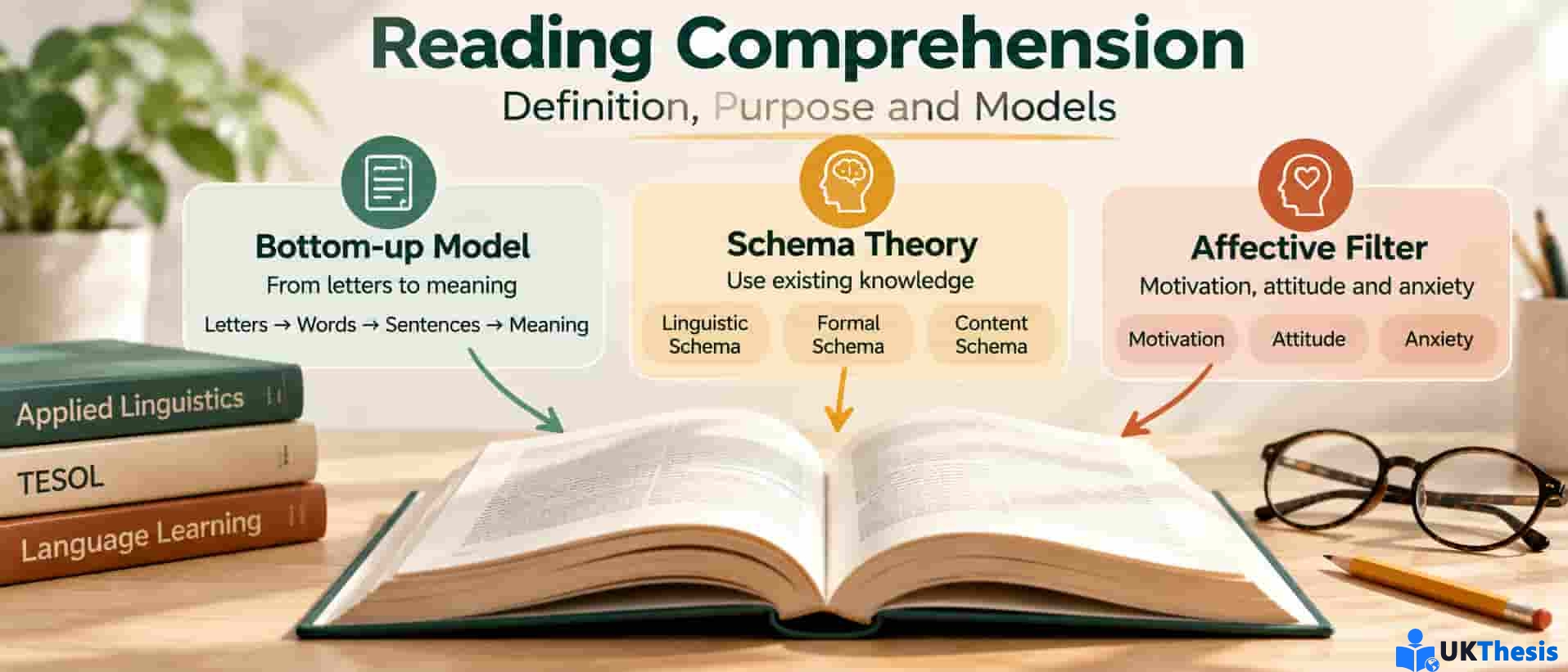
在Applied Linguistics和TESOL中,Reading通常被理解为一个复杂的Mental和Interactive Process。读者不仅需要识别Words和Sentences,还需要利用Vocabulary、Grammar、Background Knowledge、Text Structure甚至Motivation去构建Meaning。
下面这篇Reading Comprehension essay从Reading的Definition与Purpose开始,进一步讨论Bottom-up Reading Model、Schema Theory以及Krashen's Affective Filter Hypothesis,并分析这些理论怎样帮助我们理解Second Language Learners为什么会出现Reading Comprehension困难。
| 核心理论 | Reading关注点 |
|---|---|
| Bottom-up Model | Letters → Words → Sentences → Meaning |
| Linguistic Schema | Vocabulary与Grammar Knowledge |
| Formal Schema | Text Structure与Discourse Organisation |
| Content Schema | Background与Topic Knowledge |
| Affective Filter | Motivation、Attitude与Language Input |
What Is Reading?Reading到底是什么?
Reading is a mental process. At its most basic level, a reader looks at written language and attempts to understand the information represented by words, sentences and larger units of text.
但是Reading并不只是Word Recognition。
一个人完全可以把一句英文准确地念出来,却不知道它是什么意思。这说明:
Pronouncing Words ≠ Understanding Text
Reading therefore involves bothdecoding and comprehension.
原来的Essay引用多种Reading Definitions,但这些定义实际上围绕几个共同点:
Readers perceive written language;
Readers identify linguistic information;
Readers construct meaning;
Reading can be silent or oral;
Successful reading requires comprehension。
Reading为什么是一种Interactive Process?
Reading还可以理解为Reader与Writer之间的一种Communication。
Writer通过Written Text编码Information和Meaning,Reader则需要利用Language Knowledge和已有Experience对这些信息进行Interpretation。
Writer → Written Text → Reader → Interpretation
这里有一个很重要的变化:Reader不再是一个被动“接收单词”的人。
同一篇文章,不同Reader可能因为Vocabulary、Background Knowledge、Education和Experience不同而产生不同程度的Comprehension。
Reading不是单一Skill
原Essay还有一个很值得保留的观点:Reading并不是永远以同一种方式使用的Single Skill。
它会和其他Language Skills产生联系,例如:
Listening;
Speaking;
Writing;
Vocabulary Knowledge;
Grammar;
Thinking。
例如一个学生Reading以后需要参加Seminar Discussion,Reading会与Speaking连接;如果需要写Critical Essay,又会与Writing连接。
所以Academic Reading更接近:
Read → Understand → Evaluate → Connect → Communicate
Purpose of Reading:为什么要读?
Reading最基本的Purpose之一当然是获取Information,但不同Reading Context下,Purpose并不完全相同。
例如:
| Reading Purpose | Example |
|---|---|
| Reading for Information | 查找某个Concept或Fact |
| Reading for Learning | 理解Lecture或Textbook内容 |
| Reading for Academic Work | 完成Essay、assignment或Research |
| Reading for Evaluation | 比较不同Author的Arguments |
| Reading for Pleasure | Novel、Story或Personal Interest |
如果Reader只是机械看完Text却没有形成Comprehension,那么Reading作为Learning Tool的作用就会大幅下降。
为什么Second Language Learners会出现Reading困难?
原Essay把Reading Difficulty和Vocabulary、Interest以及Home、School、Social Environment联系起来。
这个思路值得保留,因为Second Language Reading Problem通常不是由一个因素造成的。
常见影响因素包括:
Limited Vocabulary;
Insufficient Grammar Knowledge;
Lack of Background Knowledge;
Low Motivation;
Limited Exposure to English;
Difficulty recognising Text Structure;
Anxiety or negative attitudes towards English。
例如,一个学生每个Sentence里都有大量Unknown Words,那么他的大部分Mental Resources可能已经花在Word Recognition上,自然很难继续分析作者的Argument。
Home、School和Social Environment会影响Reading吗?
会,但这里不能简单理解成“家里说English的学生一定Reading好”。
原Essay讨论了Home Exposure、Teacher Language Use和Social Environment对Language Learning的影响。更准确的理解应该是:不同环境提供的Language Exposure和Literacy Opportunities可能不同。
例如:
学生有没有机会接触English Reading Materials?
School是否提供足够Reading Support?
Teacher怎样帮助学生理解Unknown Vocabulary?
学生是否愿意在课外继续使用English?
这些因素都会间接影响Reading Development。
大学生为什么特别需要Academic Reading?
原Essay把Tertiary Students和Secondary School Students进行了一个很生活化的比较。
进入University以后,Reading往往不再只是Teacher说“这一页回家读一下”。
学生需要自己阅读:
Journal Articles;
Textbooks;
Assignment Briefs;
Case Studies;
Research Reports;
Academic Sources。
如果Reading速度慢或者Comprehension不足,影响的不只是English课程,而可能直接影响Assignment、Lecture Preparation甚至整个Academic Performance。
Model 1:Bottom-up Reading Model
原文首先介绍的是Traditional View of Reading,也就是常说的Bottom-up Model。
这个Model强调Reading从较低层级的Language Processing逐渐向Meaning发展。
Letters → Sounds → Words → Phrases → Clauses → Sentences → Meaning
Reader首先识别Visual Information,例如Letters,然后处理Words和Sentence Structure,最终形成对Text的理解。
对于Beginning Reader或者Second Language Learner来说,这个Model很容易理解,因为Vocabulary和Word Recognition确实是Reading的重要基础。
Bottom-up Model有什么局限?
问题是,人真正Reading的时候并不一定每次都按照:
字母 → 单词 → 句子 → 意义
这么老老实实地一级一级往上爬。
Experienced Reader会利用Context、Background Knowledge和Expectation帮助理解Text。
例如看到:
The waiter brought the menu and...
即使后面的Sentence还没有读完,Reader已经可能根据Restaurant Schema预测接下来会发生Order、Food或者Drink。
所以Bottom-up Processing很重要,但单靠Bottom-up不能完整解释Reading Comprehension。
Model 2:Schema Theory
Schema Theory强调Reader已有Knowledge在Reading Comprehension中的作用。
原Essay将Schema分成三个主要类型:
1. Linguistic Schema
Linguistic Schema指Reader已经拥有的Vocabulary和Grammar Knowledge。
如果一篇文章大量Words和Sentence Structures都完全陌生,Reader自然需要投入更多精力进行Decoding。
Linguistic Schema = Vocabulary + Grammar + Language Knowledge
2. Formal Schema
Formal Schema涉及Reader对Text Organisation、Genre和Discourse Structure的认识。
例如已经熟悉Academic Essay的人通常知道:
Introduction → Main Argument → Evidence → Discussion → Conclusion
因此他们在Reading时可以更快判断某一段在整篇文章中的Function。
3. Content Schema
Content Schema指Reader对Topic本身已有的Background Knowledge。
例如一个学过Climate Change的人阅读相关Journal Article,即使遇到少量Unknown Vocabulary,也可能利用已有Knowledge帮助推断Meaning。
| Schema | Reader已经知道什么? |
|---|---|
| Linguistic | Words和Grammar |
| Formal | Text怎么组织 |
| Content | Topic讲什么 |
Schema Theory给Reading Teaching什么启发?
如果Background Knowledge能够帮助Reading,那么Teacher在让学生直接冲进一篇陌生Text以前,可以先激活相关Schema。
例如:
讨论Title;
观察图片;
预测文章内容;
复习关键Vocabulary;
讨论学生已有Topic Knowledge。
这并不是提前把答案告诉学生,而是帮助Reader建立进入Text所需要的Context。
Model 3:Krashen's Affective Filter Hypothesis
原Essay最后引入Stephen Krashen的Affective Filter Hypothesis。
这个Theory关注Motivation、Attitude、Anxiety等Affective Factors与Language Acquisition之间的关系。
简单来说,如果Learner对English长期处于:
High Anxiety;
Low Motivation;
Negative Attitude;
Fear of Failure;
即使Language Input存在,也未必能得到最有效的Processing。
反过来,较积极的Learning Attitude和较低的Anxiety可能让Learner更愿意接触和处理Language Input。
Language Input + Low Affective Barrier → Better Opportunity for Language Learning
Affective Filter和Reading有什么关系?
这一点原文写得比较短,其实可以继续往Reading上走一步。
想象一个学生拿到Academic Article,第一反应就是:
“完了,20页英文,我肯定看不懂。”
这种Anxiety可能让学生更容易放弃、跳读甚至完全不读。
所以Reading Difficulty不一定全部来自Vocabulary或Grammar。有时候Learner Beliefs、Confidence和Motivation也会影响Reading Behaviour。
三个Reading Models应该怎样放在一起理解?
这三个Theory不是必须互相打架。
反而可以从不同角度解释Reading:
| Theory | 它回答的问题 |
|---|---|
| Bottom-up | Reader怎样从Written Language识别Meaning? |
| Schema Theory | Reader已有Knowledge怎样帮助Comprehension? |
| Affective Filter | Motivation和Attitude怎样影响Language Learning? |
把它们放在一起以后,Reading就不再只是“认识多少Words”的问题。
Language Knowledge + Background Knowledge + Text Processing + Motivation = Reading Comprehension
学姐提醒:写Reading Theory Essay最容易犯的毛病,是第一段介绍Bottom-up,第二段介绍Schema,第三段介绍Krashen,然后Conclusion说“三个理论都很重要”。理论介绍完了,Critical Analysis却还没开始。真正应该继续问的是:哪个Theory解释了哪一种Reading Difficulty?这些Theory能不能互相补充?对Teaching有什么实际意义?这样才从“背理论”走到“用理论”。
Conclusion
Reading is a complex process that involves more than recognising written words. Successful reading requires readers to decode language, construct meaning, use background knowledge and engage actively with the text.
The Bottom-up Model highlights the importance of lower-level linguistic processing such as letter, word and sentence recognition. Schema Theory demonstrates how linguistic, formal and content knowledge can support comprehension. Krashen's Affective Filter Hypothesis adds another dimension by showing how attitudes, motivation and emotional factors may influence language learning.
These perspectives suggest that difficulties in second-language reading cannot always be explained by a single factor. Vocabulary and grammar are important, but so are text knowledge, background knowledge, learning environment and learner motivation.
Effective reading instruction should therefore help learners develop linguistic knowledge while also activating relevant background knowledge, teaching reading strategies and creating conditions in which students are willing to engage with English texts.
FAQ
Q1:Reading Comprehension是什么意思?
Reading Comprehension指Reader不仅识别Written Words,还能够理解、解释并整合Text所表达的信息和意义。
Q2:Bottom-up Reading Model是什么?
Bottom-up Model强调Reading从Letters、Words等低层级Language Information逐渐建立到Sentence和Meaning。
Q3:Schema Theory中的三种Schema是什么?
通常包括Linguistic Schema、Formal Schema和Content Schema,分别涉及Language Knowledge、Text Structure Knowledge和Background Knowledge。
Q4:Affective Filter和Reading有什么关系?
Motivation、Anxiety和Attitude可能影响Learner接触、处理和坚持阅读Second Language Text的程度。
Q5:Vocabulary是不是Reading Comprehension最重要的因素?
Vocabulary非常重要,但并不是唯一因素。Grammar、Background Knowledge、Text Structure、Reading Strategy和Motivation也会影响理解。
Q6:这篇属于Linguistics Essay还是TESOL Assignment?
两者都有关联,但更准确地说属于Applied Linguistics / TESOL中的Second Language Reading和Reading Comprehension主题。
Q7:Bottom-up Model和Schema Theory矛盾吗?
不一定。前者强调Language Input的低层级Processing,后者强调Reader已有Knowledge,两者可以从不同角度共同解释Reading。
Q8:Reading Comprehension Essay不知道怎么搭结构怎么办?
可以从Definition、Reading Problem、Theory、Comparison、Teaching Implication和Critical Evaluation搭建结构。如果Theory Application、Outline或英文表达比较乱,也可以通过UKThesis的Essay写作辅导梳理论证逻辑。
相关阅读
English Learner Education Essay:SEI、Bilingual Education与Blended Model分析