Research Paper Introduction怎么写?5步写清Background、Gap与Research Question
Research Paper的Introduction有个挺折磨人的地方:明明知道自己研究什么,一打开Word却突然不会说人话了。第一句写“In recent years”是不是太普通?Background写多少才够?Literature要不要塞进去?其实Introduction真正的任务并不是把开头写得多么惊艳,而是把读者从一个Broad Topic一步步带到你的Research Problem,最后让他明白:这个问题为什么值得研究,以及这篇Paper究竟准备回答什么。把这条路线想清楚,Introduction就没那么玄学了。
Research Paper Introduction到底负责什么?
Introduction是读者正式进入Research Paper的入口。它需要提供理解研究所必需的Context,同时逐渐缩小范围,把一个较大的Topic转化成明确的Research Problem。
所以一篇好的Introduction读完以后,读者至少应该能回答三个问题:你在研究什么?为什么值得研究?这篇Paper到底准备解决什么问题?
| 部分 | 主要作用 | 常见问题 |
|---|---|---|
| Background | 建立研究背景 | 背景铺得太远,半天进不了主题 |
| Research Problem | 说明具体问题 | 只有Topic,没有Problem |
| Research Gap | 说明现有研究还缺什么 | 为了制造Gap而过度声称“没人研究过” |
| Question / Objective | 明确本文准备回答什么 | 范围太大,无法真正回答 |
| Thesis / Position | 需要时说明核心Argument | 只有观点,没有前面的Evidence基础 |
最好用的思路:把Introduction想成一个倒三角
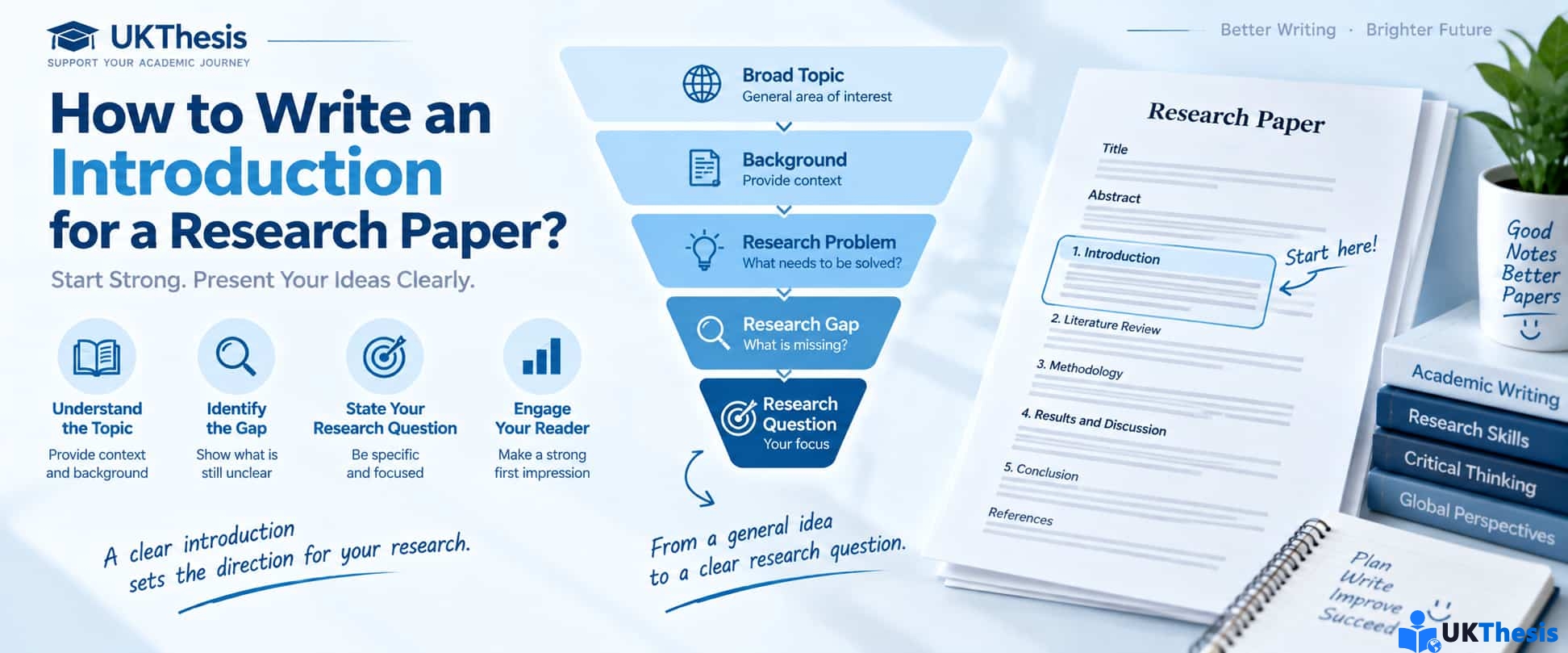
我比较喜欢用“倒三角”解释Introduction。不是第一句话就把research Question扔出来,也不是从人类文明起源讲起,而是Broad → Narrow → Specific。
Broad Context
↓
Specific Topic
↓
Existing Research
↓
Research Problem / Gap
↓
Research Question
比如研究“Generative AI对大学生Academic Writing的影响”,第一段没必要从“自从计算机被发明以来”讲起。可以先交代Generative AI进入Higher Education的背景,再缩小到Academic Writing,随后讨论已有研究关注了什么、仍有什么问题,最后落到自己的Research Question。
Introduction写得顺不顺,很多时候不是英语问题,而是研究范围有没有真正缩下来。
5步把Introduction搭起来
| 步骤 | 你需要回答 |
|---|---|
| ① Establish Context | 这个研究属于什么背景? |
| ② Narrow the Topic | 具体研究哪个人群、变量、地区或情境? |
| ③ Identify the Problem | 现有知识或现实实践中有什么问题? |
| ④ Establish the Gap | 已有Research还没有充分回答什么? |
| ⑤ State the Question | 这篇Research Paper最终准备回答什么? |
这里有个特别容易写过头的地方——Research Gap。不要动不动就写“There is no research on...”。学术世界这么大,你很难确定真的“一个人都没研究过”。更稳妥的写法通常是说明某个Population、Context、Method或Relationship还没有得到充分讨论。
Research Paper Introduction Example:火星研究怎么缩小范围?
原来的Mars案例其实很适合解释Introduction,只是没必要把整篇Paper都搬进来。
Broad Context: Mars has attracted sustained scientific interest because of its proximity to Earth and evidence that liquid water existed on its surface in the past.
Specific Context: Advances in robotic exploration have expanded knowledge of Martian geology and atmospheric conditions, while also raising questions about the scientific priorities of future planetary research.
Research Problem: Despite the scientific value of Mars exploration, concentrating astronomical resources on a single planet may limit research into other important questions about the solar system.
Research Focus: This paper therefore evaluates whether Mars should receive priority in astronomical research over the next decade by considering its scientific value, potential for future human exploration, and the opportunity costs of concentrating research funding on one planetary target.
你会发现,这样处理以后,Introduction不需要把火星所有知识都讲完。它只需要提供足够的Background,然后把读者送到真正的Research Problem。
Introduction最容易出现的几个问题
| 问题 | 修改思路 |
|---|---|
| 第一段太宏大 | 从与Research Question真正相关的Context开始 |
| 像literature review | 只保留建立Problem和Gap所需要的研究 |
| 只讲Background | 最终必须落到Research Focus或Question |
| 强行放名人名言 | Humanities可以酌情使用,Scientific Paper通常更适合直接建立研究Context |
| Research Gap夸张 | 说明“研究不足在哪里”,而不是轻易声称“从未有人研究” |
提交前可以做一次“倒三角检查”:
Background是否逐渐缩小?→ Research Problem是否明确?→ Gap有没有Evidence支持?→ Research Question能否真正回答?→ Introduction最后是否自然进入后面的Paper?
如果Introduction读完以后,别人还不知道你的Paper到底准备研究什么,那通常不是句子不够高级,而是研究路线还没有交代清楚。
FAQ:Research Paper Introduction常见问题
Q:Research Paper Introduction一般写多少字?
没有适用于所有课程的固定数字。可以根据总Word Count规划,但assignment Brief、学校要求和Journal Guidelines应该优先。
Q:Introduction一定要有Research Gap吗?
取决于Paper类型和课程要求。正式Research Paper通常需要说明研究问题产生的背景,而Research Gap是建立研究必要性的常见方式之一。
Q:Introduction可以用Quotation开头吗?
可以,但要看学科。Humanities和部分Social Sciences可能适合,Natural Sciences通常更强调直接、准确地建立Research Context。
Q:Introduction和Abstract有什么区别?
Abstract概括整篇Paper,包括Methods、Results和Conclusion;Introduction主要负责建立Background、Problem、Gap以及Research Question,不应该提前把整篇论文重新总结一遍。
Q:Introduction写了一页还是感觉没有重点怎么办?
先暂时不润色英语,把每一段分别标成Background、Problem、Gap或Research Question。如果有几段根本不知道属于哪一类,通常就是可以压缩的部分。对于Research Paper结构、Introduction逻辑、Research Question和英文表达,也可以通过论文辅导、结构反馈和Academic Writing修改建议逐项检查。