School Uniforms Essay范文:校服能减少Bullying并改善Education吗?

A heart surgeon in scrubs is easily recognised. The clothing immediately communicates a role, a professional environment and a set of expectations. If the same surgeon arrived for an operation wearing completely unrelated clothing, a patient might at least pause for a second.
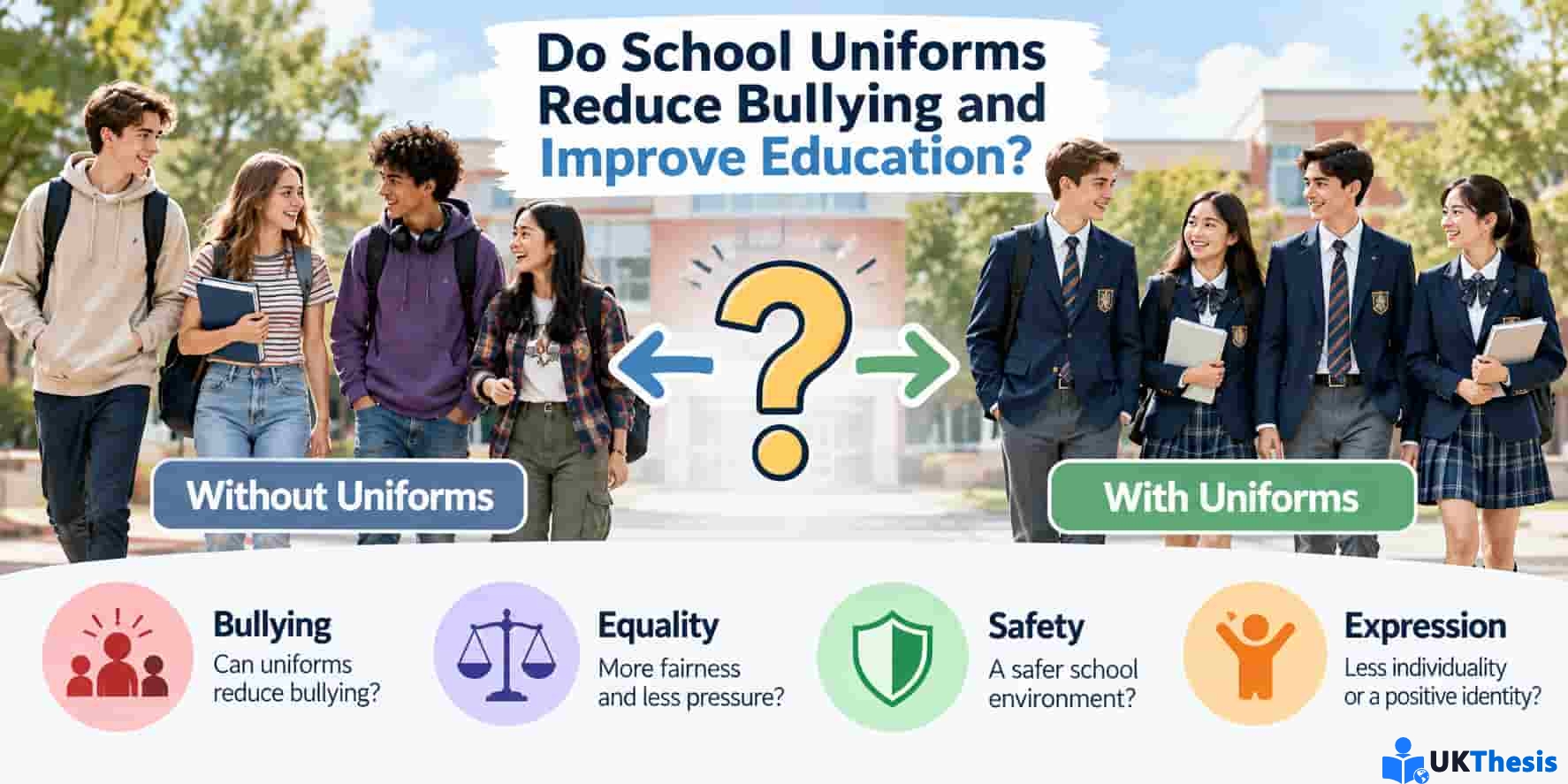
School uniforms raise a surprisingly similar question. Clothing can create identity, familiarity and belonging, but students are not surgeons and schools are not hospitals. Students also care about individuality, comfort and freedom of expression. This makes the debate around school uniforms much more complicated than simply asking whether everybody looks neater in the same clothes.
This Education essay examines whether School Uniform Policies can reduce Bullying and contribute to a better educational environment. The strongest argument for uniforms is that they may reduce visible differences in clothing, encourage a sense of equality and make school identity clearer. The opposing argument is equally important: uniforms do not remove the deeper causes of bullying, and compulsory policies may create concerns around cost, comfort and individual expression.
Essay Question:Do School Uniforms Reduce Bullying and Improve Education?
Suggested Position:School uniforms may remove some appearance-based differences and support a sense of school community, but they should be treated as one possible part of a broader anti-bullying strategy rather than a complete solution.
| Argument | Possible Benefit | Question to Evaluate |
|---|---|---|
| Equality | 减少明显服装差异 | Bullying会不会转移到其他特征? |
| School Identity | 增加Belonging与Community | Belonging是否一定来自服装? |
| Safety | 较容易识别本校学生 | 实际安全效果有多大? |
| Academic Focus | 减少部分Appearance Pressure | 是否真的改善Academic Achievement? |
Why School Uniforms Are Linked to Bullying
Bullying can involve repeated aggressive behaviour, social exclusion, verbal harassment or other actions that create a power imbalance between students. Appearance can sometimes become one of the characteristics around which bullying develops.
Clothing is especially visible. Students may notice brands, styles, whether another student can afford particular clothes, or whether somebody dresses differently from the dominant peer group. A School Uniform Policy can reduce at least one category of visible difference by requiring students to follow broadly similar clothing rules.
This creates the basic argument in favour of uniforms: if clothing differences become less noticeable, students may have fewer opportunities to target classmates specifically because of what they wear.
However, this argument needs an important qualification. Bullying is not caused by clothing alone. Students may also be targeted because of body shape, disability, social background, personality, ethnicity, academic performance or many other characteristics. Removing one visible difference therefore does not automatically remove bullying itself.
Equality and Appearance
One of the most common arguments for School Uniforms is equality.
Without a uniform policy, students from families with different incomes may arrive at school wearing clothing with very different prices, brands and styles. For adolescents in particular, clothing can become part of social status.
A uniform can reduce the visibility of some of these economic differences during the school day. Students are still different individuals, but clothing may become less useful as an immediate marker of status.
There is also a psychological reason why appearance deserves attention. People regularly form impressions of others using visible information. Children and adolescents are not immune to this process.
Yet equality created by uniforms should not be exaggerated. Students may still display difference through shoes, phones, accessories, hairstyles or activities outside school. A uniform can reduce some visual distinctions without eliminating the wider social inequalities from which they come.
学姐的Critical Analysis提醒:这里不要写成“Uniforms create equality,所以Bullying就没了”。更稳妥的逻辑是:Uniforms may reduce one visible source of social comparison → this could reduce some appearance-based pressure → but bullying has multiple causes → therefore uniform policy alone is unlikely to be sufficient。
School Uniforms and a Sense of Community
Uniforms can also contribute to a visible shared identity. Students wearing the same school colours or clothing may feel part of the same institution, much like members of a sports team or other organised group.
This idea is often connected with belonging. If students identify themselves as part of a shared school community, stronger social connection may help create an environment in which bullying is less socially acceptable.
However, a sense of community does not come from clothing alone. Students are more likely to feel that they belong when they also experience supportive teachers, fair rules, friendships, effective pastoral care and opportunities to participate in school life.
Uniforms can therefore reinforce an existing school identity, but they cannot manufacture a healthy school culture by themselves.
Can Uniforms Improve School Safety?
Supporters of School Uniform Policies sometimes argue that uniforms improve security because students can be more easily identified within school premises.
In some circumstances, a clear uniform may make it easier for staff to notice whether somebody does not belong to the school population. This is a practical rather than psychological argument.
Nevertheless, it would be too strong to suggest that uniforms by themselves create school safety. Safeguarding procedures, staff supervision, access control, reporting systems and responses to threatening behaviour are much more direct elements of school security.
Uniforms may therefore play a supporting role, but they should not be described as the central mechanism of school safety.
Do Uniforms Improve Academic Performance?
This is where the argument becomes more difficult.
Supporters sometimes suggest that uniforms reduce distraction, allow students to concentrate more on education and create a more academically focused environment. The idea sounds reasonable, but an Argumentative Essay needs to separate a plausible explanation from strong evidence.
Academic Achievement is influenced by many factors including teaching quality, family background, attendance, motivation, school resources and student wellbeing. Clothing policy is only one relatively small part of the school environment.
Research comparing different types of school uniform has not established a simple academic advantage from traditional uniforms. This suggests that claims such as “uniforms improve grades” should be treated cautiously.
| Claim | Reasoning | Evidence Caution |
|---|---|---|
| Uniforms reduce distraction | Less attention to clothing differences | Distraction has many other causes |
| Uniforms improve grades | More academic focus | Direct evidence is limited |
| Uniforms reduce bullying | Reduce clothing-based differences | Bullying has multiple causes |
Why Bullying Still Matters to Education
Even if School Uniforms do not provide a guaranteed solution, Bullying itself has an important relationship with Education.
Students who repeatedly experience peer victimisation may struggle with engagement, motivation, confidence and concentration. This means anti-bullying policy should not be treated as something separate from educational quality.
If students do not feel safe, respected or included in school, their ability to participate fully in learning can be affected.
The important distinction is therefore:
Bullying can harm Education ≠ Uniforms automatically prevent Bullying
This distinction makes the Essay more academically careful.
Counterargument: Freedom of Expression
One of the strongest objections to compulsory school uniforms concerns individual expression.
Clothing is one way young people communicate identity. Students and parents may therefore argue that a mandatory policy unnecessarily limits individuality or places too much institutional control over personal appearance.
There is also a practical question: if bullying is primarily driven by group behaviour, status competition or prejudice, changing clothes may deal with a visible symptom rather than the deeper problem.
This Counterargument deserves to be taken seriously. A persuasive Argumentative Essay should not make the opposing side sound foolish simply to make its own position stronger.
Another Concern: Cost and Comfort
Uniforms are sometimes presented as a way to reduce clothing costs, but this depends heavily on the policy itself.
If a school requires expensive items from limited suppliers, families may face additional financial pressure. If the policy is flexible and affordable, it may instead reduce pressure to purchase multiple fashionable outfits for school.
Comfort is another issue. Students spend many hours each day in school and may also participate in physical activity. A uniform that is uncomfortable, impractical or poorly suited to weather conditions can create unnecessary problems.
This is why the question should not only be:
Should schools have uniforms?
It should also be:
What kind of uniform policy is affordable, comfortable, inclusive and educationally justified?
A Balanced School Uniform Policy
A more balanced approach would avoid treating School Uniforms as either a miracle solution or a completely useless policy.
Uniforms may provide several practical benefits:
reduce some visible clothing differences;
support a shared school identity;
reduce some appearance-related social pressure;
make school membership easier to identify;
provide predictable expectations about clothing.
But schools would still need broader anti-bullying measures such as:
clear reporting procedures;
teacher intervention;
student education about bullying;
pastoral and mental-health support;
parental involvement;
a strong school culture built around respect.
School Uniform Policy should therefore be understood as one possible element within a wider educational and safeguarding strategy.
Conclusion
School uniforms can contribute to equality, shared identity and a reduction in some visible clothing-based differences among students. These effects provide reasonable grounds for schools to consider uniform policies, particularly where appearance and clothing status create social pressure.
However, uniforms should not be presented as a guaranteed way to eliminate Bullying or automatically improve Academic Achievement. Bullying is influenced by complex social and behavioural factors, while educational performance depends on far more than what students wear.
A stronger conclusion is therefore that School Uniforms may support a safer and more inclusive school environment when they are affordable, comfortable and implemented as part of a broader anti-bullying strategy.
The debate is ultimately not about whether every student should simply “look the same”. It is about whether a clothing policy can remove unnecessary social pressure without ignoring individuality, student wellbeing and the deeper causes of bullying.
学姐的写作提醒:这种题最容易写成“我支持校服,所以校服什么都好”。我第一次看Argumentative Essay的时候也觉得Position越坚定越好,后来才发现,真正让Argument变强的反而是承认它解决不了什么。你可以支持School Uniform Policy,同时承认它不会自动解决Bullying,这不是削弱论点,而是在告诉老师:我知道现实比一句Thesis复杂。
FAQ
Q1:这篇属于Education Essay还是Argumentative Essay?
两者都是。Topic属于Education,Essay Type则更接近Argumentative/Persuasive Essay,因为作者需要围绕School Uniform Policy形成Position并用Evidence支持。
Q2:School Uniforms真的能减少Bullying吗?
目前更适合写成“可能减少部分与Clothing Difference有关的Bullying或Social Pressure”,而不是声称校服能够解决Bullying。Bullying具有多种社会和心理原因。
Q3:School Uniforms能提高成绩吗?
不能简单这样下结论。Academic Performance受到教学质量、家庭环境、Motivation、Attendance和School Resources等多种因素影响,目前并没有足够证据证明Uniform本身能直接提高成绩。
Q4:这类Essay怎样写Counterargument?
可以讨论Freedom of Expression、Cost、Comfort以及“uniform policy may address symptoms rather than root causes of bullying”等反方观点,然后再说明为什么你仍然支持某种更有限、更平衡的Uniform Policy。
Q5:Argumentative Essay一定要明确表态吗?
通常需要形成可辨认的Thesis,但Position不一定非黑即白。“Uniforms may help, but only as part of a broader anti-bullying policy”本身就是一个明确而有条件的Argument。
Q6:怎样避免Education Essay写成Opinion Piece?
每一个主要Claim后都问自己三个问题:Evidence是什么?这个Evidence能证明到什么程度?有没有Alternative Explanation?这样就能把个人意见慢慢变成Academic Argument。
Q7:不会写Argumentative Essay怎么办?
可以先建立“Thesis → Supporting Argument → Evidence → Counterargument → Response”的结构。如果在Position、Evidence选择或Critical Analysis上比较卡,也可以通过UKThesis的Essay写作辅导梳理论证,而不是单纯堆观点。
相关阅读
Persuasive Essay怎么写?Thesis、Evidence与Counterargument写作指南