Knowledge Management Case Study范文:Tata Motors组织学习与员工培训案例分析
Knowledge Management Case Study范文:Tata Motors组织学习与员工培训案例分析
一家汽车公司最值钱的东西是什么?
工厂?设备?品牌?专利?
这些当然都重要。但还有一种资产,你在Balance Sheet里很难直接看到,却可能随着一个工作二十年的老员工离职,在一个下午悄悄从公司大门走出去。
它就是Knowledge(知识)。
这也是Knowledge Management和Organizational Learning case study特别有意思的地方:企业真正需要管理的不只是People,还包括员工脑袋里的Experience、Skills、Problem-solving Methods以及长期积累下来的Tacit Knowledge。
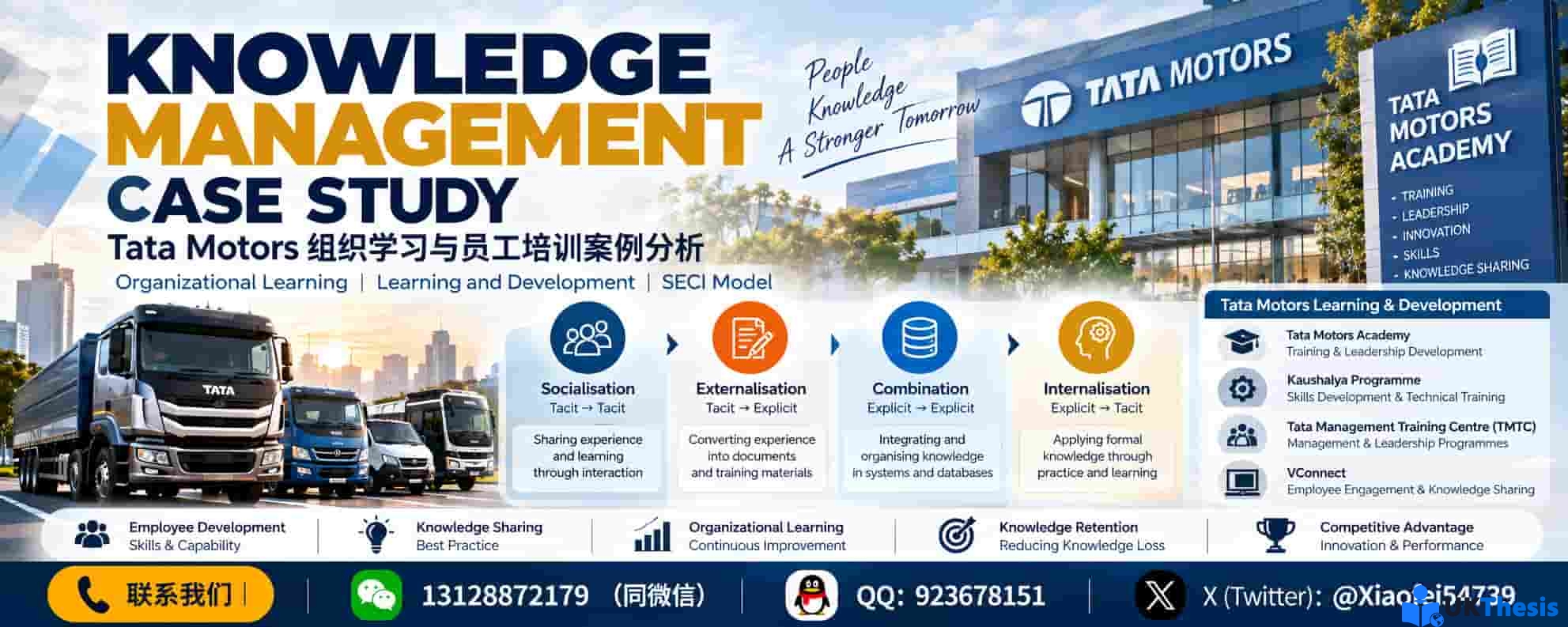
本篇Case Study以Tata Motors为案例,从Organizational Learning、Knowledge Management和Learning & Development角度,分析企业如何通过Tata Motors Academy、Management Training、Employee Engagement以及Knowledge-sharing Mechanisms,把个人学习逐渐转化成Organizational Knowledge。
一、先判断:这是什么类型的Case Study?
| 项目 | 本文定位 |
|---|---|
| assignment Type | Case Study Assignment |
| Primary Subject | Knowledge Management |
| Secondary Subject | Organizational Learning |
| HRM Topic | Learning & Development |
| Core Concepts | Tacit / Explicit Knowledge |
| Knowledge Process | Socialisation / Externalisation / Combination / Internalisation |
| Company | Tata Motors |
所以这篇文章并不是简单的“员工培训Case Study”。
真正值得分析的主线应该是:
Individual Learning → Knowledge Sharing → Organizational Learning → Knowledge Management → Organisational Capability
二、Organizational Learning到底是什么意思?
很多同学第一次写这种Assignment,会把Organizational Learning理解成:
“公司给员工上课。”
那就有点把事情想简单了。
Employee Training当然属于Learning的一部分,但Organizational Learning更加关注一个问题:
个人学到的东西,怎样变成整个Organisation能够重复使用的Knowledge?
比如一个Engineer通过十年工作经验发现了一种解决Manufacturing Problem的方法。
如果这个方法永远只存在于他的脑袋里,那么它主要属于Individual Knowledge。
如果企业把这种经验通过Meeting、Training、Documentation、Database或者Mentoring传递给其他员工,它才开始真正变成Organizational Knowledge。
三、Learning、Organizational Learning和Knowledge Management有什么区别?
| Concept | 核心问题 | 简单理解 |
|---|---|---|
| Individual Learning | 个人学到了什么? | Skills & Experience |
| Organizational Learning | 组织如何从经验中学习? | Learning Process |
| Organizational Knowledge | 组织已经掌握什么? | Knowledge Asset |
| Knowledge Management | 知识如何被创造、保存和共享? | Management Process |
| Learning Organisation | 企业是否形成持续学习文化? | Organisational Capability |
把这几个概念区分清楚以后,后面的Tata Motors Case Study就好写多了。
四、Tacit Knowledge和Explicit Knowledge
Knowledge Management里非常经典的一组概念,就是:
Tacit Knowledge(隐性知识)与Explicit Knowledge(显性知识)。
Tacit Knowledge
Tacit Knowledge通常具有较强的个人经验属性,很难完全用文字表达。
比如:
一个Experienced Engineer听声音就能判断Machine哪里可能有问题;
一个Senior Manager知道什么时候应该推进Negotiation;
一个Sales Employee凭经验能够判断Customer真正担心什么。
这些Knowledge很有价值,但也最容易随着Employee Turnover流失。
Explicit Knowledge
Explicit Knowledge则更加容易记录和传播,例如:
Manuals;
Training Materials;
Reports;
Databases;
Videos;
Standard Operating Procedures。
所以Knowledge Management一个非常现实的任务,就是:
怎样让“只有张师傅会”的事情,慢慢变成“Organisation也会”。
五、Tata Motors为什么适合做Knowledge Management Case Study?
Tata Motors拥有分布于不同地区和不同Functions的员工、Management Teams、Engineering Resources以及Learning Programmes。
对于这样的大型Organisation来说,Knowledge如果只停留在个人或者单一Department中,就很容易形成Knowledge Silos。
因此企业需要通过:
Training、Learning Platforms、Management Development、Employee Communication以及Knowledge-sharing Mechanisms
促进知识在Organisation内部流动。
六、Tata Motors Academy:培训不只是“上课”
原案例一个非常值得保留的部分就是Tata Motors Academy(TMA)。
TMA针对不同Workforce Segments和Functions提供Learning & Development支持,并涉及多个Centre of Excellence。
学习形式包括:
Classroom Learning;
External Programmes;
Online Learning;
Learning Management System(LMS);
Functional Development;
Leadership Development。
这里Case Study千万不要只写:
Tata Motors provides many training programmes for employees.
老师看到这里,大概只能回复你一句:“然后呢?”
真正需要分析的是:
这些Programmes如何帮助Organisation创造、传播和保存Knowledge。
七、Kaushalya Programme体现了什么?
案例还涉及Tata Motors的Skill Development Programme——Kaushalya。
相关Training覆盖Design、Engineering、Manufacturing、Automobile Production、Sales、Service以及其他Support Functions,并关注Quality、Productivity、Discipline和Safety。
从Learning & Development角度看,它主要解决:
Employee Capability。
但从Knowledge Management角度看,它还承担另一个作用:
把Organisation需要的Knowledge和Skills更加系统地传递给Employees。
| Programme | Learning作用 | Knowledge Management意义 |
|---|---|---|
| Technical Training | 提高专业Skills | 传播Technical Knowledge |
| Manufacturing Training | 提高Production Capability | 标准化Operational Knowledge |
| Quality Training | 减少错误 | 形成Best Practice |
| Safety Training | 提高Safety Awareness | 保存并传播Safety Knowledge |
八、TMTC:Management Knowledge怎样传播?
Tata Management Training Centre(TMTC)则更加偏向Management和Leadership Development。
其Learning Topics可以涉及:
Leadership、Human Resources、Strategy、Innovation、Marketing、Finance以及Corporate Governance等。
这一点对于Knowledge Management尤其重要。
因为Managers拥有大量Tacit Knowledge。
他们在Project、Decision-making、Leadership以及Problem-solving中积累的经验,如果能够通过Seminars、Mentoring、Discussion和Training进行传播,就可能成为其他Managers的Learning Resource。
于是:
Managerial Experience → Knowledge Sharing → Management Learning → Organisational Capability
这条逻辑就建立起来了。
九、用SECI逻辑分析Tata Motors的Knowledge Creation
这部分是我认为整篇Case Study最值得升级的地方。
原案例已经涉及:
Socialisation、Externalisation、Combination、Internalisation
它们可以帮助我们理解Tacit Knowledge和Explicit Knowledge如何相互转化。
| Process | Knowledge变化 | Tata Motors情境示例 |
|---|---|---|
| Socialisation | Tacit → Tacit | 员工通过共同工作、Mentoring和Experience Sharing学习 |
| Externalisation | Tacit → Explicit | 把个人经验转化为Training Material、Guidelines或Models |
| Combination | Explicit → Explicit | 整合Reports、Documents、Databases及Formal Knowledge |
| Internalisation | Explicit → Tacit | 员工通过Training和实践把Formal Knowledge转化为个人能力 |
这样一来,Tata Motors Academy就不再只是一个“培训中心”。
它可以被理解成:
Organizational Knowledge Conversion Infrastructure。
十、Socialisation:为什么员工之间的交流很重要?
有些东西真的很难靠PDF学会。
比如Experienced Employee处理突发问题时的判断方式。
Socialisation强调员工通过:
Observation、Shared Experience、Teamwork、Mentoring以及Informal Interaction
实现Tacit Knowledge之间的传递。
这也是为什么Organisation不能只建设Database,还需要创造People真正交流的机会。
十一、Externalisation:把脑袋里的经验“倒出来”
Externalisation解决的是Knowledge Management一个很现实的问题:
怎么把个人经验变成别人也能理解的内容?
例如Senior Engineer可以把多年经验整理成:
Technical Guidelines;
Training Cases;
Best Practice Documents;
Problem-solving Frameworks。
这样Tacit Knowledge才不会永远锁在某一个Employee身上。
十二、Combination:企业为什么需要Knowledge Systems?
当Organisation已经拥有大量Explicit Knowledge以后,下一个问题就是:
这些Knowledge怎么整理?
如果公司有五万个文件,但没人知道文件放在哪里,那严格来说只是拥有五万个“电子失踪人口”。
这也是Document Management、Content Management、Learning Platforms和Knowledge Databases存在的意义。
它们帮助Organisation:
Collect、Organise、Store、Retrieve以及Share Explicit Knowledge。
十三、Internalisation:培训为什么最终必须回到实践?
员工看完Training Video,并不代表真正掌握了Knowledge。
Internalisation强调员工通过:
Learning by Doing。
把Manual、Training Material以及Formal Knowledge逐渐转化成自己的Skills和Experience。
所以:
Training → Practice → Experience → Tacit Knowledge
形成了Knowledge循环。
十四、VConnect与Employee Engagement有什么Knowledge价值?
原案例还涉及VConnect这一Employee Engagement Initiative。
如果从Knowledge Management角度分析,它的意义并不仅仅是“让员工开心一点”。
开放的Employee Communication Platform可以促进:
Ideas Exchange;
Employee Voice;
Knowledge Sharing;
Cross-functional Communication;
Sense of Belonging。
而一个愿意表达Ideas的Employee,往往比一个“领导让我干什么我就干什么”的Employee更可能参与Organizational Learning。
十五、Learning Organisation到底长什么样?
Learning Organisation不是“培训课特别多的公司”。
真正的Learning Organisation应该能够持续:
Learn → Share → Reflect → Adapt → Improve。
| 特征 | Case Study分析角度 |
|---|---|
| Continuous Learning | Employees持续发展Skills |
| Knowledge Sharing | Knowledge不被个人垄断 |
| Learning from Mistakes | 错误转化成Organizational Learning |
| Employee Participation | 员工能够贡献Ideas |
| Knowledge Retention | 降低Employee Exit造成的Knowledge Loss |
| Adaptation | Organisation能够应对Environment Change |
十六、Knowledge Management为什么可能形成Competitive Advantage?
这也是Business Case Study里非常重要的一步。
不要分析完Training Programme以后就结束。
需要继续追问:
So what?
如果Knowledge Management能够提高:
Innovation、Problem-solving、Employee Capability、Decision-making、Productivity以及Organisational Adaptability,
它最终就可能影响Business Performance。
逻辑可以写成:
Knowledge Creation → Knowledge Sharing → Employee Capability → Innovation & Efficiency → Organisational Performance
十七、Tata Motors现有Learning System还有什么潜在问题?
Critical Analysis不能只夸。
企业拥有Training Centre、LMS和Learning Programmes,并不自动等于Knowledge Management已经完美。
仍然需要关注:
| Potential Issue | 可能产生的问题 |
|---|---|
| Knowledge Silos | Departments之间知识无法流动 |
| Employee Turnover | Tacit Knowledge随员工离开 |
| Information Overload | Knowledge很多但难以找到 |
| Low Participation | 员工不愿分享Experience |
| Outdated Knowledge | Database存在大量过期资料 |
| Training–Practice Gap | 学到的内容无法应用到工作 |
十八、可以给Tata Motors提出哪些新建议?
如果Assignment要求提出New Initiatives,建议千万不要突然跑去写CRM。
Recommendation必须继续围绕Knowledge Management和Organizational Learning。
建议一:建立Structured Knowledge Retention Programme
对于Senior Employees、Technical Experts以及Key Managers,可以建立更加系统的Knowledge Capture机制。
例如:
Exit Knowledge Interview、Expert Database、Mentoring、Case Documentation以及Best Practice Library。
目的很明确:
员工可以退休,但Knowledge最好别跟着一起退休。
建议二:建立Cross-functional Knowledge Community
Tata Motors可以进一步发展跨Department的Communities of Practice,让Engineering、Manufacturing、Sales、Service等Functions围绕具体Problems共享Knowledge。
这样能够减少Knowledge Silos,并促进Cross-functional Learning。
建议三:把Learning效果与Business Outcomes连接
Training Evaluation不应该只问:
“今天课程满意吗?”
然后大家统一点五星,下班。
更值得分析的是:
Training之后Quality有没有提高?Errors有没有减少?Productivity有没有改善?Innovation有没有增加?
这样Learning & Development才能真正和Business Performance连接起来。
十九、Case Study示范:Description怎样升级成Analysis?
普通描述
Tata Motors provides training programmes to develop employees' skills and knowledge.
分析型表达
Tata Motors' learning infrastructure can be interpreted as more than a conventional employee training system. By combining formal development programmes, digital learning platforms and opportunities for knowledge exchange, the organisation creates mechanisms through which individual knowledge can be shared, codified and potentially retained at organisational level. This supports organisational learning while reducing dependence on knowledge held exclusively by individual employees.
区别就在这里。
前面一句只是告诉老师:
“公司有培训。”
后面才开始回答:
培训为什么和Knowledge Management有关,以及它可能产生什么Organisational Value。
二十、这类Case Study最容易犯哪些错误?
| 常见错误 | 改进方法 |
|---|---|
| 大量介绍Company History | 只保留与Learning相关背景 |
| 把Training等同于Organizational Learning | 分析Knowledge如何转化和共享 |
| 只解释Tacit/Explicit定义 | 结合Tata Motors实际Programme |
| SECI只画模型 | 解释四种Knowledge Conversion |
| 只夸企业Learning Programme | 加入Limitations和Risks |
| Recommendation突然讨论CRM | 继续围绕Knowledge Management提出建议 |
二十一、Knowledge Management Assignment怎么写得更像Case Study?
这种题最容易出现的情况就是:
前1000字全部解释Theory,最后500字才想起来题目里还有一家Company。
比较合理的方式应该是:
Theory → Case Evidence → Analysis → Critical Evaluation → Recommendation
理论讲一点,马上回到Tata Motors;再讲一个Concept,再回到Case Evidence。
在Case Study论文辅导和Assignment写作支持中,我们通常也更建议先拆解Assignment Brief、Learning Outcomes和Rubric,再选择Knowledge Management、Organizational Learning或SECI等Framework,而不是把所有理论一次性塞进文章。
理论越多不代表越专业。
能够真正解释Case,才是Theory存在的意义。
FAQ:Knowledge Management Case Study常见问题
Knowledge Management属于HRM吗?
Knowledge Management可以与HRM高度相关,尤其涉及Learning & Development、Employee Knowledge和Talent Management时,但它也属于更广泛的Business Management和Organizational Studies领域。
Organizational Learning和Learning & Development一样吗?
不完全一样。Learning & Development更关注员工能力发展,而Organizational Learning进一步关注Organisation如何从Experience中学习、保存Knowledge并持续改善。
SECI Model是什么?
SECI通常用于解释Tacit Knowledge与Explicit Knowledge之间的动态转换,包括Socialisation、Externalisation、Combination和Internalisation。
为什么Tacit Knowledge难管理?
因为它往往与个人Experience和Judgement紧密相关,很难完全通过Documents记录,因此需要Mentoring、Interaction和Shared Experience等方式进行传播。
Knowledge Management Case Study怎样体现Critical Analysis?
除了介绍企业有哪些Learning Programmes,还应该分析这些机制能否真正促进Knowledge Sharing、Retention和Application,并讨论Knowledge Silos、Employee Turnover及Information Overload等潜在限制。
总结:真正的Learning Organisation,不只是让员工去上课
Tata Motors这个Case Study最值得学习的一点,是我们可以从Training Programme继续往下分析:
员工学到了什么?
Knowledge怎样被分享?
个人经验怎样成为Organizational Knowledge?
这些Knowledge最后怎样帮助Organisation持续改善?
当一篇Case Study能够从“公司有培训”写到“Organisation如何创造、分享、保存并应用Knowledge”,它才真正进入Knowledge Management和Organizational Learning的分析层面。