E-Supply Chain Management Essay|ERP、EDI、RFID与数字供应链案例 - UKThesis

Supply Chain Management早就不只是“采购、仓库和物流”的事情了。现代企业真正关心的是:供应商、企业内部部门、物流伙伴和客户之间的信息能不能及时流动,库存能不能看得见,订单变化能不能快速反应,以及Demand Forecasting是不是还在靠Excel和经验硬猜。
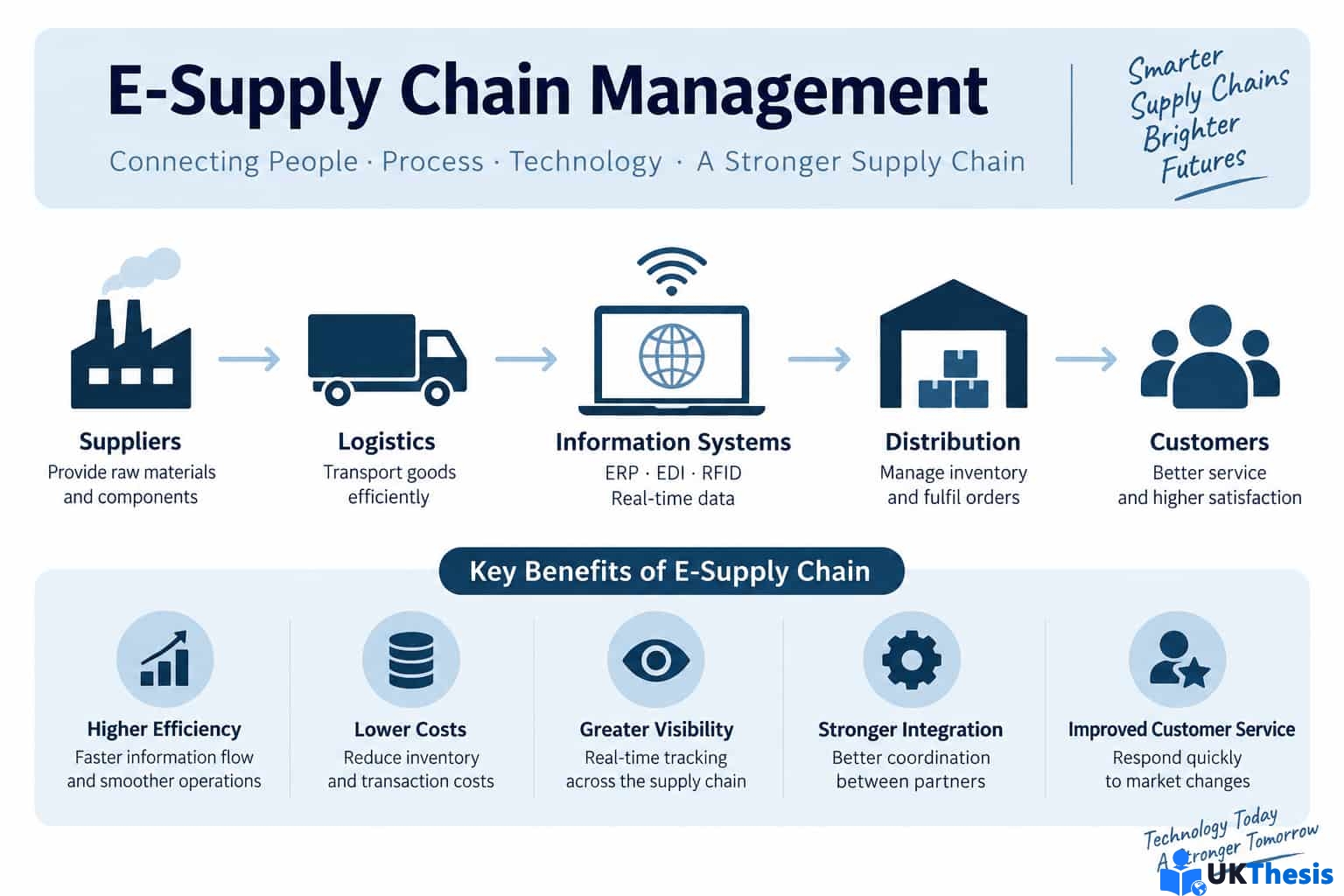
这篇E-Supply Chain Management essay主要讨论Information Technology怎样改变传统供应链管理,并重点分析ERP、EDI、Barcoding、RFID和Real-time Information在供应链整合中的作用。对于正在准备Supply Chain Management Essay、Operations Management assignment或者Digital Supply Chain课程作业的同学来说,这篇案例最值得参考的地方,并不是记住几个技术缩写,而是理解Technology如何真正改善Supply Chain Performance。
先抓住全文主线:供应链数字化的价值并不是“用了新系统”,而是让Information Flow更快、更准确,从而改善Inventory、Forecasting、Coordination、Customer Response以及Cost Control。
一、什么是E-Supply Chain Management?
Supply chain management has become an increasingly important business concept. It is no longer limited to purchasing products or coordinating basic logistics activities. Modern supply chain management has developed into a strategic process involving customer service, supplier relationships, information sharing and coordination across different organisations.
Information Technology plays an important role in redesigning these processes. When technology is properly integrated into the supply chain, businesses can obtain faster and more accurate information about customers, suppliers, inventory and market demand.
如果一定要用一句比较容易记的话解释E-Supply Chain,我通常会说:它就是把传统Supply Chain里的“货物流”与“信息流”真正接起来。
货物在仓库里移动是一回事,系统是否知道它现在在哪里、还有多少、什么时候到、客户什么时候需要,又是另一回事。很多供应链问题最后并不是“没货”,而是“信息比货慢半拍”。
| 传统供应链问题 | 数字技术的作用 | 可能改善的结果 |
|---|---|---|
| 库存信息更新慢 | RFID / Barcode | Real-time Inventory |
| 部门数据分散 | ERP | Process Integration |
| 供应商沟通效率低 | EDI | Faster Information Exchange |
| 需求变化反应慢 | Integrated Data | Better Forecasting |
二、Information Technology怎样改善Supply Chain?
Several information technology initiatives can reduce cycle time and improve coordination across the supply chain. Common technologies include:
Barcoding in logistics
Electronic Data Interchange (EDI)
Material Requirements Planning (MRP)
Enterprise Resource Planning (ERP)
Radio Frequency Identification (RFID)
这些技术看起来像一串缩写,第一次学Supply Chain的时候确实很容易看得头大。我以前碰到学生写这类Assignment,最常见的情况就是每个技术查了一段Definition,然后ERP一段、RFID一段、EDI一段,写完自己都不知道它们之间到底有什么关系。
比较好理解的方法是把它们放进同一条Information Flow里:
商品被识别 → 数据被记录 → 系统之间交换 → 企业内部整合 → Supply Chain共同决策
这样一看,Barcoding、RFID、EDI和ERP其实不是互相替代,而是在供应链不同环节解决不同的问题。
三、ERP为什么对Supply Chain Integration很重要?
An integrated Enterprise Resource Planning system can provide an overview of the wider logistics and business process. ERP systems are designed to combine functions such as production, logistics, sales, human resources and accounting through shared information and coordinated processes.
对于Supply Chain来说,ERP最大的价值并不是“装了一个大型软件”,而是让原本分散在不同部门的数据能够建立联系。
例如Sales收到订单以后,如果信息能够自动影响Production Planning、Inventory、Procurement以及Finance,那么企业就不需要等不同部门分别更新Excel,再开会确认一遍到底谁的数据是真的。
| ERP连接的业务 | 供应链价值 |
|---|---|
| Sales | 及时掌握Customer Demand |
| Inventory | 减少库存信息差异 |
| Procurement | 更快触发采购需求 |
| Production | 改善Production Scheduling |
| Finance | 连接采购、销售与成本信息 |
当然,Essay里不能写成“上了ERP就一切都好了”。如果数据质量差、不同部门流程不一致,或者员工仍然绕开系统工作,那么ERP只是把原来的问题搬进一个更昂贵的平台。这一点特别适合放进Critical Analysis。
四、EDI怎样连接供应链上下游企业?
Electronic Data Interchange, usually referred to as EDI, allows structured business information to be exchanged electronically between organisations. In a supply chain environment, this information may include orders, prices, delivery details, inventory levels and other transaction-related data.
Technology has therefore changed the way supply chain partners interact. Instead of repeatedly entering the same information manually, EDI allows information to move more quickly between customers, suppliers and other partners.
如果企业发现库存下降到某个水平,系统可以把补货需求快速传递给Supplier。这个过程看起来很普通,但它减少的其实不只是“发一封邮件”的时间,还包括Manual Entry、错误、等待以及不同系统之间的信息延迟。
五、RFID与Barcoding怎样改善Inventory Management?
Technology can simplify and optimise many supply chain processes, especially inventory management. Real-time or near-real-time inventory information can help businesses understand what products are available, where they are located and when replenishment may be required.
Barcodes provide a relatively simple method for identifying and tracking products through logistics operations. RFID extends this capability by using radio-frequency identification tags that can provide information without requiring the same type of direct scanning process.
| 技术 | 主要作用 | Supply Chain应用 |
|---|---|---|
| Barcode | Product Identification | Receiving、Picking、Stock Control |
| RFID | Automatic Identification | Tracking、Warehouse Visibility |
| EDI | Business Data Exchange | Supplier Orders、Inventory Data |
| ERP | Enterprise Integration | Planning、Procurement、Finance、Operations |
真正值得分析的是:这些技术的价值取决于数据是否准确、流程是否统一,以及供应链伙伴是否愿意共享信息。如果RFID读到的数据最后仍然被人工抄进另一套系统,Digital Supply Chain的优势也会大打折扣。
六、Technology如何改善Supply Chain Coordination?
Advanced information technology can increase the speed, quality and quantity of information transferred between supply chain participants. Faster information collection and exchange gives managers and partners greater visibility over what is happening across the network.
Technology can also support closer inter-firm integration between upstream and downstream partners. Inventory information, demand forecasts and order schedules can be shared more effectively, creating a more coordinated flow of information between customers and suppliers.
This integration can help balance supply and demand and improve the ability of supply chain members to respond to market changes and customer requirements.
Dell经常被Supply Chain课程拿来举例,就是因为Build-to-order模式需要非常高效的信息协调。如果Customer Order变化以后,Supplier、Assembly和Inventory反应太慢,Just-in-Time反而很容易变成“Just Too Late”。
七、Real-time Data为什么重要?
Real-time information can improve decision-making across inventory, logistics and customer service. Businesses can monitor stock levels, track orders, locate products or components and respond more quickly to changes.
For customers, technology can provide access to order tracking and delivery information. For managers, the same information can support stock replenishment, demand planning and exception management.
写Essay时不要把“Real-time”写成绝对好处。数据更新越快,不代表Decision一定越好。错误的数据如果传播得更快,反而会让整个Supply Chain更快做错决定。所以Data Quality和Information Accuracy同样重要。
八、Information Technology如何影响Supply Chain Performance?
Information technology can influence supply chain performance in several ways. Integrated systems may allow businesses to respond more effectively to customer requests, improve coordination, reduce some transaction costs and support faster information exchange.
Technology can also improve communication with customers. Businesses may provide order tracking, product availability and delivery information more efficiently while collecting customer feedback more quickly.
| Performance Dimension | Technology可能产生的影响 |
|---|---|
| Cost | 减少重复录入、库存浪费与部分交易成本 |
| Speed | 加快订单、库存与Supplier信息流动 |
| Quality | 提高信息准确性与Process Visibility |
| Dependability | 改善交付预测和库存可用性 |
| Flexibility | 更快响应Demand与Market Changes |
九、Digital Supply Chain的风险不能忽略
Technology creates opportunities, but it also creates dependencies. The more a supply chain relies on integrated systems and shared data, the more important System Reliability、Cybersecurity、Data Quality以及Partner Compatibility become.
供应链有时候特别像多人小组作业:只要其中一个人文件版本错了,后面五个人都能跟着一起改错。Digital Supply Chain也是这样,上游输入的数据不准确,下游系统再先进,也只是更高效地处理错误信息。
因此一篇比较完整的Supply Chain Management Essay不能只写Technology带来的Advantages,还应该讨论:
Implementation Cost
Employee Training
Data Accuracy
Cybersecurity
System Integration
Supplier Technology Capability
Resistance to Change
十、这篇Essay怎样写出Critical Analysis?
如果Assignment题目要求“evaluate the role of information technology in supply chain management”,不要只写:
ERP很好、RFID很好、EDI很好。
可以继续追问:
| 描述性写法 | Critical Analysis写法 |
|---|---|
| ERP整合数据 | 如果Process和Data Quality不好,整合是否仍然创造价值? |
| RFID提高库存可见性 | 成本是否适用于所有商品和所有企业? |
| EDI提高供应商沟通效率 | 小型Supplier是否有能力采用相同技术? |
| Real-time Data提高决策 | 实时但错误的数据是否比延迟但准确的数据更危险? |
这样文章就不再只是Technology介绍,而是真正回到Management问题。
如果课程Brief涉及Supply Chain、Operations Management、ERP或Digital Transformation,也可以通过Essay写作辅导、Assignment辅导和论文辅导先梳理Task Words、理论框架和案例证据。供应链类作业术语很多,但真正拿分的通常不是记住多少缩写,而是能不能解释这些技术为什么会改变Business Performance。
十一、Conclusion
The implementation of information technology has become an important part of modern supply chain management. Technologies such as ERP, EDI, barcoding and RFID can improve information visibility, coordination and integration across suppliers, organisations and customers.
These technologies may support faster information exchange, more accurate inventory control, improved demand planning and better customer response. However, technology alone does not guarantee supply chain success. Its value depends on data quality, process design, organisational capability and the willingness of supply chain partners to share and use information effectively.
As technology continues to develop, supply chain managers will need to evaluate not only which tools are available, but how those tools can be integrated into business processes in a way that improves cost, speed, quality, flexibility and service.
FAQ:E-Supply Chain Management Essay常见问题
1. 这篇属于Supply Chain Essay还是Business Essay?
核心属于Supply Chain Management Essay,同时具有Business、Operations Management和Information Systems属性。
2. E-Supply Chain和Digital Supply Chain有什么区别?
两者有较大重叠。E-Supply Chain强调电子信息技术在供应链中的连接作用,而Digital Supply Chain现在通常涵盖范围更广,包括Cloud、IoT、AI、Analytics、Automation等数字技术。
3. ERP和Supply Chain Management是什么关系?
ERP可以连接企业内部Sales、Procurement、Inventory、Production和Finance等流程,为Supply Chain Planning和Execution提供统一的信息基础,但ERP本身并不等同于完整的Supply Chain Management。
4. RFID和Barcode是一回事吗?
不是。两者都可以用于产品识别和库存管理,但RFID通过无线射频标签读取信息,在部分应用中可以实现更自动化的识别和追踪。
5. EDI为什么在Supply Chain中重要?
EDI能够让企业之间交换订单、物流、库存等结构化业务信息,从而减少人工录入和信息传输延迟。
6. 这篇可以归到ERP Assignment吗?
可以作为辅助Tag,但不建议作为主分类,因为ERP只是本文分析的多种供应链技术之一。
7. 这篇属于Methodology吗?
不属于。文章讨论的是Information Technology对Supply Chain Management的应用与影响,并没有设计Research Methodology。
8. Supply Chain Essay最容易写成什么问题?
最常见的问题是只介绍ERP、EDI、RFID等Technology,却没有解释它们如何影响Cost、Inventory、Forecasting、Customer Service和Supply Chain Performance。
相关阅读
ERP Assignment怎么写?Enterprise Resource Planning选型、实施与案例分析
电子商务靠什么赚钱?E-commerce Revenue Model与供应链案例分析
M&S Operations Management Report:零售运营与Supply Chain案例
物流与供应链管理Essay、Assignment与Dissertation专题
```